
Quick Answer
Occasional morning breath or odor after garlic is normal. Breath that repeatedly returns soon after brushing is different: it can affect confidence, but it can also be a clue that bacteria, inflammation, dry mouth, or another condition needs attention. More mints are rarely the complete answer because they cover odor without addressing its source.
Most persistent bad breath, also called halitosis, has an oral component, so a dental evaluation is a sensible place to begin. This guide explains common causes, a useful home routine, and signs that warrant professional care. It is educational rather than a diagnosis. Sudden illness, facial swelling, trouble swallowing, or breathing difficulty requires prompt medical attention.
Why Bad Breath Often Starts in the Mouth
Oral bacteria break down food debris, shed cells, and proteins, releasing volatile sulfur compounds that can smell unpleasant. The back of the tongue is a common reservoir because its textured surface holds bacteria and debris. Plaque between teeth and around the gumline adds another source, especially when those areas are not cleaned daily.
Saliva normally rinses the mouth and buffers bacterial activity. Saliva flow naturally falls during sleep, which explains typical morning breath. Dehydration, mouth breathing, tobacco, and many prescription or over-the-counter medications can make dryness more persistent. Removable dentures, retainers, and night guards can also hold odor if they are not cleaned according to their care instructions.
A professional general dentistry examination can separate ordinary bacterial buildup from a condition that needs treatment.
Common Causes and the Clues They Leave
Bad breath is a symptom, not a single disease. More than one factor may be present, so the pattern and accompanying findings matter more than the odor alone.
| Possible Source | Common Clues | Useful Next Step |
|---|---|---|
| Tongue and plaque bacteria | Coated tongue; odor improves briefly after cleaning | Daily tongue and interdental cleaning |
| Gingivitis or periodontitis | Bleeding, tenderness, recession, or persistent bad taste | Periodontal examination and indicated cleaning |
| Dry mouth | Sticky mouth, thick saliva, frequent thirst, cracked lips | Hydration and medication/risk review |
| Decay or dental infection | Food trapping, pain, sensitivity, swelling, or drainage | Prompt dental diagnosis and treatment |
| Non-oral source | Sinus, throat, reflux, or systemic symptoms | Medical evaluation when appropriate |
Bleeding gums are not healthy simply because they are common. If they accompany odor, our guide to causes of bleeding gums explains why plaque-related inflammation deserves attention.
A Practical At-Home Routine for Fresher Breath
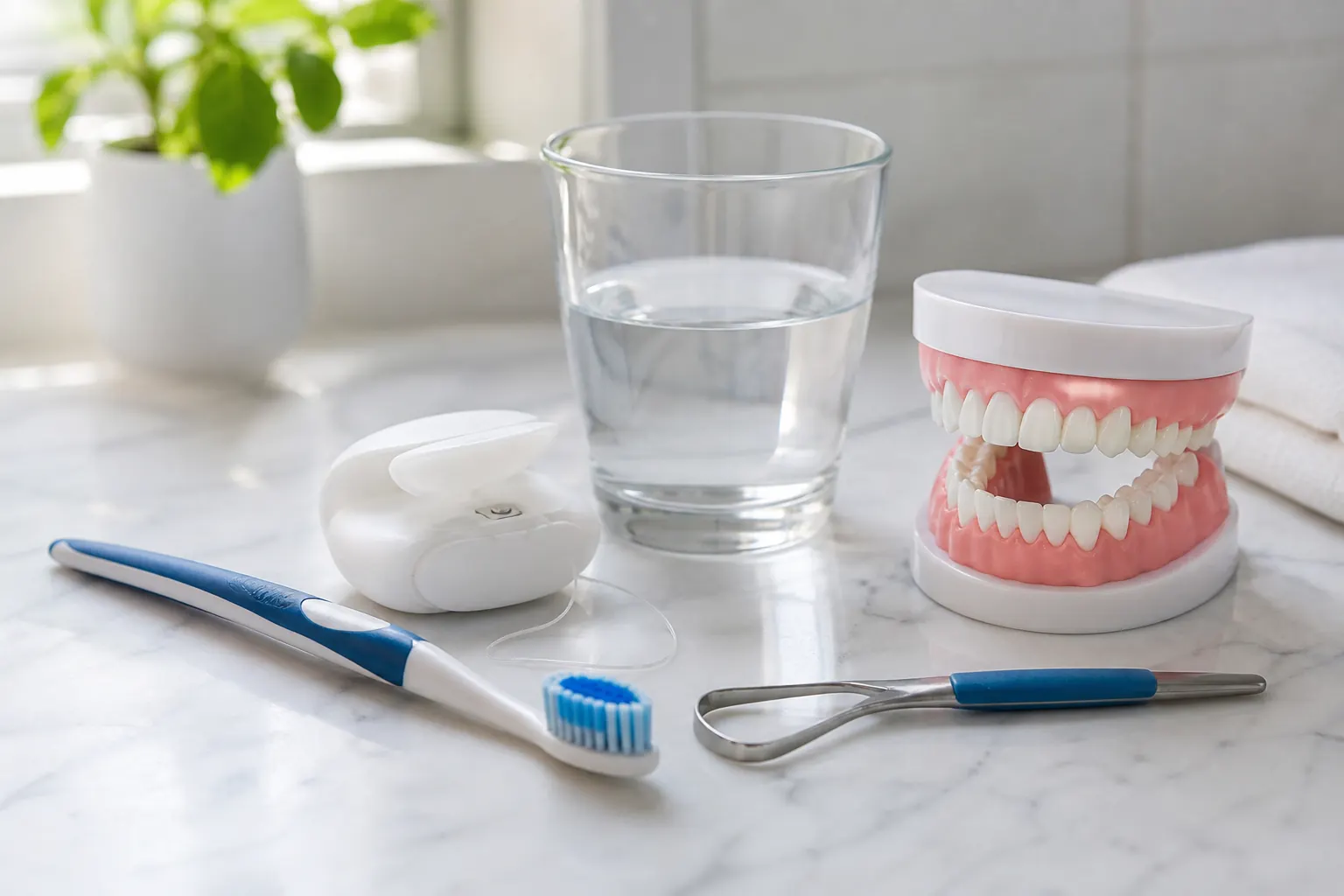
Brush twice a day for two minutes with fluoride toothpaste, using a soft-bristled brush along the gumline without aggressive scrubbing. Clean between every tooth daily with floss, interdental brushes, or another tool recommended for your spaces. Gently clean the tongue from back to front with a tongue scraper or toothbrush, rinsing the tool between passes.
Drink water regularly and limit frequent tobacco, alcohol, and heavily sweetened products. Sugar-free gum may stimulate saliva for people who can chew it safely, but it does not replace cleaning. Wash dentures and removable appliances daily and clean their storage containers; follow professional instructions because toothpaste or hot water can damage some materials. Replace a toothbrush or brush head when bristles fray.
- Do not use perfume, bleach, or household disinfectants in the mouth.
- Do not scrape the tongue hard enough to cause pain or bleeding.
- Do not stop a prescribed medication because it may cause dry mouth.
- Do not rely on gum or rinse to conceal persistent symptoms.
If a medication may be contributing, discuss it with the prescriber and dentist. They can consider safe strategies without disrupting necessary medical treatment.
When Professional Dental Treatment Is Needed
Arrange an examination when bad breath persists for roughly two weeks despite consistent cleaning, or sooner when it occurs with pain, bleeding, swelling, loose teeth, drainage, or a bad taste. The dental team may review medical history and medications, measure gum pockets, check the tongue and soft tissues, inspect restorations and appliances, and take dental images when clinically indicated.
Treatment should match the finding. Plaque and tartar may require a professional cleaning; periodontal disease may need scaling and root planing plus maintenance. Cavities, defective restorations, or infected teeth need their own treatment plans. Dry mouth management can involve hydration strategies, saliva-supporting products, fluoride protection, and coordination with a physician. No single rinse can reasonably promise to cure all of these causes.
When Bad Breath May Need Medical Follow-Up
Not every case begins in the teeth and gums. Nasal or sinus conditions, tonsil problems, reflux, and some systemic illnesses can contribute to unusual breath odor. These causes are less common than oral ones and cannot be identified reliably by matching an odor to an online list. After addressing dental findings, a clinician may recommend follow-up with primary care, an ear-nose-throat specialist, or another appropriate professional.
Seek urgent help for facial or neck swelling, fever with dental pain, difficulty swallowing, trouble breathing, confusion, or rapidly worsening illness. For dental pain or swelling that requires prompt assessment, Meadowbrook Dental offers emergency dental care for patients in Mineola, Plainview, and nearby Nassau County communities. The safest next step is based on symptoms and examination, not an odor description alone.
Frequently Asked Questions
Why does my breath still smell after brushing?
Brushing may miss bacteria on the tongue and between teeth, and it cannot remove hardened tartar or treat cavities, gum disease, dry mouth, or some medical causes. Clean the tongue and interdental spaces, drink water, and arrange an examination if odor repeatedly returns. Persistent bad breath deserves a cause-based evaluation rather than stronger masking products.
How can I tell if I have bad breath?
It is difficult to judge your own breath because the nose adapts to familiar odors. A trusted family member can give more useful feedback, or a dental professional can assess odor and look for oral causes. Licking the wrist or smelling floss may offer clues, but these home checks are imperfect and do not identify the source.
Can mouthwash cure chronic bad breath?
Mouthwash may temporarily reduce odor, and certain therapeutic rinses can support a dentist-directed plan. It does not remove tartar, repair decay, restore saliva flow, or treat an infection. Alcohol-containing rinses may feel drying for some people. Choose a product based on professional advice and use it as an addition to brushing and interdental cleaning.
When should bad breath be checked by a doctor instead of a dentist?
A dental examination is a practical first step because many persistent cases begin in the mouth. If no oral cause is found, or if you have symptoms such as ongoing sinus problems, reflux, excessive thirst, unexplained weight change, fever, or breathing difficulty, the dentist may recommend evaluation by your physician or another appropriate clinician.
If persistent breath odor is affecting your comfort or confidence, call Meadowbrook Dental Care in Mineola at (516) 284-1234 or Meadowbrook Dentistry in Plainview at (516) 346-5757, or request a fresh-breath evaluation online. We will look for the cause and explain appropriate treatment rather than simply masking the symptom.
Get to the Source of Persistent Bad Breath
Our Mineola and Plainview teams can check for gum disease, decay, dry mouth, and other oral causes, then recommend care based on the findings.