Quick Answer
A first dental appointment is a small visit with an important purpose. It gives parents practical guidance at the moment daily habits are forming, allows a dentist to check early development, and introduces the child to the office without waiting for pain or an accident. For families across Long Island, a calm beginning can make future preventive care feel familiar rather than threatening.
Children develop at different rates, so the visit should adapt to the child rather than follow a rigid performance checklist. This guide explains timing, preparation, what usually happens, and how to respond if your child is hesitant. It is educational and cannot replace an examination or advice based on your child's medical and dental history.
When to Schedule the First Appointment
A common professional recommendation is to establish a dental home when the first tooth erupts and no later than the first birthday. That may sound early, but infant and toddler visits are primarily preventive. The dentist can look at tooth eruption and oral tissues, identify early signs of decay, and help caregivers manage brushing, fluoride exposure, snacks, bottles, cups, pacifiers, and thumb habits.
Do not wait for every baby tooth to arrive. Early childhood cavities can progress quickly, and small children may not be able to explain where they hurt. Schedule sooner if you notice a spot that does not brush away, swelling, a broken tooth, persistent mouth pain, or a dental injury. Children with medical conditions or elevated cavity risk may need a visit schedule tailored with their pediatrician and dentist.
Our pediatric dental care is designed to meet children at their developmental level while giving parents clear, practical information.
How to Prepare Without Creating Anxiety
Choose a time when your child is usually rested and fed, allowing enough travel time that the family does not arrive rushed. In the days before, describe the visit briefly: “The dentist will count your teeth and help us keep them strong.” Practice opening wide while you count teeth with a clean finger or toothbrush. A picture book or pretend visit with a stuffed animal can make the sequence familiar.
Use neutral, truthful language. Avoid words that introduce fears your child may not have, including “needle,” “drill,” or “it won't hurt.” Do not make the appointment a threat or attach a large reward that implies something unpleasant is coming. If you feel anxious about dentistry, share important concerns privately with the team so your child can take cues from the office's calm approach.
- Bring a comfort item if it helps your child in new settings.
- Complete forms ahead of time when possible.
- Tell the office about sensory, communication, or mobility needs.
- Keep your explanation short and invite simple questions.
- Plan a normal, low-pressure activity after the appointment.

What Happens During a Child's First Dental Visit
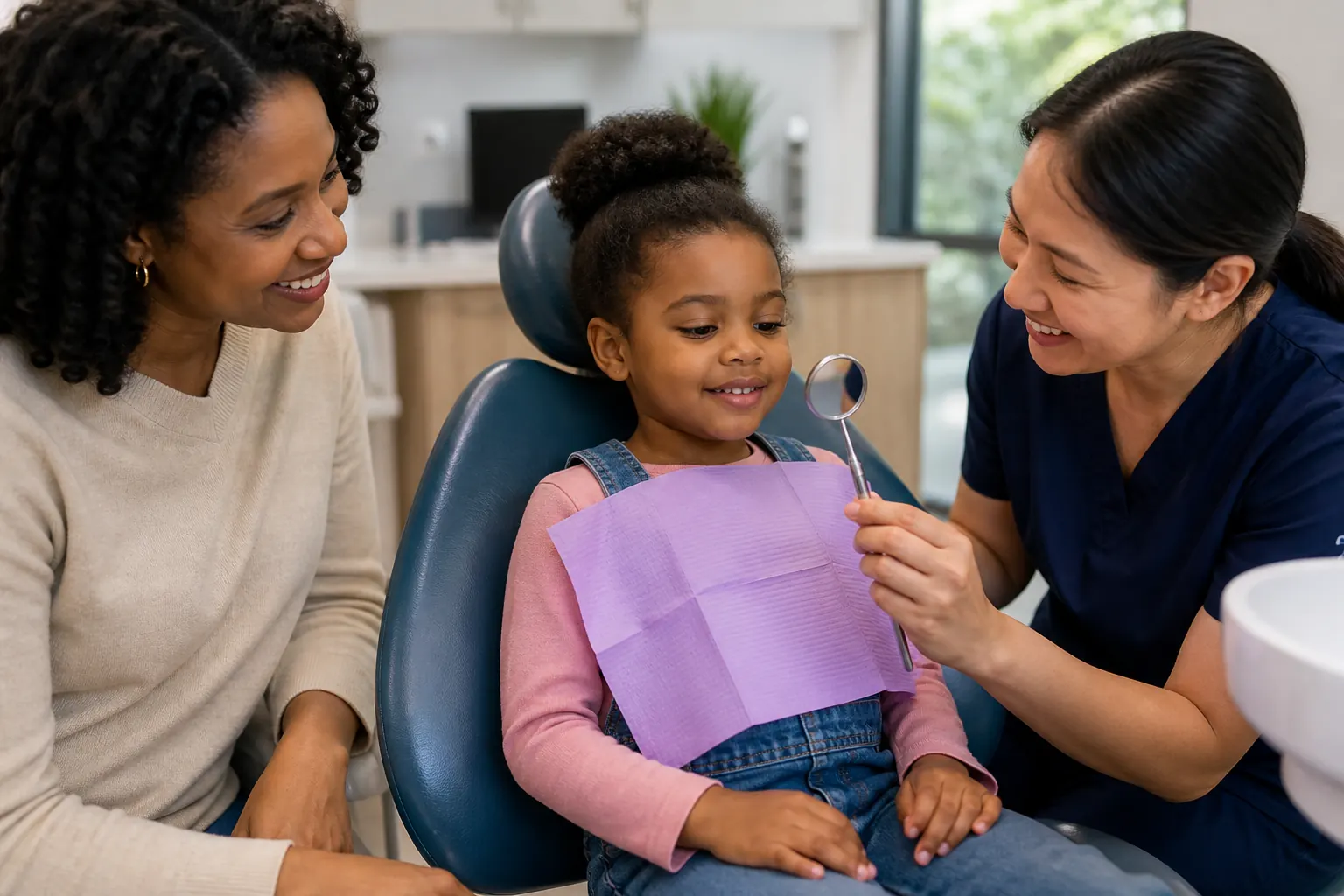
The team typically begins by reviewing medical history, medications, allergies, feeding patterns, oral habits, and any parent concerns. Young children may sit in a caregiver's lap or use a knee-to-knee position while the dentist performs a brief examination. Depending on age and comfort, the team may count and gently clean the teeth, assess the bite and gums, and apply fluoride when appropriate.
Dental images are not automatic. They are recommended when the expected diagnostic benefit justifies them, based on symptoms, risk, tooth contacts, and cooperation. The visit should also leave time for questions about toothpaste amount, brushing technique, flossing, diet, and what to do after an injury. If the child has an urgent finding, the dentist will explain treatment options and whether a separate appointment is needed.
| Part of the Visit | What the Child May Experience | What the Parent Learns |
|---|---|---|
| Introduction | Meet the team and explore at a comfortable pace | How the office supports the child |
| Gentle examination | Open wide while teeth and gums are counted | Development, current findings, and risk |
| Preventive care | Cleaning or fluoride when appropriate | How prevention fits the child's needs |
| Home-care coaching | See brushing demonstrated | Toothpaste amount, technique, food, and drink guidance |
What to Bring and What to Tell the Dental Team
Bring your insurance card, identification, pediatrician information, and an accurate list of medical conditions, medications, supplements, and allergies. Mention premature birth, heart conditions, developmental diagnoses, prior surgeries, or other issues that may affect care. Tell the team about pain, sleep changes, mouth breathing, grinding, injuries, and feeding habits, including frequent snacks or drinks after brushing.
Also share what helps your child communicate and regulate. Some children benefit from seeing each instrument first, fewer verbal instructions, a quieter room, or a clear stop signal. If there was a difficult medical or dental experience, say so without discussing frightening details in front of the child. Families who want a broader orientation can review our new-patient visit guide before arriving.
Building Healthy Habits After the Visit
Praise specific cooperation, such as sitting in the chair or opening for the mirror, even if the examination was brief. Avoid labeling the child as “bad” or apologizing for normal toddler behavior. The dental team can build on a partial first visit over time. At home, an adult should brush twice daily with the dentist-recommended amount of fluoride toothpaste and begin cleaning between teeth when they touch.
Keep sugary foods and drinks to mealtimes when possible, offer water between meals, and avoid putting a child to bed with a bottle containing milk, formula, juice, or another sweetened drink. Follow the recall interval recommended for your child's risk rather than assuming every family needs the same schedule. Meadowbrook Dental provides family preventive dentistry at our Mineola and Plainview offices so siblings and caregivers can build consistent routines together.
Frequently Asked Questions
When should my child have a first dental visit?
A first dental visit is generally recommended when the first tooth appears and no later than the first birthday. An early visit lets the dental team check development, discuss brushing, fluoride, feeding habits, and injury prevention, and help your child become comfortable with the office before a problem occurs.
What if my toddler will not open their mouth?
That reaction is common and not a failed visit. The team may use a knee-to-knee position with the caregiver, count only a few teeth, or focus on conversation and acclimation. A brief, respectful introduction can still provide useful guidance. The goal is safe care and trust, not forcing a perfect cleaning.
Should I prepare my child by practicing at home?
Yes. Practice reclining while you count teeth, read a positive dental story, and describe the visit in simple terms. Avoid promises that nothing will hurt or warnings about shots and drilling. Tell your child the dentist will count, look at, and help clean their teeth, then answer questions calmly without overexplaining.
Are dental X-rays always taken at the first visit?
No. Dental images are selected according to the child's age, tooth contacts, symptoms, cavity risk, and ability to cooperate. Some young children do not need images at the first visit, while a child with pain, injury, or areas that cannot be examined directly may benefit from them. The dentist should explain the reason.
Ready to make your child's first visit calm and constructive? Call Meadowbrook Dental Care in Mineola at (516) 284-1234 or Meadowbrook Dentistry in Plainview at (516) 346-5757, or request your child's appointment online. Tell us about any accommodations that would help when you schedule.
Start Your Child's Dental Visits Positively
Our family-focused teams in Mineola and Plainview make early visits calm, informative, and appropriate for your child's age.