Quick Answer
“Why can't I just get the regular cleaning?” is a reasonable question, especially when a deep cleaning costs more and may require multiple appointments. The answer is that the services are designed for different conditions. One maintains health; the other treats periodontal disease below the gumline. Comparing only the appointment fee misses that clinical difference.
This guide explains how routine prophylaxis differs from scaling and root planing, what each may cost in Nassau County, and how insurance commonly processes them. If bleeding prompted your concern, our article on why gums bleed when brushing offers helpful background. Only an exam with periodontal measurements and appropriate imaging can diagnose your condition. This article is general education, not personalized dental or insurance advice.
Regular Cleaning and Deep Cleaning Serve Different Purposes
A regular cleaning, also called an adult prophylaxis, is preventive care for a mouth that is generally healthy or has mild gingivitis without periodontal attachment and bone loss. The hygienist removes plaque, tartar, and surface stain from the crowns of the teeth and around the gumline, then polishes and reviews home care. Its goal is to maintain health and prevent disease from progressing.
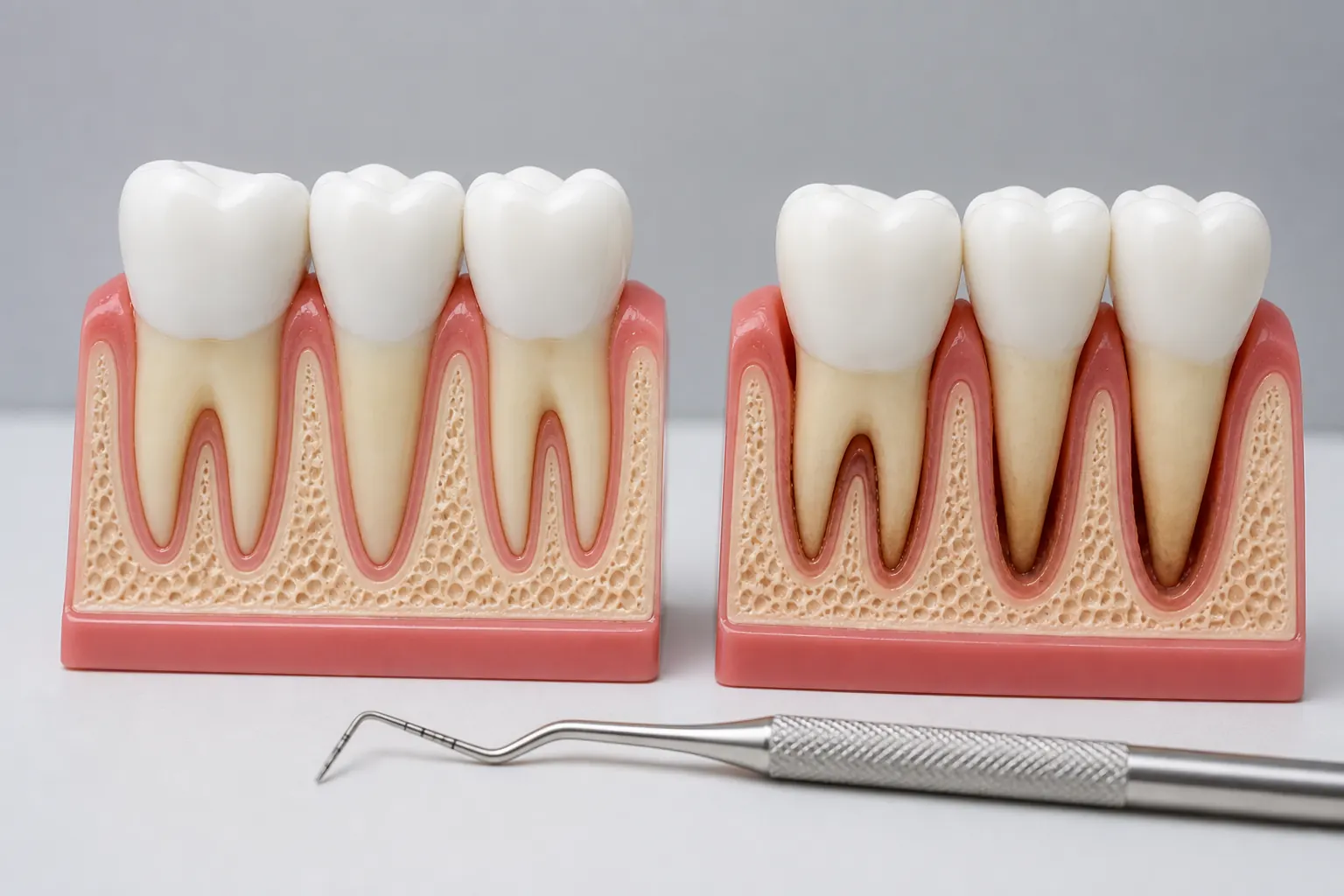
A deep cleaning is scaling and root planing. It treats periodontal disease by removing hardened deposits and bacterial buildup from root surfaces beneath deeper gum pockets. Root planing smooths contaminated root areas so the gums can heal more closely around the teeth. Local anesthetic is often used for comfort, and the mouth may be treated by quadrant over one or more visits. It is active therapy, not simply a more thorough version of a routine polish.
How the Examination Determines the Right Cleaning
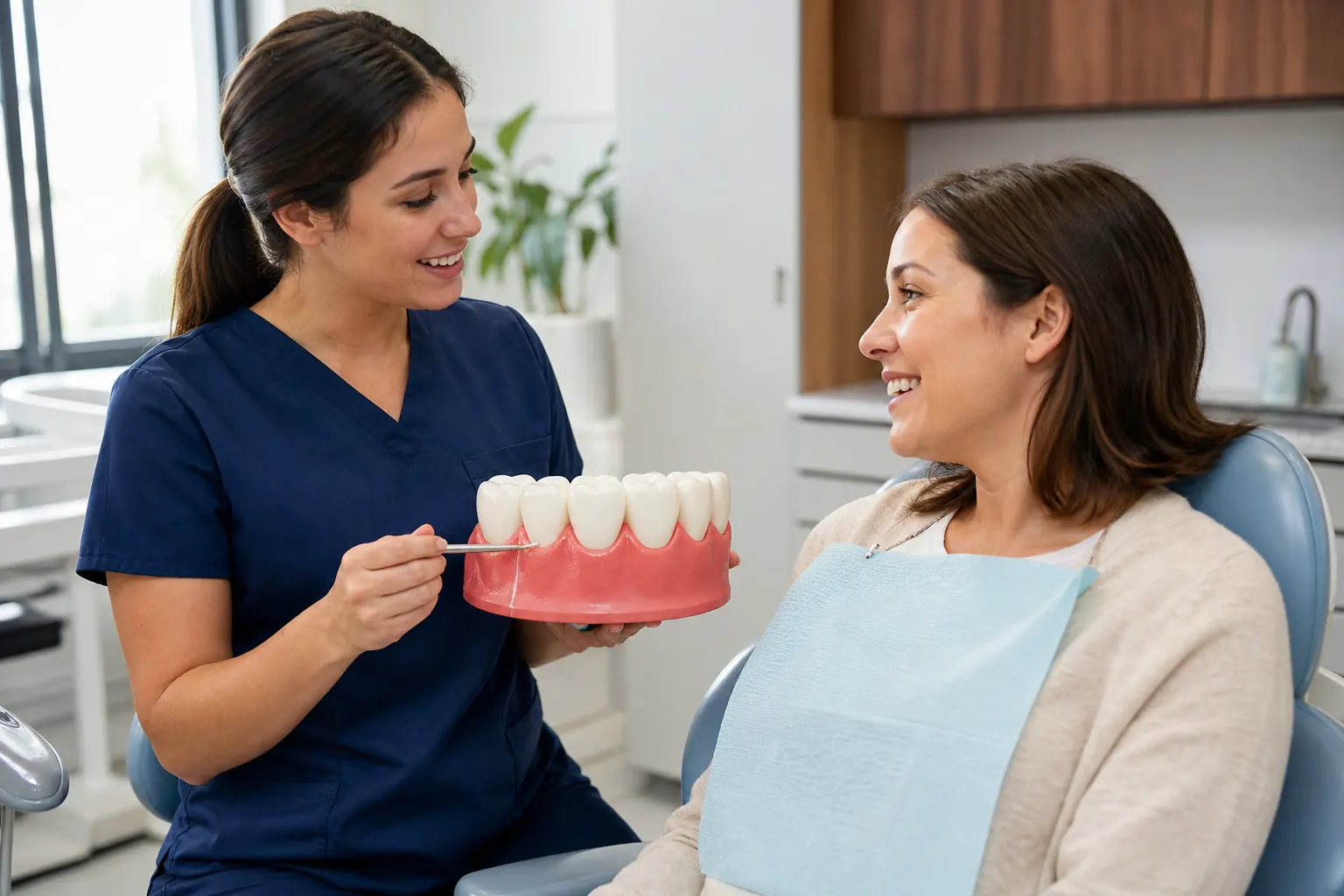
The recommendation should be based on findings, not on how long it has been since your last appointment. A clinician measures the space between each tooth and gum with a periodontal probe, records bleeding, evaluates recession and mobility, and reviews dental images for bone levels and tartar. Medical history, smoking, diabetes, medications, and home care can affect risk and treatment planning.
Healthy shallow pockets with no attachment loss generally support routine preventive care. Deeper pockets, bleeding, root-surface tartar, and evidence of attachment or bone loss may support scaling and root planing. Some mouths need treatment in only one or two quadrants, while others need all four. Ask the team to show you the measurements and images and explain which areas require treatment. You should understand both the diagnosis and the proposed sequence before consenting.
Deep Cleaning vs. Regular Cleaning Cost on Long Island
Routine cleanings are generally billed as one full-mouth preventive service. Scaling and root planing is commonly billed by quadrant, and the fee depends on how many teeth in each quadrant require therapy. The ranges below reflect broad educational estimates for Long Island and should help with budgeting, not replace a written treatment estimate.
| Service | Typical Range Before Insurance | Usual Purpose |
|---|---|---|
| Regular adult cleaning | $120 to $300 | Preventive maintenance in a generally healthy mouth |
| Scaling and root planing, per quadrant | $250 to $500 | Treatment below periodontal pockets |
| Scaling and root planing, four quadrants | $800 to $2,000 | Full-mouth periodontal therapy when indicated |
| Periodontal maintenance | $150 to $350 per visit | Ongoing care after periodontal treatment |
Disclaimer: These figures are educational estimates for the Long Island market and are not a quote. Your actual cost depends on the number of teeth and quadrants treated, disease severity, imaging, anesthesia, follow-up needs, provider, and insurance benefits, all determined after a clinical examination.
A comprehensive exam and periodontal images can be separate charges. Antimicrobial products or other adjuncts may also be recommended in some cases; ask what evidence supports them and whether they are optional. A clear estimate should identify every procedure, the number of quadrants, anticipated insurance payment, and your expected portion.
Insurance Coverage and Out-of-Pocket Questions
Many plans cover preventive cleanings at a high percentage, sometimes without applying the deductible. Scaling and root planing is often processed under basic or major periodontal benefits with coinsurance. Plans may limit treatment by quadrant, require a minimum number of affected teeth, request periodontal charting and images, or restrict how often the service is covered. An annual maximum can leave a larger patient balance even when the service is eligible.
The Meadowbrook Dental team can help review your insurance benefits, but the carrier makes the final claim decision. Ask whether the estimate includes your remaining deductible, whether all planned quadrants fit within the current annual maximum, and how periodontal maintenance will be covered afterward. If benefits are limited, discuss safe sequencing rather than substituting a service that does not address the diagnosed condition.
What Happens After Scaling and Root Planing
Gum tissue may feel tender and teeth may be temporarily sensitive after treatment. Follow the clinician's home-care and medication instructions, use gentle brushing and interdental cleaning, and attend the recommended reevaluation. At that visit, the team may remeasure pockets, assess bleeding, and determine how the tissues responded. No ethical clinician should promise that one procedure will eliminate every pocket or prevent future disease.
Patients with a history of periodontitis commonly transition to periodontal maintenance rather than ordinary prophylaxis. These visits monitor previously affected sites and disrupt buildup at an interval selected for your risk, often more frequently than twice a year. Advanced or nonresponsive areas may require consultation with a periodontist. For preventive and periodontal evaluations, learn more about our general dentistry services.
Frequently Asked Questions
How much does a deep cleaning cost on Long Island?
Scaling and root planing commonly costs about $250 to $500 per quadrant before insurance on Long Island, or roughly $800 to $2,000 for a full mouth when all four quadrants need treatment. Fees depend on how many areas are treated, disease severity, imaging, anesthesia, and follow-up. An examination is required for an individualized estimate.
Can I choose a regular cleaning instead of a deep cleaning?
The two cleanings address different conditions. A regular cleaning maintains a generally healthy mouth and removes deposits above and just below the gumline. Deep cleaning treats deposits on root surfaces beneath periodontal pockets. If periodontal disease is present, a routine cleaning may leave the disease-causing buildup in place and is not an equivalent substitute.
Does insurance cover scaling and root planing?
Many dental plans provide partial coverage when periodontal measurements and imaging support the diagnosis, but deductibles, coinsurance, frequency limits, quadrant rules, annual maximums, and network status vary. Preauthorization may be helpful but is not a guarantee of payment. The dental office can verify benefits and provide an estimated patient portion.
Will I need regular cleanings again after a deep cleaning?
After scaling and root planing, patients with periodontal disease often move to periodontal maintenance rather than ordinary preventive cleanings. Maintenance reaches areas affected by the disease and is commonly scheduled more frequently based on risk and response. Your dentist or hygienist will recommend an interval after reassessing pocket depths, bleeding, and home care.
To understand which cleaning your gums need and what it may cost, call Meadowbrook Dental Care in Mineola at (516) 284-1234 or Meadowbrook Dentistry in Plainview at (516) 346-5757, or request a gum health evaluation online. We can review the findings, treatment choices, and estimated benefits with you before care begins.
Find Out Which Cleaning You Need
Our Mineola and Plainview teams can measure your gum health, explain the recommended cleaning, and review costs and benefits with you.