Custom Dental Crowns
A Perfect Crown, Crafted In-House
Our on-site dental lab lets us craft premium porcelain and zirconia crowns with rapid turnaround — personalized to your smile with precision that outside labs can't match.
The Difference
Faster Crowns, Zero Compromise
Traditional crowns mean weeks of waiting on an outside lab. Our in-house lab changes everything.
Traditional Crown
2 visits over 2-3 weeks
Visit 1
Tooth is prepared, messy impression taken, temporary crown placed
Wait 2-3 weeks
Lab fabricates the crown off-site while you wear a fragile temporary
Visit 2
Temporary removed, permanent crown adjusted and cemented
In-House Lab Crown
Rapid turnaround, custom precision
Scan
Digital impression with intraoral scanner — no messy molds
Custom Design
Your crown is hand-crafted in our on-site lab for a precise, personalized fit
Rapid Turnaround
Because we control every step in-house, your permanent crown is ready faster than any outside lab
Our Advantage
In-House Lab, Unmatched Precision
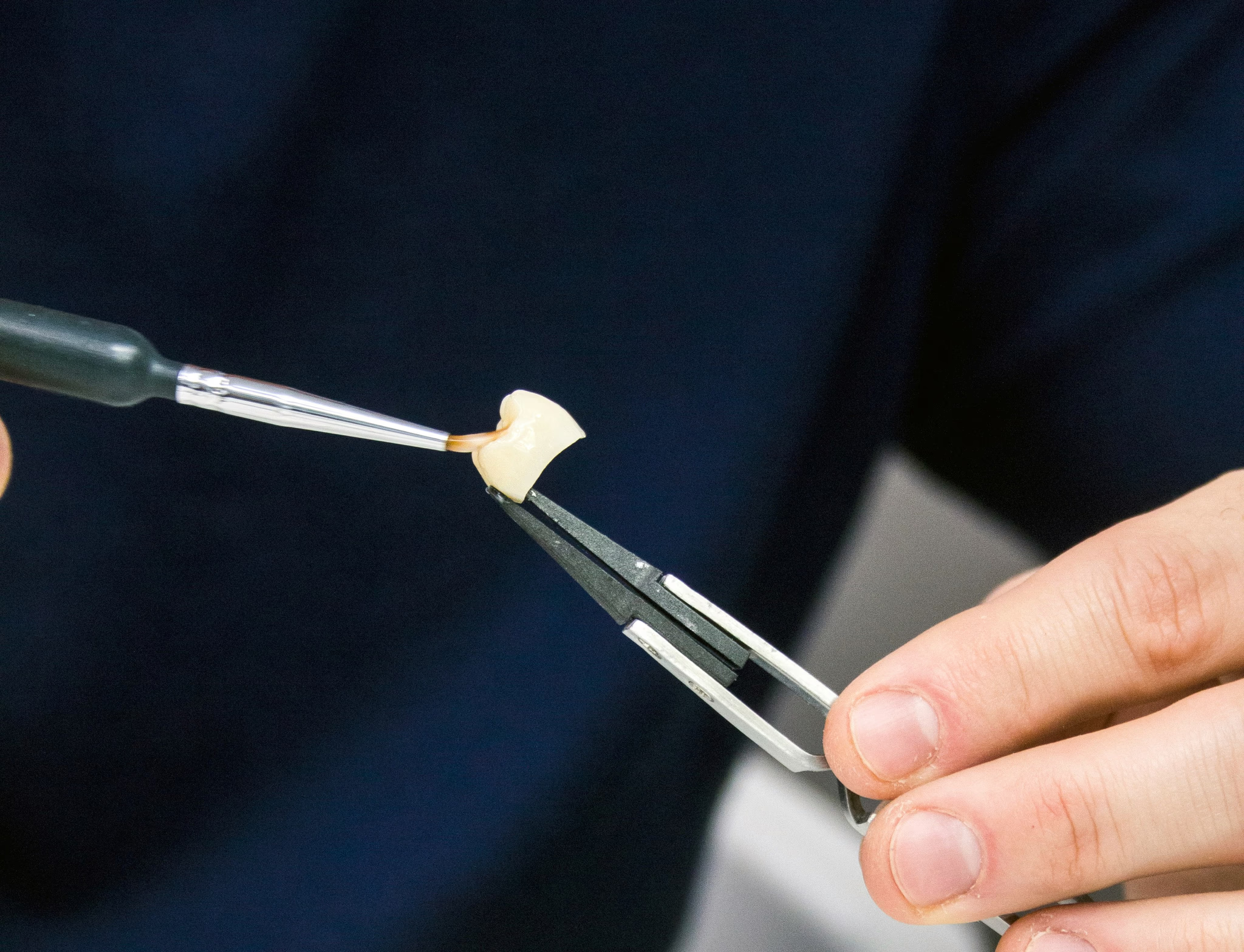
Unlike most dental offices that outsource to third-party labs, we have a fully equipped lab on-site. This means your crown is hand-crafted by our own technicians, with direct collaboration between your dentist and the lab — resulting in a perfect fit, faster turnaround, and a level of personalization that outside labs simply can't match.
On-Site
In-house lab
Faster
Rapid turnaround
Custom
Personalized fit
Materials
Premium Materials, Lasting Results
Our in-house lab uses only dental-grade ceramics crafted to precision — no metal, no compromise.
Porcelain
Best for: Front teeth, visible smile zone
- Natural translucency
- Excellent color matching
- Stain-resistant
- 10-15+ year lifespan
Zirconia
Best for: Back teeth, heavy bite areas
- Strongest ceramic available
- Fracture-resistant
- Biocompatible
- 15-20+ year lifespan
Complete Guide
Your Complete Guide to Dental Crowns
Everything you need to know about dental crowns — what they are, when you need one, the materials we use, what the process looks like at our Long Island offices, and how much a dental crown costs.
What Is a Dental Crown?
A dental crown is a custom-made cap that covers the entire visible portion of a tooth above the gum line, restoring its shape, size, strength, and appearance. Unlike a filling that repairs a small area of damage, a crown encases the whole tooth to provide full structural reinforcement.
Dental crowns serve several important purposes:
- Protecting a weakened or decayed tooth from further breakdown
- Restoring a broken or severely worn tooth to full function
- Covering a tooth with a large filling where little natural structure remains
- Capping a dental implant to replace a missing tooth
- Improving the cosmetic appearance of a misshapen or deeply discolored tooth
Crowns differ from other restorations in scope. A filling replaces a small portion of lost tooth structure. An inlay fits within the cusps of a tooth, while an onlay extends over one or more cusps. When the damage is too extensive for any of these conservative options, a dental crown is the appropriate solution — it wraps the entire tooth for maximum protection and long-term durability.
When Do You Need a Dental Crown?
Your dentist may recommend a dental crown in any of the following situations:
- After a root canal — the treated tooth loses internal structure and needs reinforcement to withstand normal biting forces
- Large cavity too big for a filling — when decay has removed so much tooth structure that a filling alone cannot reliably restore the tooth
- Cracked or fractured tooth — a crown holds the pieces together and prevents the crack from spreading deeper toward the nerve
- Severely worn teeth — grinding, clenching, or acid erosion can wear teeth down to the point where a crown is needed to rebuild proper height and function
- To support a dental bridge — crowns on the teeth adjacent to a gap anchor the bridge in place
- Cosmetic enhancement — a crown can reshape a tooth that is undersized, oddly shaped, or resistant to whitening
- To cover a dental implant — the implant post replaces the root, and the crown serves as the visible, functional tooth
If you are experiencing tooth pain, sensitivity, or have a visibly damaged tooth, early evaluation often means a simpler, more conservative restoration. Schedule a consultation to find out whether a crown is the right treatment for you.
Types of Dental Crown Materials
The material used for your crown directly affects its appearance, strength, and lifespan. At Meadowbrook Dental, our in-house lab works exclusively with all-ceramic systems to deliver the best combination of aesthetics and durability.
Porcelain is the preferred choice for front teeth and any tooth visible when you smile. Porcelain offers natural translucency that closely mimics real enamel, excellent shade matching to surrounding teeth, stain-resistant surfaces, and a typical lifespan of 10–15+ years with proper care.
Zirconia is the strongest ceramic material available in modern dentistry. Ideal for back teeth and areas that withstand heavy chewing forces, zirconia crowns are virtually fracture-resistant, fully biocompatible, and routinely last 15–20+ years.
Porcelain-fused-to-metal (PFM) crowns were once the industry standard, pairing a metal core with a porcelain exterior. While structurally strong, PFM crowns can reveal a dark line at the gum margin over time and lack the lifelike translucency that patients expect from a modern restoration.
Our lab uses only all-ceramic porcelain and zirconia because these materials deliver superior aesthetics, proven strength, and excellent biocompatibility — with no metal substructure to compromise the final result.
The Dental Crown Process at Meadowbrook
Getting a dental crown at our Mineola or Plainview office is a streamlined, comfortable experience built around digital technology and our on-site lab.
Step 1 — Digital Impression: We capture a precise 3D scan of your tooth using an intraoral scanner. There are no messy impression trays or gagging — just a quick, accurate digital scan that feeds directly into our design software.
Step 2 — Tooth Preparation: Your dentist carefully reshapes the tooth to create room for the crown, preserving as much healthy tooth structure as possible. If the tooth has significant damage, a core buildup may be placed first to provide a stable foundation.
Step 3 — Crown Design and Fabrication: Your scan goes directly to our in-house dental lab, where a skilled ceramist designs and crafts the crown. Because the dentist and lab technician work under the same roof, they collaborate in real time on shade matching, contour, and fit — an advantage that outside labs simply cannot replicate.
Step 4 — Crown Placement: The finished crown is tried in and evaluated for precise fit, proper bite alignment, and natural aesthetics before being permanently bonded to your tooth.
The in-house lab advantage is what sets our process apart from most dental offices in Nassau County. Rather than shipping impressions to a remote facility and waiting two to three weeks, our on-site workflow delivers significantly faster turnaround, direct dentist-to-technician communication, and color matching performed in person rather than from photographs. The result is a same-day or rapid-turnaround dental crown that fits better and looks more natural.
Dental Crown Cost on Long Island
How much does a dental crown cost? On Long Island, the typical range is $800 to $1,500 per crown, depending on the material and the complexity of the case. Zirconia crowns generally fall at the higher end due to their superior strength and longevity, while porcelain crowns for front teeth may be slightly lower.
Several factors influence dental crown cost:
- The material selected (porcelain vs. zirconia)
- The tooth's location and the extent of preparation required
- Whether additional procedures such as a core buildup are needed
- Your dental insurance coverage and remaining annual benefits
Most PPO dental insurance plans classify crowns as a major restorative procedure and cover 50–80% of the cost after your deductible is met. Our team verifies your benefits before treatment begins so there are no surprises on the day of your appointment.
For patients without insurance or those with remaining out-of-pocket costs, we offer flexible financing through CareCredit and Cherry, allowing you to split payments into low monthly installments. Contact our team to discuss your coverage and payment options.
Caring for Your Dental Crown
A well-placed dental crown should be treated just like a natural tooth. Brush twice daily with fluoride toothpaste and floss carefully around the crown every day, paying special attention to the gum line where the crown meets the tooth. Maintaining strong general dentistry habits is the single best way to extend the life of any restoration.
To protect your investment, avoid chewing ice, hard candy, popcorn kernels, or other exceptionally hard objects that can chip or crack any dental restoration. If you grind or clench your teeth at night, ask your dentist about a custom night guard to shield both your crown and your natural teeth from excessive wear.
Attend regular checkups and professional cleanings so your dentist can monitor the crown's fit, the health of the underlying tooth, and the surrounding gum tissue. With consistent care, a high-quality dental crown can last 15 years or longer — and many of the crowns crafted in our Mineola and Plainview lab routinely exceed that expectation.
FAQs
Crown FAQs
With proper care, dental crowns typically last 10 to 20+ years. Our in-house lab uses high-grade porcelain and zirconia, and direct collaboration with your dentist ensures an exceptionally precise fit.
No. The procedure is done under local anesthesia and is very comfortable. Most patients are surprised at how easy and fast it is compared to what they expected.
With our on-site lab, your dentist works directly with the technician crafting your crown. This means faster turnaround, more precise color matching, and a level of customization that outsourced labs can't offer.
Yes. Most PPO dental plans cover crowns as a major restorative procedure. We verify your benefits before treatment so you know exactly what to expect.
You May Also Be Interested In
Cosmetic Dentistry
Veneers, whitening, bonding, and complete smile makeovers designed to transform your confidence.
Dental Implants
Permanent, natural-looking tooth replacement from single implants to full-arch All-on-4 solutions.
General Dentistry
Comprehensive exams, cleanings, fillings, and preventive care to keep your smile healthy for life.
Ready for Your Best Smile?
Whether you need a routine checkup, a complete smile transformation, or urgent care — our team is here for you. Book your visit today.