
Quick Answer
The best post-dental meal is not the same after every procedure. A routine filling, temporary crown, tooth extraction, and implant each place different demands on the mouth. Texture, temperature, chewing force, and suction can all affect comfort or healing. Your written discharge instructions should always take priority because they reflect the treatment you actually received.
This practical guide gives adults and caregivers a starting point for planning meals after dental work. It is educational rather than personalized medical advice. If instructions from your Meadowbrook Dental clinician differ from a general timeline below, follow the clinician who examined and treated you.
First Rule: Protect a Numb Mouth
Local anesthesia can last roughly one to three hours and sometimes longer, depending on the injection, treatment area, and individual. Avoid chewing while your lips, cheek, or tongue remain numb. It is easy to create a deep bite injury without noticing. Hot coffee, tea, and soup can also burn tissue when you cannot accurately sense temperature.
Once normal sensation returns, begin with a small portion and chew away from the treated area. Choose food that is soft, moist, nutritious, and not extremely hot or cold. Good first choices include scrambled eggs, cottage cheese, yogurt without seeds, oatmeal that has cooled, flaky fish, soft pasta, applesauce, mashed sweet potato, avocado, and blended soup. Patients receiving routine general dental treatment should still confirm whether their specific material or procedure adds restrictions.
Procedure-Specific Eating Timelines
Healing speed varies, and these ranges are not guarantees. Use them to plan groceries, then confirm the details with your dental team.
| Procedure | First food | Typical progression | Key caution |
|---|---|---|---|
| Filling | After numbness resolves | Soft meal, then normal foods as comfortable that day | Call if the bite feels high or pain worsens |
| Temporary crown | After numbness resolves | Soft foods until the permanent crown is placed | Avoid sticky, hard, and chewy foods |
| Root canal | After numbness resolves | Soft foods until tenderness settles and tooth is restored | Do not chew hard on an unrestored tooth |
| Extraction | Cool liquids and spoon-soft foods when advised | Soft foods for several days; add texture gradually | No straws, forceful spitting, seeds, or socket disturbance |
| Implant or bone graft | Cool, soft foods according to surgical instructions | Often a soft diet for one to two weeks or as directed | Keep chewing pressure away from the surgical site |
| Deep cleaning | After numbness resolves | Soft, mild foods for 24 to 48 hours if gums are tender | Avoid spicy, sharp, and very hot foods |
A permanent filling may be ready for light chewing quickly, but the tooth can remain temporarily sensitive. With a temporary dental crown, chew on the opposite side and avoid gum, caramels, crusty bread, ice, and nuts that could pull off or fracture the restoration. After a root canal, the tooth may be structurally vulnerable until its final restoration is complete, even if pain has improved.
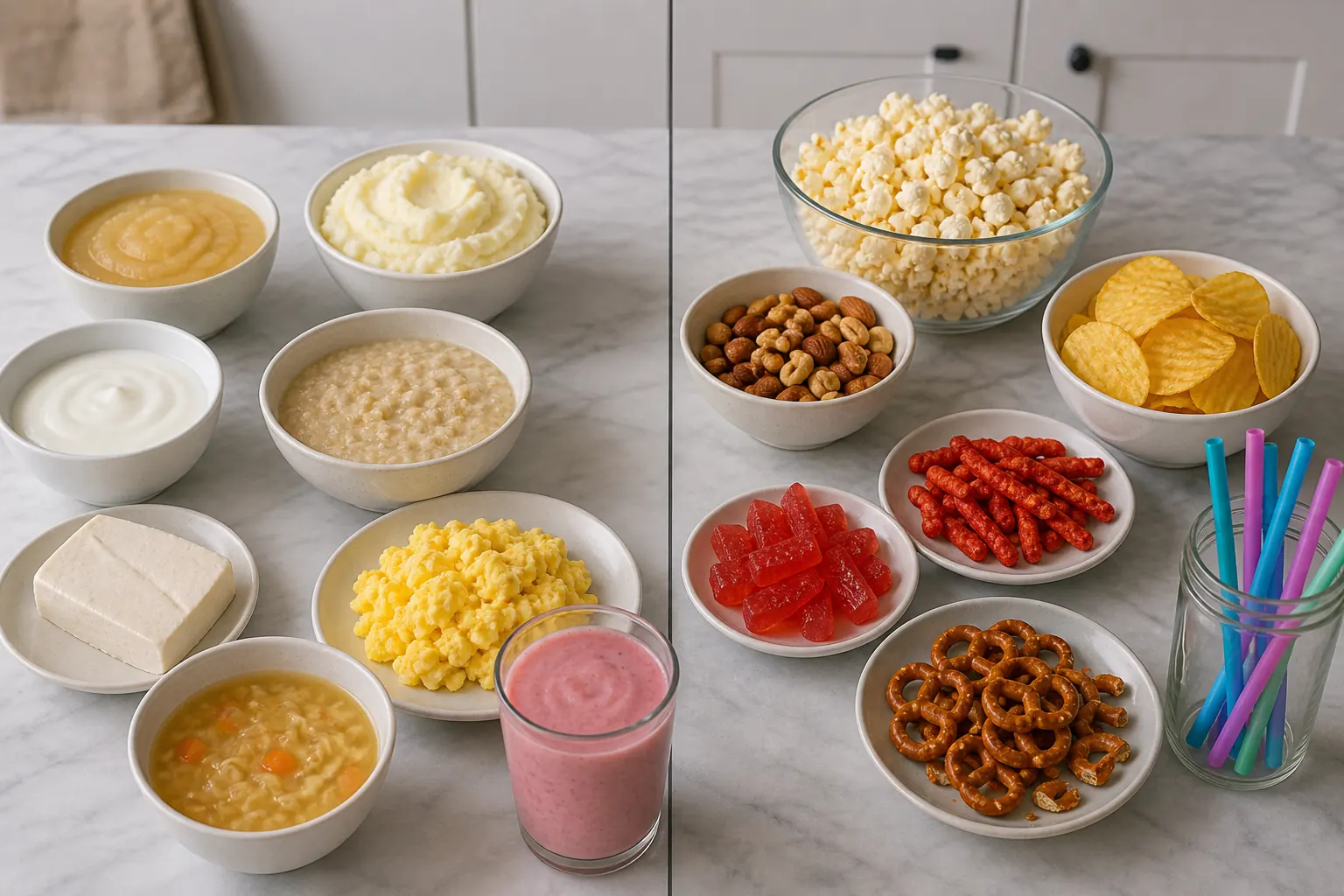
Eating After Extractions, Implants, and Grafts
Oral surgery requires the most careful progression. During the first day after an extraction, the goal is to protect the blood clot covering the socket. Choose cool or lukewarm foods that require little chewing: yogurt, applesauce, smooth mashed potatoes, soft eggs, or a blended smoothie eaten with a spoon. Avoid straws, smoking, vaping, forceful rinsing, and forceful spitting because suction or pressure can disturb the clot.
Over the next two to three days, many patients can add soft pasta, flaky fish, tender cooked vegetables, pancakes, and finely shredded meat if comfortable. Keep crumbs, popcorn, chips, nuts, seeds, and rice away from an open socket. Do not poke the site to remove food. Cleaning instructions vary by procedure and day of healing, so use only the rinse or irrigation method your dentist recommended.
Implant and graft sites need protection from chewing pressure while tissue begins to stabilize. A soft diet may be recommended for one to two weeks, and sometimes longer for more extensive surgery. Do not test the implant by biting on it. Protein-rich eggs, Greek yogurt, soft fish, tofu, beans blended into soup, and smooth nut butter can support a balanced diet without hard chewing. Learn more about the treatment itself on our dental implant page.
Build a Soft Diet That Still Supports Recovery
A week of ice cream and pudding may sound appealing, but healing benefits from protein, fluids, fiber, and micronutrients. Aim to include a protein source at meals, such as eggs, yogurt, soft fish, tofu, or pureed lentils. Add cooked or blended fruits and vegetables, and choose soft whole grains such as oatmeal. Sip water regularly from a cup unless your medical clinician has restricted fluids.
Smoothies can be useful, but use a spoon after extraction and skip berries or chia seeds that can lodge in a surgical site. Keep added sugar modest because frequent sugar exposure feeds cavity-causing bacteria. If diabetes, kidney disease, swallowing difficulty, food allergies, or another medical condition affects your diet, ask the appropriate clinician for tailored nutrition advice rather than relying on a generic meal list.
- Breakfast: cooled oatmeal with mashed banana and smooth yogurt
- Lunch: blended vegetable soup with soft tofu or pureed beans
- Dinner: flaky fish, mashed sweet potato, and very tender vegetables
- Snacks: applesauce, cottage cheese, avocado, or a seed-free smoothie eaten with a spoon
When to Stop Eating and Call the Dentist
Mild tenderness that gradually improves can be expected after many procedures. Stop chewing on the area and call if a filling or crown feels taller than the surrounding teeth, a temporary restoration moves, food repeatedly catches under it, or biting creates sharp pain. An early adjustment can prevent unnecessary strain.
After surgery, contact the office for bleeding that does not slow with the pressure method you were given, pain that becomes markedly worse after initially improving, increasing swelling after the expected early period, fever, pus, foul drainage, rash, medication reaction, or inability to drink enough fluid. Seek emergency medical care for trouble breathing or swallowing, rapidly spreading facial or neck swelling, fainting, or other severe systemic symptoms. Do not wait for the next meal to see whether those warning signs pass.
Recovery differs from person to person, so a calendar is less important than a steady trend toward less pain, less swelling, and easier eating. When uncertain, our Mineola or Plainview team can compare your symptoms with the exact procedure performed.
Frequently Asked Questions
How soon can I eat after a filling?
Follow your dentist's instructions because filling materials and procedures differ. In many cases the main restriction is waiting until numbness fully wears off, often one to three hours, so you do not bite your cheek or burn your mouth. Start with a soft, moderate-temperature meal and avoid hard or sticky foods if the tooth feels tender.
Can I drink through a straw after an extraction?
Usually no. Suction from a straw may disturb the blood clot that protects an extraction socket and increase the risk of dry socket. Drink from a cup and avoid forceful spitting for the period your dentist specifies, commonly at least the first several days. Follow your personalized post-operative instructions if they differ.
What can I eat after a crown is placed?
Wait until numbness is gone. With a temporary crown, avoid sticky candy, gum, ice, nuts, and very hard or chewy foods until the permanent crown is placed. After a permanent crown, begin with softer foods and return gradually to normal chewing unless your dentist gives a different restriction.
When should pain while eating concern me?
Call your dentist if pain is severe, worsening rather than improving, or accompanied by increasing swelling, fever, pus, a bad taste, uncontrolled bleeding, or difficulty swallowing. Also call if a new filling or crown feels high when you bite, a restoration becomes loose, or you cannot maintain hydration.
For procedure-specific food guidance or a concern during recovery, call Meadowbrook Dental Care at (516) 284-1234 (Mineola) or (516) 346-5757 (Plainview), or request a follow-up visit online.
Recover Comfortably After Dental Treatment
Questions about eating, healing, or a new symptom? Our Mineola and Plainview teams can review your procedure-specific instructions and arrange an evaluation when needed.