
Quick Answer
When a dentist recommends root canal therapy, the financial questions can feel almost as urgent as the tooth itself. Patients want to know the total price, what insurance may pay, whether a crown is separate, and whether delaying care will make the plan more expensive. This guide focuses on those practical decisions rather than repeating a symptom checklist.
If you are still wondering whether your symptoms could point to an infected or inflamed tooth, read our guide to signs you may need a root canal. A clinical exam and dental imaging are still required to diagnose the tooth. The information below is educational, not personal medical or financial advice, and fees can differ by provider and treatment plan.
What the Root Canal Fee Actually Covers
A root canal fee generally covers anesthesia, access to the inside of the tooth, removal of inflamed or infected pulp, cleaning and shaping of the canals, disinfection, filling the canal spaces, and sealing the access. Diagnostic imaging taken before, during, or after treatment may be bundled or billed separately. A consultation with an endodontist, if needed, can also be a separate charge.
The final restoration is a different phase of care. Many teeth need a core buildup to replace missing structure and a crown to protect the tooth during chewing. That is why an advertised root canal price may not match the complete cost of returning the tooth to function. Ask for a written estimate that identifies the root canal, buildup, crown, imaging, and any follow-up separately. It should also show which amounts are estimates from the insurance carrier rather than guaranteed payments.
Typical Root Canal Costs on Long Island
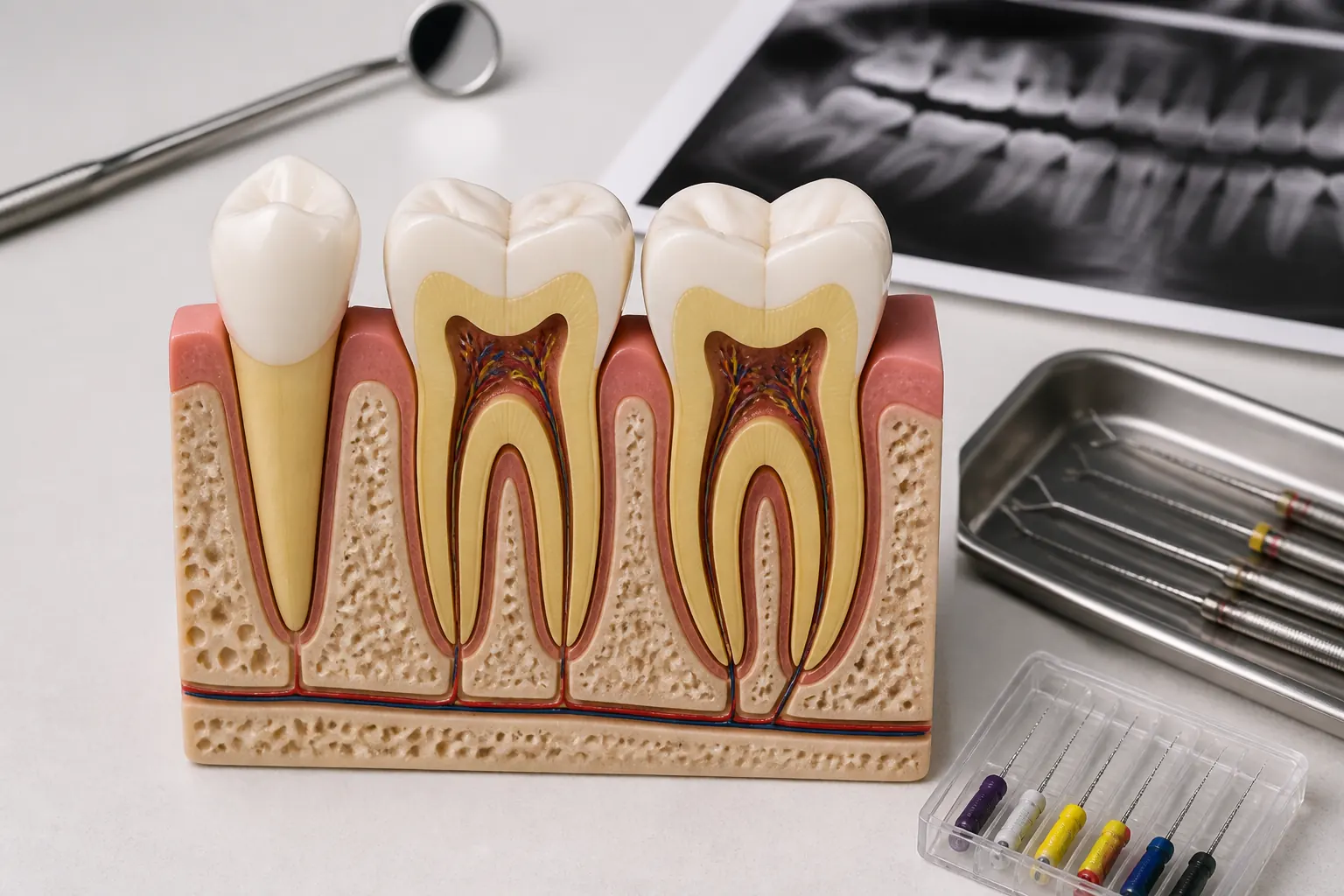
Tooth position is one of the clearest pricing factors. Front teeth usually have one canal, premolars often have one or two, and molars may have several with more complex anatomy. These broad Nassau County and Long Island ranges are useful for planning, but they are not a fee schedule.
| Service | Educational Range Before Insurance | Why It Varies |
|---|---|---|
| Front tooth root canal | $900 to $1,300 | Usually simpler canal anatomy |
| Premolar root canal | $1,000 to $1,500 | One or more canals |
| Molar root canal | $1,200 to $1,800 | Multiple canals and greater complexity |
| Core buildup | $250 to $500 | Amount of missing tooth structure |
| Crown | $1,200 to $2,000 | Material, design, and laboratory needs |
Disclaimer: These figures are educational estimates for the Long Island market and are not a quote. Your actual cost depends on the tooth, case complexity, required restoration, provider, and insurance benefits, all determined after a clinical exam and appropriate imaging.
Retreatment of a tooth that has already had root canal therapy, treatment through an existing crown, emergency visits, or unusually complex anatomy may fall outside these ranges. A lower fee is not automatically a better value if it excludes the restoration or follow-up needed to protect the tooth.
Why One Patient Pays More Than Another
Complexity matters beyond the number of canals. Curved or calcified canals can require more time and specialized instruments. A cracked tooth, an existing large restoration, limited access, or prior treatment can change both the procedure and prognosis. Some cases are appropriately handled by a general dentist; others benefit from referral to an endodontist, whose specialty fee may be higher.
Timing can also affect the overall bill. A tooth that is evaluated while it remains restorable may need planned root canal therapy and a crown. Waiting can lead to an urgent visit, greater loss of tooth structure, or a situation in which the tooth can no longer be predictably restored. However, treatment should never be selected from price alone. The dentist must assess whether saving the tooth is clinically reasonable and discuss alternatives, risks, and expected maintenance.
How Insurance Changes Your Out-of-Pocket Cost
Dental insurance commonly uses negotiated fees, deductibles, percentage coverage, annual maximums, and frequency limitations. For example, a plan may cover a percentage of an allowed fee after the deductible, but your remaining annual maximum could cap what it pays. The crown may be processed under a different benefit category from the root canal. Waiting periods, missing-tooth clauses, and network status can also matter.
Before care, request a benefit check through the practice's dental insurance support. Ask for the estimated allowed amount, deductible remaining, coinsurance, annual maximum remaining, and whether a crown needs preauthorization. Remember that a pre-treatment estimate is not a guarantee; the insurer makes its final decision after reviewing the claim.
Planning the Complete Cost Without Delaying Needed Care
Start by comparing complete treatment paths. For a restorable tooth, that may mean root canal therapy, buildup, and crown. For a tooth with a poor prognosis, the alternative may involve extraction and either leaving the space, using a removable option, placing a bridge, or planning an implant. Each path has different short-term costs, timelines, and maintenance.
If the patient portion is difficult to pay at once, ask whether treatment can be sequenced safely and review available financing options. Financing does not change the clinical need or total fee, so compare interest, term, and total repayment carefully. Facial swelling, fever, trouble swallowing, or rapidly worsening pain warrants prompt professional assessment rather than waiting for a benefits question to be resolved.
Frequently Asked Questions
How much does a root canal cost on Long Island without insurance?
An uncomplicated root canal commonly costs about $900 to $1,800 before insurance on Long Island, depending mainly on the tooth and case complexity. A crown, buildup, consultation, or imaging may be separate. Molars generally cost more because they have more canals to clean. An exam is necessary for an individualized written estimate.
Does dental insurance usually cover root canal treatment?
Many dental plans cover root canal therapy as a basic or major service, often subject to a deductible, coinsurance, waiting period, annual maximum, and network rules. Coverage is not the same as full payment. Ask the office to verify the specific tooth, procedure codes, remaining maximum, and expected patient portion before treatment.
Is the crown included in the root canal price?
Usually not. Root canal therapy treats the tissue inside the tooth, while a buildup and crown restore and protect the tooth afterward. Back teeth often need crowns because they carry substantial chewing force, but the final restoration depends on how much sound tooth remains. Your estimate should clearly separate these services.
Is extraction less expensive than a root canal?
Extraction may have a lower immediate fee, but it leaves a space that can affect chewing and neighboring teeth. Replacing the tooth with a bridge or implant can make the total cost higher than saving a restorable tooth. The right comparison includes diagnosis, prognosis, restoration, replacement needs, and long-term maintenance.
For a tooth-specific diagnosis and transparent estimate, call Meadowbrook Dental Care in Mineola at (516) 284-1234 or Meadowbrook Dentistry in Plainview at (516) 346-5757, or request an evaluation online. Our team can explain the procedure, restoration, insurance estimate, and payment choices before treatment begins.
Get a Clear Root Canal Estimate
Our Mineola and Plainview teams can evaluate the tooth, review your benefits, and explain the cost of treatment and restoration before you proceed.