
A toothache at 2 a.m. A child who trips and knocks a tooth loose at soccer practice. A swelling along your jaw that appeared out of nowhere. When something goes wrong with your teeth, the first question is always the same: is this a real dental emergency, or can it wait?
The answer matters more than you might think. True dental emergencies can lead to permanent tooth loss, spreading infection, or even hospitalization if treatment is delayed. On the other hand, some dental problems—while uncomfortable—are safe to manage at home for a day or two until you can get a regular appointment. Knowing the difference helps you act quickly when seconds count and avoid unnecessary panic when they don’t.
At Meadowbrook Dental Care, we treat dental emergencies every week at our Mineola and Plainview offices. Below is a practical guide to help Long Island residents determine what qualifies as a dental emergency, what first-aid steps to take, and when to head to the ER instead.
True Dental Emergencies: Act Immediately
These situations require professional care within minutes to hours. Delaying treatment significantly reduces the chance of saving the tooth or preventing a dangerous infection.
- Knocked-out (avulsed) permanent tooth. Time is critical. If the tooth is reimplanted within 30 minutes, survival rates can exceed 90%. After two hours outside the mouth, the prognosis drops dramatically. Handle the tooth by the crown only, rinse gently with milk or saline, and try to place it back in the socket. If that is not possible, store it in cold milk and get to our office immediately.
- Severe, unrelenting toothache with swelling. A throbbing toothache accompanied by facial swelling, fever, or a foul taste in the mouth often signals an abscess—a bacterial infection at the root of the tooth or in the gum tissue. Left untreated, the infection can spread to the jaw, neck, or even the brain. Antibiotics and drainage are typically needed the same day.
- Uncontrolled oral bleeding. Bleeding that does not stop after 15–20 minutes of firm pressure with gauze—whether from an extraction site, trauma, or gum injury—needs professional evaluation. Persistent bleeding may indicate a torn blood vessel or a clotting issue that requires intervention.
- Broken or dislocated jaw. If you suspect a jaw fracture (severe pain, inability to open or close the mouth, misaligned bite after trauma), go directly to the nearest emergency room. Jaw fractures require imaging and stabilization that goes beyond what a dental office can provide.
- Cracked tooth with exposed nerve. A crack that extends into the pulp chamber causes intense, sharp pain—especially with temperature changes. The exposed nerve tissue is vulnerable to bacterial invasion, making same-day treatment essential to prevent irreversible damage.
- Swelling spreading toward the eye, throat, or neck. This indicates a rapidly progressing infection. If swelling is causing difficulty breathing, swallowing, or opening the mouth (trismus), go to the emergency room immediately—this is a life-threatening situation.
Urgent but Can Wait 24–48 Hours
The following situations are uncomfortable and need attention soon, but they are unlikely to cause permanent damage if treated within a day or two. Call our office to schedule the earliest available appointment.
- Lost filling or crown. The tooth may feel sensitive to air and temperature, but the underlying structure is usually stable for a short period. Apply a small amount of over-the-counter dental cement or sugar-free gum to protect the exposed surface until your visit.
- Chipped tooth without pain. A small cosmetic chip that does not cause pain or expose the inner layers of the tooth can safely wait for a scheduled appointment. Avoid chewing on that side and cover any sharp edges with dental wax. Read more in our guide on what to do when you chip or break a tooth.
- Minor toothache without swelling. Dull, intermittent pain without visible swelling or fever may indicate early decay, a cracked filling, or gum irritation. Take over-the-counter pain relief as directed and schedule an exam within 24–48 hours.
- Broken orthodontic wire or bracket. A poking wire can be covered with orthodontic wax and trimmed carefully with clean nail clippers if necessary. Contact your orthodontist or our office during normal business hours.
- Object stuck between teeth. Try gentle flossing first. If you cannot remove the object, do not force it with sharp instruments—call for an appointment.
Emergency Reference: Type, Severity, and First Aid
Use this table as a quick reference when a dental problem strikes. It covers the most common scenarios Nassau County residents call us about.
| Emergency Type | Severity | First Aid Step | Time Window |
|---|---|---|---|
| Knocked-out tooth | Critical | Reimplant or store in milk; avoid touching root | Under 30 minutes ideal |
| Abscess / facial swelling | High | Rinse with warm salt water; do not pop or squeeze | Same day |
| Uncontrolled bleeding | High | Firm pressure with damp gauze for 15–20 min | Same day |
| Cracked tooth with pain | High | Cold compress; avoid chewing on that side | Same day |
| Lost crown or filling | Moderate | Dental cement or sugar-free gum over exposed area | 24–48 hours |
| Minor chip (no pain) | Low | Dental wax on sharp edges; soft diet | 48–72 hours |
| Broken jaw (suspected) | Critical | Stabilize jaw; go to ER immediately | Immediate / ER |
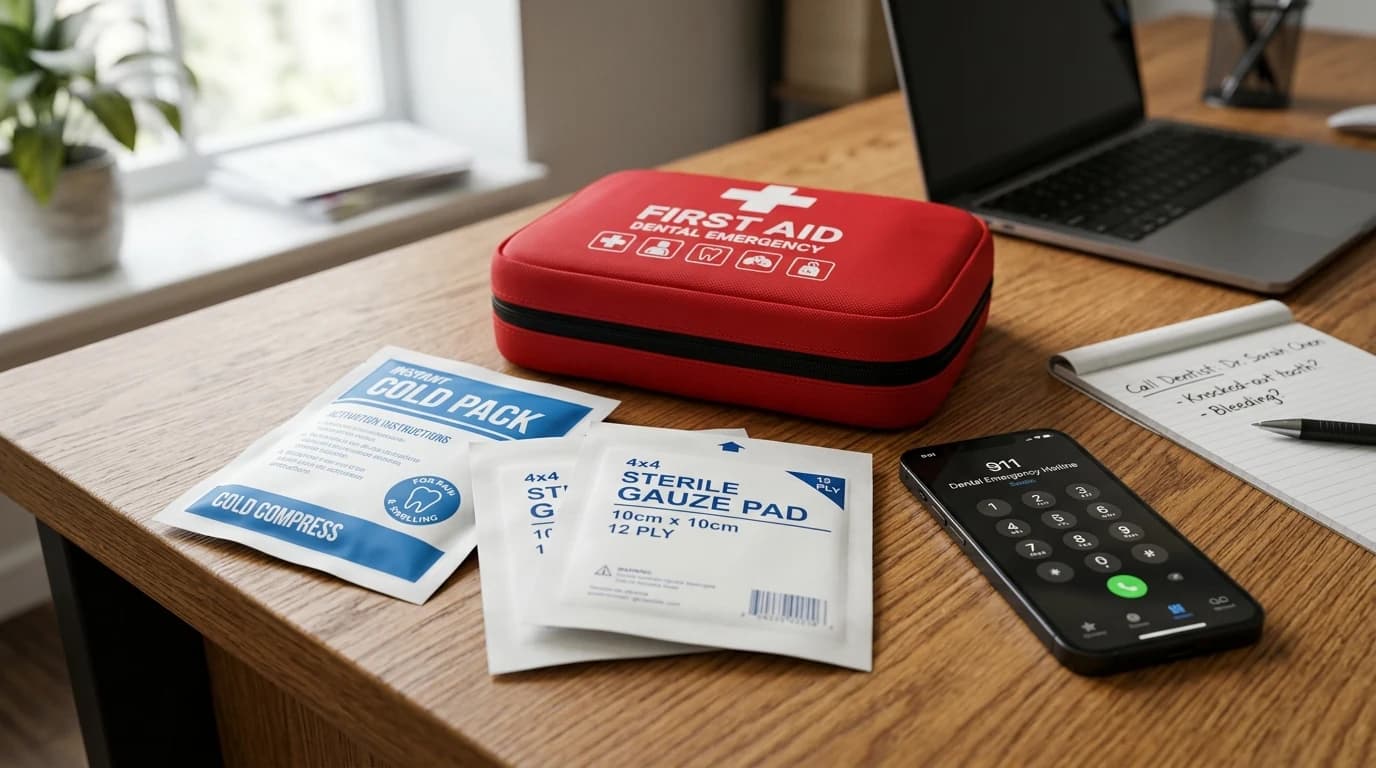
When to Go to the ER vs. Your Dentist
Emergency rooms are equipped for medical crises, but most ERs do not have dentists on staff. An ER visit for a toothache typically results in antibiotics, pain medication, and a referral to a dentist—but no definitive dental treatment. That said, certain situations absolutely warrant an ER visit:
- Suspected broken jaw or facial bone fractures
- Swelling that is affecting your ability to breathe or swallow
- Heavy, uncontrollable bleeding from the mouth
- Dental trauma accompanied by head injury or loss of consciousness
- High fever (over 101°F) with facial swelling
For all other dental emergencies—including severe toothaches, knocked-out teeth, cracked teeth, and abscesses without airway compromise—your dentist is the better choice. We have the imaging, instruments, and expertise to actually fix the problem, not just manage symptoms. At Meadowbrook Dental Care, we reserve same-day slots specifically for emergencies across both our Long Island locations.
What to Expect During an Emergency Visit at Meadowbrook
When you call our Mineola or Plainview office with an urgent issue, here is what happens:
- Phone triage. Our team asks targeted questions about your symptoms to determine urgency and give you immediate first-aid instructions while you are on the way.
- Rapid intake and imaging. We take digital X-rays or a 3D cone-beam scan as needed to assess the extent of damage or infection. Digital imaging is faster and uses less radiation than traditional film.
- Pain management. Getting you out of pain is the first priority. Depending on the situation, this may include local anesthesia, nerve blocks, or sedation options for anxious patients.
- Stabilization and treatment. We address the immediate threat—draining an abscess, splinting a loose tooth, placing a temporary crown, or performing an emergency extraction. The goal is to resolve the acute problem and prevent it from getting worse.
- Follow-up plan. Before you leave, we outline the next steps—whether that means returning for a permanent restoration, starting root canal therapy, or monitoring healing. You will never leave without knowing what comes next.
Cost Considerations for Emergency Dental Care
Emergency dental visits on Long Island typically range from $150 to $350 for the exam and imaging, depending on whether a standard X-ray or a 3D scan is needed. Treatment costs vary based on what the problem requires: a simple temporary filling may cost $100–$250, while an emergency extraction can range from $200–$600. Root canal therapy, if needed, generally runs $800–$1,500 depending on the tooth.
Most dental PPO plans cover emergency exams and a portion of treatment. If you are not sure about your coverage, our team can verify your benefits before treatment begins. We also offer flexible payment and financing options so that cost is never a reason to delay care that could save your tooth.
Disclaimer: The cost ranges above are approximate estimates for the Nassau County area and may vary based on the complexity of treatment, materials used, and your individual insurance coverage. A specific treatment plan with pricing is provided after examination.
Frequently Asked Questions
Is a toothache considered a dental emergency?
It depends on severity. A mild, intermittent ache without swelling can usually wait 24–48 hours for a scheduled appointment. However, a severe, throbbing toothache that disrupts sleep, is accompanied by swelling or fever, or does not respond to over-the-counter pain medication should be treated the same day. When in doubt, call us—we can help you assess the situation over the phone.
What should I do if my child knocks out a baby tooth?
Baby teeth should not be reimplanted because doing so can damage the developing permanent tooth underneath. Control any bleeding with gentle gauze pressure, apply a cold compress to reduce swelling, and call our office. We will want to examine the area to make sure the permanent tooth bud was not injured and that no tooth fragments remain in the gum tissue.
Can I go to urgent care for a dental emergency?
Walk-in urgent care clinics can prescribe antibiotics or pain medication, but they typically cannot perform dental procedures. For anything beyond temporary symptom relief, you need a dental office with imaging equipment and the ability to do restorative or surgical work. A same-day appointment with Meadowbrook Dental Care is almost always the faster, more effective option.
Does dental insurance cover emergency visits?
Most dental PPO plans cover the emergency exam and diagnostic imaging at 80–100%. Coverage for treatment (fillings, extractions, root canals) varies by plan but typically falls under basic or major services with 50–80% coverage after your deductible. We verify benefits before starting treatment so you understand your out-of-pocket costs upfront.
How can I prevent dental emergencies?
Regular checkups catch small problems before they become emergencies. Wearing a custom mouthguard during contact sports and a night guard if you grind your teeth protects against fractures and cracks. Avoid chewing ice, hard candy, and non-food objects like pen caps—these are some of the most common causes of cracked teeth that we see at our Nassau County offices.
If you are experiencing a dental emergency on Long Island, do not wait. Call Meadowbrook Dental Care at (516) 284-1234 (Mineola) or (516) 346-5757 (Plainview) for same-day care, or request an appointment online.
Don't Wait When It Hurts—Call Now
Meadowbrook Dental Care offers same-day emergency appointments at our Mineola and Plainview offices. Pain, swelling, or trauma should never wait.