A brighter smile is one of the most commonly requested cosmetic improvements—and one of the most accessible. But with dozens of over-the-counter whitening products lining pharmacy shelves, many patients wonder whether professional teeth whitening is actually worth the difference in cost. The short answer: for most people, yes—and the reasons go beyond just getting a whiter shade faster.
This guide explains why professional whitening delivers better, safer, and longer-lasting results than drugstore alternatives, what types of professional whitening are available, what it costs in the Nassau County and Long Island area, who should and should not whiten, and how to maintain your results once you have them.
Why Professional Whitening Outperforms OTC Products
Over-the-counter whitening strips, paint-on gels, and one-size-fits-all trays are not inherently bad products—they simply have limitations that professional treatment does not share. Here is what sets clinical whitening apart:
- Higher-concentration formulas: Professional whitening gels use hydrogen peroxide or carbamide peroxide at concentrations between 15% and 40%, compared to 3–10% in most OTC products. Higher concentration means deeper stain removal and more dramatic results in fewer sessions.
- Custom-fitted delivery: Professional take-home trays are fabricated from impressions of your teeth, ensuring even gel distribution and full coverage. OTC strips leave gaps and miss interproximal surfaces (the spaces between teeth), leading to uneven results.
- Gum and soft tissue protection: In-office whitening includes a protective barrier applied to the gums before the gel is placed. This prevents the chemical burns and irritation that can occur when OTC strips contact gum tissue—a common complaint.
- Pre-whitening screening: Before any professional whitening, your dentist examines for cavities, cracks, exposed roots, and gum disease. Whitening teeth that have untreated decay or fractures can cause significant pain and damage. OTC products come with no clinical screening at all.
- Faster, more predictable results: In-office whitening can lighten teeth by 2–8 shades in a single 60–90 minute session. OTC strips typically produce 1–2 shades of improvement over 2–4 weeks of daily use.
Types of Professional Whitening
Professional whitening is not one-size-fits-all. Depending on your goals, sensitivity level, and schedule, your dentist may recommend one of two approaches—or a combination of both for optimal results.
In-Office Whitening
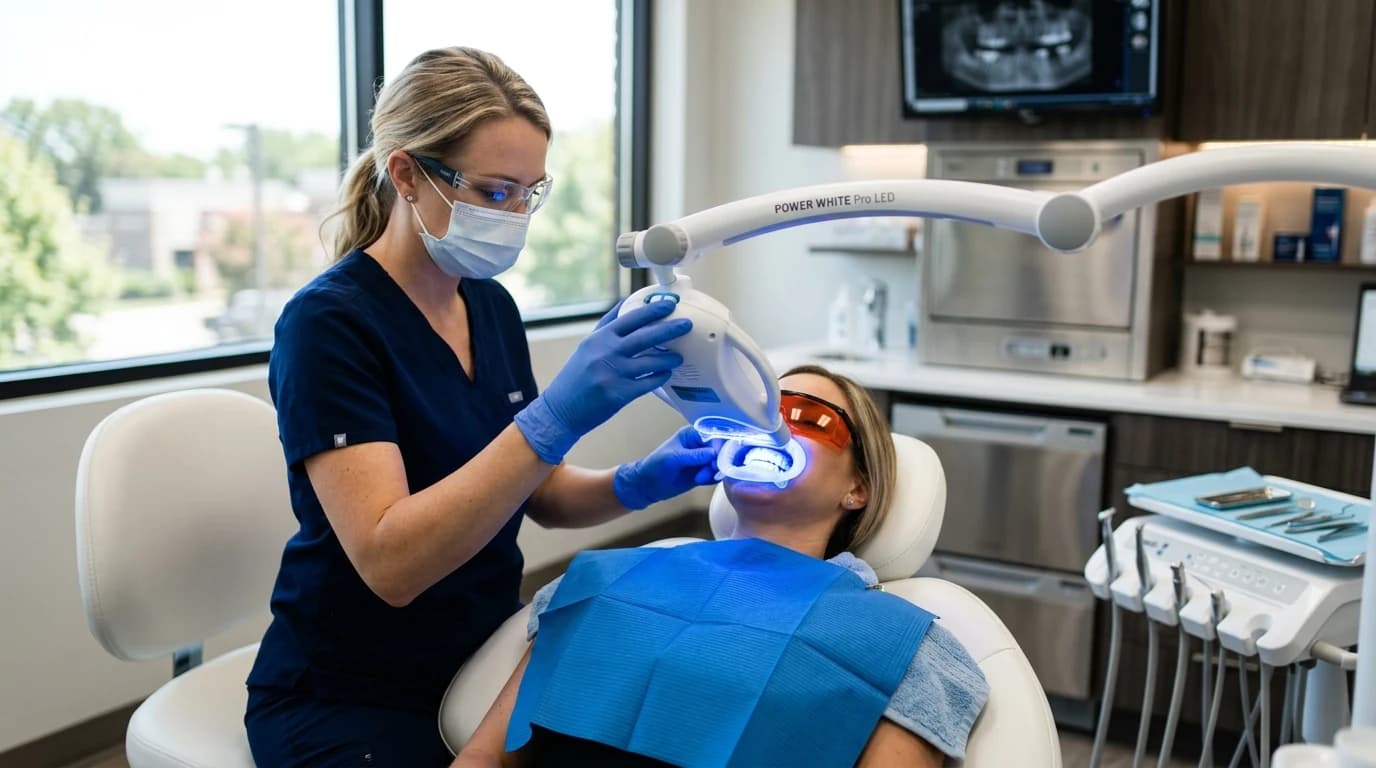
This is the fastest option. A high-concentration gel is applied to your teeth in the dental chair while your gums are protected with a barrier. The gel is activated for 15–20 minute intervals, usually repeated 2–3 times in a single session. You walk out with immediately visible results. In-office whitening is ideal for patients who want dramatic improvement before an event or simply prefer a single appointment over daily maintenance.
Professional Take-Home Trays
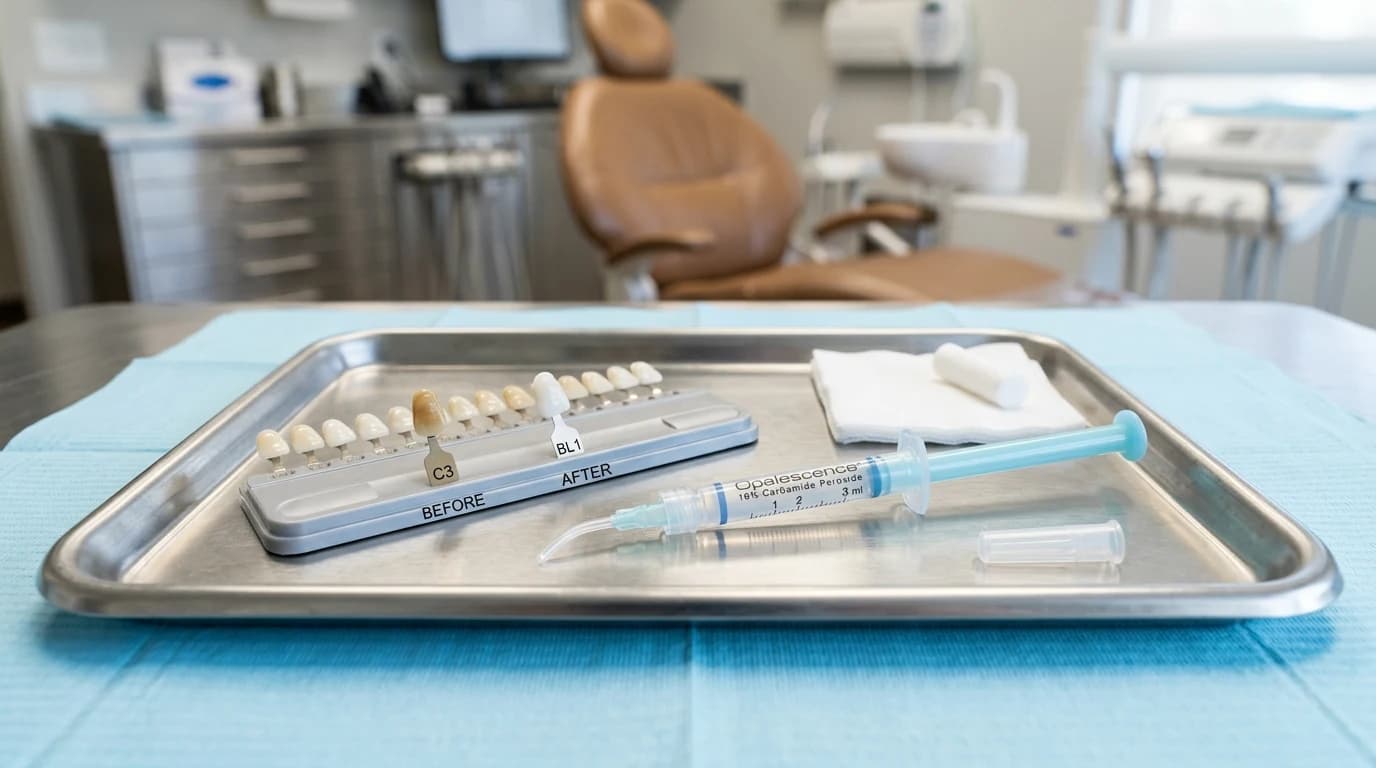
Your dentist creates custom trays from impressions of your teeth and provides professional-grade gel (typically 10–22% carbamide peroxide). You wear the trays for 30–60 minutes daily (or overnight, depending on the formula) for 1–3 weeks. Take-home trays offer more gradual improvement with excellent control over sensitivity. Many patients appreciate having the trays on hand for periodic touch-ups over the following months and years.
Professional vs. OTC Whitening: Side-by-Side Comparison
The table below compares the three most common whitening approaches across the criteria that matter most. Use it to understand the trade-offs before your consultation.
| Criteria | Professional In-Office | Professional Take-Home Trays | OTC Strips/Trays |
|---|---|---|---|
| Active ingredient strength | 25–40% hydrogen peroxide | 10–22% carbamide peroxide | 3–10% hydrogen peroxide |
| Shade improvement | 2–8 shades in 1 session | 2–6 shades over 1–3 weeks | 1–2 shades over 2–4 weeks |
| Treatment time | 60–90 minutes (1 visit) | 30–60 min/day for 1–3 weeks | 30 min/day for 2–4 weeks |
| Custom fit | Yes—applied directly by dentist | Yes—trays molded to your teeth | No—generic strip/tray shape |
| Gum protection | Yes—barrier applied before gel | Yes—custom tray edges stop at gum line | No—strips often contact gums |
| Dental screening included | Yes | Yes | No |
| Cost (Long Island) | $400–$800 | $300–$500 | $20–$50 |
| Longevity | 1–3 years with maintenance | 1–3 years with touch-ups | 3–6 months |
Disclaimer: Cost ranges are educational estimates for the Nassau County area. Your actual cost depends on the whitening system used and the number of sessions needed. Some sensitivity during or after whitening is common and usually temporary.
Who Should Not Whiten Their Teeth
While whitening is safe for the vast majority of adults, it is not appropriate for everyone. Your dentist may recommend delaying or skipping whitening if you have:
- Untreated cavities or cracks: Whitening gel can penetrate into decay or fracture lines, reaching the nerve and causing severe sensitivity or pain.
- Active gum disease: Inflamed or receding gums expose root surfaces, which do not respond to whitening the same way enamel does and can become painfully sensitive.
- Extensive existing restorations: Crowns, veneers, bonding, and fillings do not change color with whitening gel. If your visible teeth include significant restorations, whitening the natural teeth may create a mismatched appearance. In these cases, replacing restorations to match your new shade—or choosing veneers instead—may be a better path.
- Severe intrinsic staining: Discoloration caused by tetracycline antibiotics, fluorosis, or developmental enamel defects may not respond well to peroxide-based whitening. Veneers or bonding often produce more predictable results for these patients.
- Pregnancy or nursing: While no evidence demonstrates harm, most dentists recommend postponing elective whitening during pregnancy and breastfeeding as a precaution.
How to Maintain Your Whitening Results
Professional whitening is not permanent, but with the right habits you can keep your smile bright for 1–3 years or longer before needing a touch-up. Here is what works:
- Limit staining foods and beverages: Coffee, red wine, tea, berries, soy sauce, and tomato-based sauces are the most common culprits. You do not have to eliminate them—just rinse with water afterward and brush within 30 minutes when possible.
- Avoid tobacco: Smoking and chewing tobacco cause some of the most stubborn staining. Quitting produces both oral health and aesthetic benefits that far outlast any whitening treatment.
- Use a whitening toothpaste: A gentle whitening toothpaste with the ADA Seal of Acceptance can help maintain shade between professional treatments without damaging enamel.
- Touch up with your professional trays: If you received custom take-home trays, a 1–2 night touch-up session every 3–6 months keeps your smile consistently bright at minimal cost.
- Keep up with dental cleanings: Professional cleanings at Meadowbrook Dental Care remove surface stain buildup that daily brushing misses. Most patients benefit from cleanings every six months.
Whitening as Part of a Larger Cosmetic Plan
Many patients choose whitening as the first step in a broader cosmetic treatment plan. Brightening your natural teeth first establishes a baseline shade that your dentist can match when fabricating veneers, bonding, or crowns. This sequence produces the most harmonious result—all your teeth, both natural and restored, share the same shade.
If you are considering combining whitening with other procedures, read our guide to cosmetic dentistry trends in 2026 to understand how treatments are sequenced for the best outcome.
Frequently Asked Questions
How long does professional teeth whitening last?
Results typically last 1–3 years depending on your diet, oral hygiene habits, and whether you smoke or use tobacco. Patients who avoid heavy staining and use custom take-home trays for periodic touch-ups maintain their shade the longest. Even without touch-ups, professional results last significantly longer than OTC products, which tend to fade within 3–6 months.
Does teeth whitening damage enamel?
When performed under dental supervision with appropriate products, whitening does not damage enamel. Professional-grade gels are pH-balanced and formulated to minimize enamel demineralization. The risk increases with unsupervised overuse of high-concentration products or abrasive charcoal-based products sold online—another reason professional guidance matters.
Can I whiten teeth with crowns or veneers?
Whitening gel only affects natural tooth structure—it will not change the color of porcelain, ceramic, or composite restorations. If you whiten your natural teeth, existing restorations may appear darker by comparison. Your dentist can discuss options for replacing visible restorations to match your new shade, or you may choose to whiten to the shade of your existing restorations for a uniform look.
Is whitening sensitivity normal?
Mild to moderate sensitivity during and for 24–48 hours after whitening is normal and temporary. Professional protocols include desensitizing agents applied before, during, or after treatment to minimize discomfort. If you have a history of sensitive teeth, your dentist can adjust the concentration and duration to keep the experience comfortable.
How much does professional whitening cost on Long Island?
In-office professional whitening in the Nassau County area typically ranges from $400 to $800 per session. Professional take-home tray kits range from $300 to $500. These prices are higher than the $20–$50 cost of OTC strips, but the results are dramatically more effective, more even, and longer-lasting—making professional whitening a better value per shade of improvement.
Ready to see what professional whitening can do for your smile? Call Meadowbrook Dental Care at (516) 284-1234 (Mineola) or (516) 346-5757 (Plainview), or schedule online to book your whitening appointment.
Brighten Your Smile Safely and Effectively
Skip the guesswork of drugstore strips. Meadowbrook Dental Care offers professional whitening with custom trays, gum protection, and results you can see in one visit—at our Mineola or Plainview office.