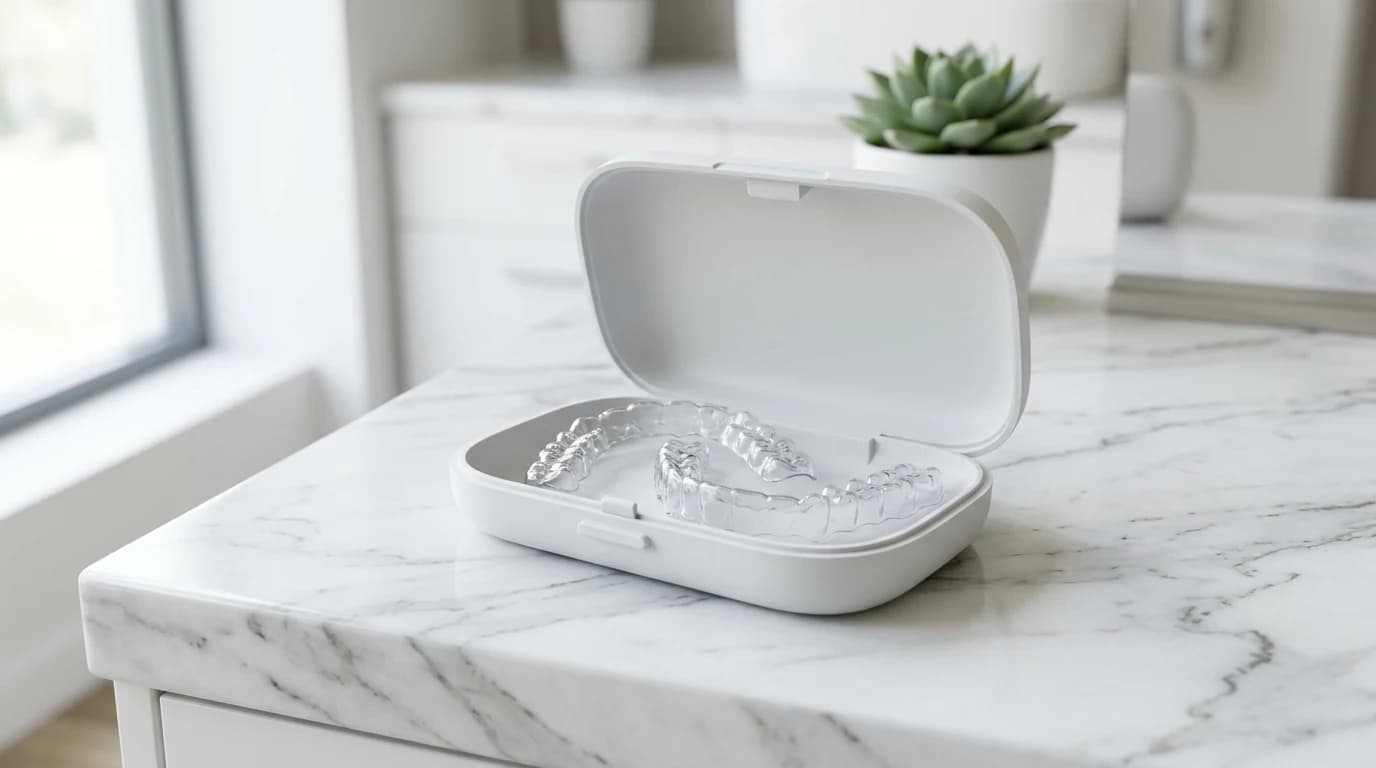
Invisalign clear aligners have transformed the way millions of adults and teens straighten their teeth, but popularity alone does not make them the right choice for every patient. If you are considering orthodontic treatment on Long Island, you deserve a balanced, fact-based look at what Invisalign does well—and where it falls short—so you can make a confident decision.
At Meadowbrook Dental Care in Mineola and Plainview, we have treated hundreds of clear aligner cases across Nassau County. This guide covers the real advantages, the honest drawbacks, how Invisalign compares to traditional braces, what treatment looks like from start to finish, and what it costs in the Long Island market in 2026.
Advantages of Invisalign
Invisalign has earned its reputation for good reasons. Here are the benefits that matter most to our patients:
- Nearly invisible appearance: The clear, medical-grade thermoplastic trays are difficult to spot at conversational distance. For working professionals, public speakers, and adults who feel self-conscious about metal brackets, this is often the deciding factor.
- Removable for eating and hygiene: Unlike fixed braces, you take aligners out before meals and when brushing and flossing. There are no food restrictions—steak, popcorn, apples, and everything in between are still on the menu.
- Greater comfort: Smooth plastic edges eliminate the wire pokes and bracket irritation common with traditional braces. You will still feel pressure when switching to a new tray (that means teeth are moving), but most patients describe it as mild tightness rather than pain.
- Shorter average treatment time: Many Invisalign cases finish in 6–18 months, compared to 18–36 months for traditional braces. Simple crowding or spacing cases can wrap up in as few as 6 months.
- Fewer office visits: Aligner switches happen at home every 1–2 weeks, so check-up appointments are typically scheduled every 6–8 weeks rather than every 3–4 weeks for wire adjustments.
- Digital Smile Design preview: Before you commit, Meadowbrook's Digital Smile Design technology lets you see a 3D simulation of your projected results. You know what to expect before the first tray is fabricated.
Drawbacks and Limitations
No orthodontic system is perfect. Being upfront about limitations helps you set realistic expectations:
- Compliance is non-negotiable: Aligners must be worn 20–22 hours per day to stay on schedule. If you frequently forget to put them back in after meals, treatment will stall. Patients who struggle with self-discipline may get better results with fixed braces that work around the clock.
- Not ideal for every case: Severe skeletal discrepancies, complex rotations, significant open bites, and certain vertical bite problems may require traditional braces, surgical orthodontics, or a hybrid approach. Invisalign has expanded its capabilities dramatically, but it has limits.
- Attachments reduce invisibility: Many cases require small tooth-colored composite bumps (attachments) bonded to teeth to give the aligner extra grip. While they are far less noticeable than brackets, they mean treatment is not completely invisible.
- Risk of loss or damage: Because aligners are removable, they can be lost, thrown away accidentally (wrapped in a napkin at a restaurant is the classic story), or damaged by pets. Replacement trays cost time and money.
- Temporary speech adjustment: A slight lisp during the first few days with new trays is common. It resolves quickly as your tongue adapts, but it catches some patients off guard.
Invisalign vs. Traditional Braces
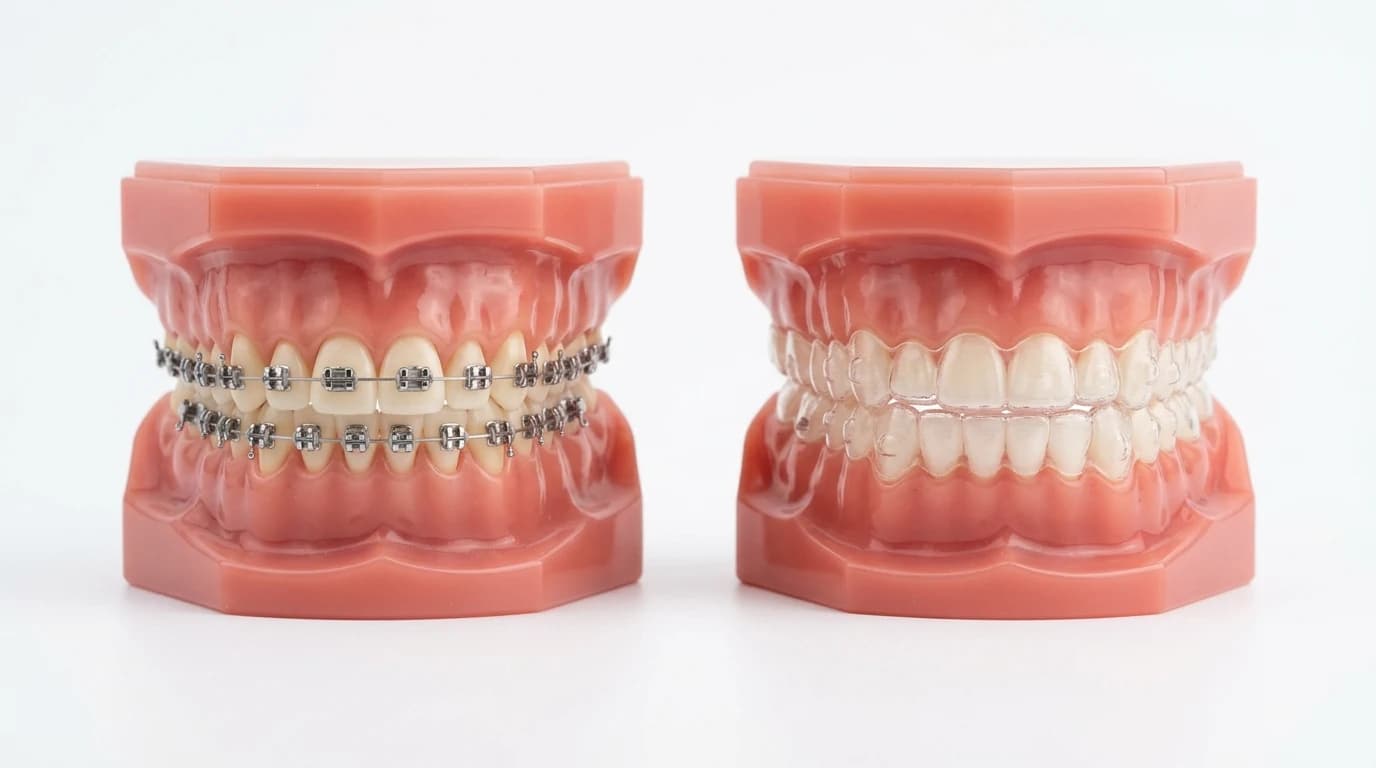
The table below compares clear aligners and conventional metal braces across the criteria that matter most. Use it as a starting point—your dentist will recommend the best option based on your specific bite and goals.
| Criteria | Invisalign | Traditional Braces |
|---|---|---|
| Appearance | Nearly invisible clear trays | Visible metal or ceramic brackets and wires |
| Removability | Removable for eating and brushing | Fixed for the entire treatment |
| Comfort | Smooth plastic; mild pressure with new trays | Wires and brackets can irritate cheeks and lips |
| Average treatment time | 6–18 months (mild to moderate cases) | 18–36 months |
| Office visits | Every 6–8 weeks | Every 3–4 weeks |
| Food restrictions | None—remove trays to eat | Avoid hard, sticky, and crunchy foods |
| Best for | Mild to moderate crowding, spacing, and bite issues | Complex cases, severe rotation, skeletal issues |
| Cost on Long Island | $3,300–$7,000+ | $4,000–$8,000+ |
Who Is (and Is Not) a Good Candidate?
Invisalign works best for patients with mild to moderate orthodontic concerns—crowding, spacing, overbite, underbite, crossbite, and open bite in many configurations. Teens and adults alike can benefit, and Invisalign Teen includes compliance indicators and replacement trays for younger patients.
You may not be an ideal candidate if you have severe skeletal jaw misalignment, need significant tooth rotation (more than 20 degrees), require vertical repositioning of teeth, or have active gum disease that needs to be treated first. A comprehensive exam with digital X-rays and an intraoral scan is the only reliable way to determine candidacy—online quizzes and mail-order assessments cannot evaluate root position, bone health, or bite function.
What Does Treatment Look Like?
Understanding the process helps reduce anxiety and set expectations. Here is a typical Invisalign timeline at Meadowbrook Dental Care:
- Consultation and scan (visit 1): Your dentist evaluates your bite, takes digital impressions with an intraoral scanner, and captures X-rays. If you are a candidate, a 3D treatment simulation is created.
- Treatment plan review (visit 2): You review the projected outcome on screen, ask questions, and approve the plan. Custom trays are fabricated and typically arrive within 2–3 weeks.
- Aligner delivery: Attachments are bonded if needed, and you receive your first set of trays along with instructions. Each tray is worn for 1–2 weeks before advancing to the next.
- Progress check-ins: Every 6–8 weeks your dentist checks tracking, adjusts attachments if necessary, and distributes the next batch of trays.
- Refinement (if needed): Some cases require a short round of additional trays to fine-tune results. This is normal and included in most treatment plans.
- Retainers: After active treatment, you wear retainers to keep teeth in their new positions—typically full-time for a few months, then nightly long-term.
Invisalign Cost on Long Island
At Meadowbrook Dental Care, Invisalign starts at $3,300 with $0 down. Total cost depends on case complexity, the number of trays needed, and whether refinement rounds are required. More complex cases involving significant bite correction can reach $5,000–$7,000 or more.
Many dental insurance plans cover Invisalign the same way they cover traditional braces—typically contributing $1,000–$2,500 toward treatment. We also offer flexible financing with 0% interest options so you can spread payments over 12–24 months without financial strain. HSA and FSA funds can be applied as well.
Disclaimer: Pricing reflects starting costs at Meadowbrook Dental Care and may vary based on clinical complexity. Insurance coverage depends on your specific plan. A personalized quote requires an in-office evaluation.
Frequently Asked Questions
Does Invisalign hurt?
Most patients experience mild pressure or tightness for the first day or two after switching to a new tray. This is a sign that teeth are moving as planned. The discomfort is generally less intense than what patients report after traditional braces adjustments, and over-the-counter pain relievers handle it effectively.
Can I drink coffee with Invisalign in?
You should remove your aligners before drinking anything other than plain water. Hot beverages can warp the plastic, and coffee, tea, and wine will stain the trays. The good news: since you can take them out, you never have to give up your favorite drinks—just pop the trays out, enjoy your coffee, brush or rinse, and put them back in.
How often do I need to visit the dentist during treatment?
Typically every 6–8 weeks for a quick progress check. These appointments are shorter than traditional braces adjustments—usually 15–20 minutes—because there are no wires to tighten. Your dentist verifies that teeth are tracking correctly and provides the next sets of trays.
What happens if I lose an aligner tray?
Contact your dentist right away. Depending on where you are in the sequence, you may move to the next tray early or go back to the previous tray while a replacement is ordered. Replacement trays are usually available within 1–2 weeks. To prevent loss, always store aligners in their case—never in a napkin or loose in a bag.
Is Invisalign faster than braces?
For comparable cases, Invisalign often finishes several months sooner. Simple spacing or crowding may resolve in 6–9 months with aligners versus 12–18 months with braces. However, complex cases that truly require braces will not finish faster with aligners—they may not even be treatable with aligners alone. Treatment speed depends on the specific movements needed, not just the appliance type.
Ready to find out if Invisalign is right for your smile? Call Meadowbrook Dental Care at (516) 284-1234 (Mineola) or (516) 346-5757 (Plainview), or schedule online to book your free Invisalign evaluation.
Find Out If Invisalign Is Right for You
Our Invisalign-certified team uses digital scanning and bite analysis to give you an honest recommendation—no pressure, no hype. Book a free evaluation at our Mineola or Plainview office.