Quick Answer
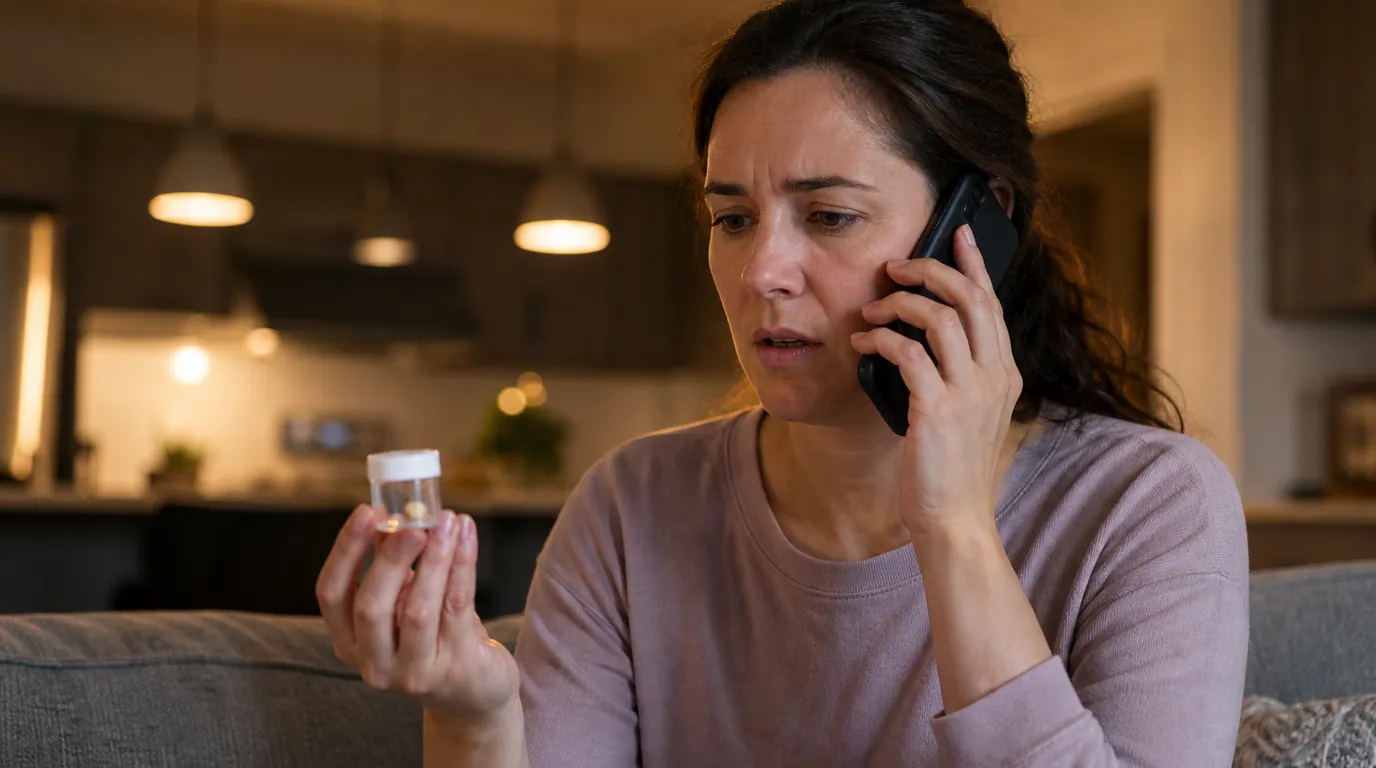
Feeling a restoration come loose during dinner can be unsettling, especially when dental offices are closed. The exposed tooth may feel rough, sensitive, or surprisingly normal. Either way, losing a crown or filling does not mean you failed at caring for your teeth, and it does not automatically mean the tooth is lost. Restorations can loosen because of wear, decay, grinding, or an unexpected bite on hard food.
The goal tonight is simple: protect the tooth, avoid unsafe home fixes, and recognize the uncommon signs that should not wait. Patients across Long Island can use the steps below until they reach a dentist for an examination. This article is general education, not a diagnosis for a particular tooth.
First, Decide Whether It Can Wait Until Morning
A lost restoration deserves a prompt call, but it is not always a middle-of-the-night emergency. Mild sensitivity, a small hole where a filling was, or an intact crown in your hand can usually be protected overnight. The tooth still needs evaluation because exposed structure can break and the reason for the failure is not visible at home.
Go to an emergency room or call 911 for difficulty breathing or swallowing, swelling that is spreading toward the eye or neck, uncontrolled bleeding, or a significant injury to the face or jaw. Fever with facial swelling also needs urgent assessment. For severe dental pain, a visibly broken tooth, or swelling that is limited but worsening, contact an emergency dentistry provider as soon as possible for triage.
What to Do Tonight, Step by Step
| Step | What to Do | What to Avoid |
|---|---|---|
| 1. Find and save it | Pick up the crown or fragments and place them in a clean container | Do not scrub, boil, bleach, or discard them |
| 2. Rinse gently | Use lukewarm water to clear food from your mouth | Do not probe the hole with a pin or sharp tool |
| 3. Protect the area | Use dental wax or pharmacy temporary material as directed | Never use superglue, craft glue, or nail products |
| 4. Change how you eat | Choose soft, room-temperature foods and chew elsewhere | Avoid sticky, hard, very hot, cold, or sugary foods |
| 5. Arrange care | Call when the dental office opens and describe your symptoms | Do not postpone simply because pain stops |
Brush gently around the tooth with a soft toothbrush. Floss nearby contacts carefully, pulling the floss out through the side rather than snapping it upward against a loose edge. If the tooth is sensitive, lukewarm water is often more comfortable than very cold water.
If a Crown Fell Out
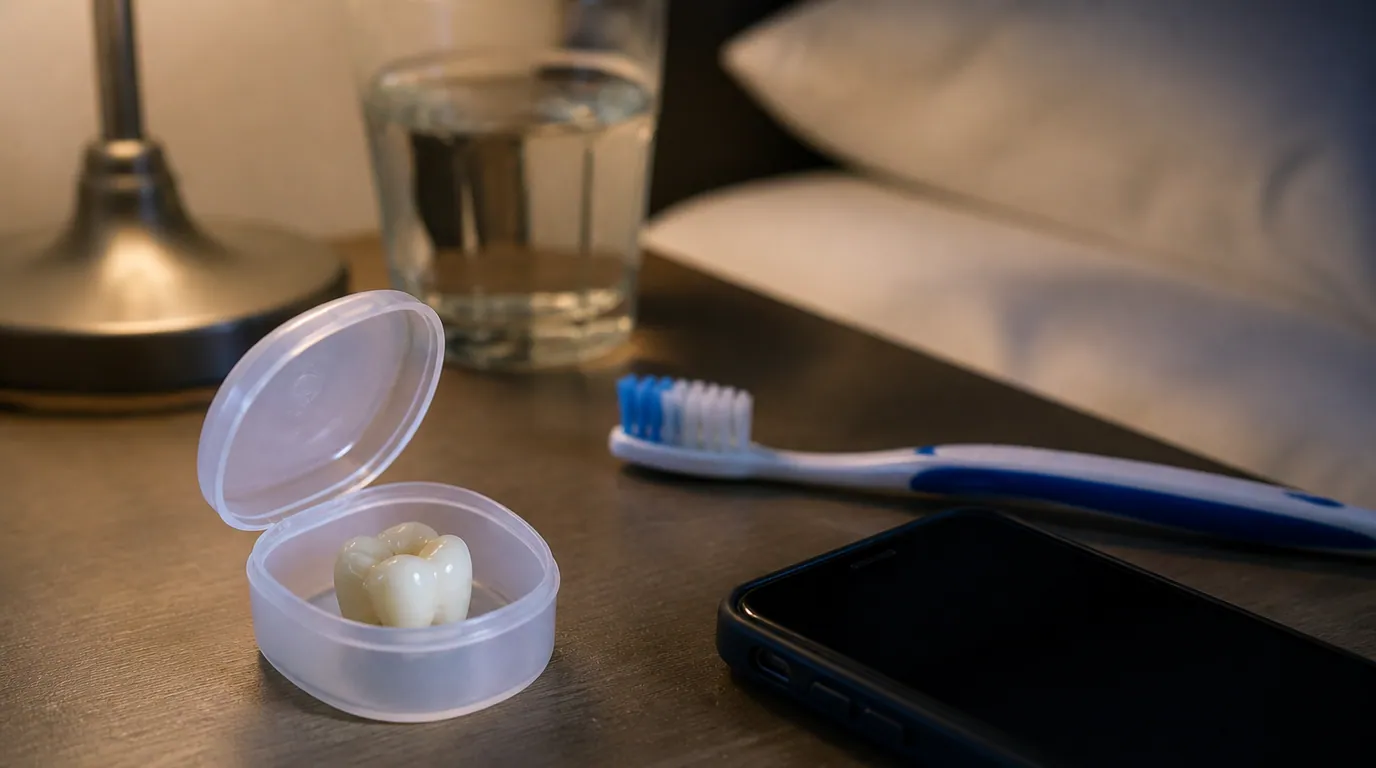
Hold the crown by its outside surface and rinse away loose debris with water. Do not scrape cement from inside it or alter the tooth. If the crown is hollow and slides into place without pressure, you can note its orientation. Do not bite hard to test it. A crown that rocks, prevents your teeth from closing normally, or requires force should stay out.
Temporary dental cement sold at a pharmacy is different from household glue and may be used according to its package instructions. It is only a short-term cover, not a repair. If you cannot seat the crown securely, store it in a container and bring it with you. Do not sleep with a loose crown in your mouth because it could be swallowed or inhaled. A dentist must check both the crown and the supporting tooth before deciding whether recementing is appropriate. Learn more about how dental crowns wear and fail over time.
If a Filling Fell Out
A missing filling often leaves a hole or sharp rim. Unlike a crown, there is usually nothing useful to place back into the tooth. Rinse, keep the cavity free of food, and cover an irritating edge with dental wax. Pharmacy temporary filling material may shield the area when used as labeled, but packing the cavity tightly can cause discomfort or make the bite too high.
Do not place aspirin, alcohol, clove oil, or other concentrated substances directly on the gum or tooth; they can irritate or burn soft tissue. For discomfort, an over-the-counter pain reliever may help when taken exactly as labeled and only if it is safe with your health conditions, medications, allergies, pregnancy status, and clinician advice. Do not exceed package doses or combine products containing the same ingredient.
If a large piece of tooth also broke, the situation is more than a lost filling. Save any fragment and follow the same protective steps in our guide to a chipped or broken tooth.
What the Dentist Will Check
The appointment begins with symptoms, an examination, and often an X-ray. The dentist looks for decay, cracks, remaining tooth thickness, gum irritation, bite forces, and signs that the nerve is inflamed or infected. This matters because simply replacing what fell out can seal an untreated problem underneath.
An intact crown may be cleaned and recemented if the tooth is healthy and the fit remains accurate. A damaged crown may need replacement. A lost filling may be restored with a new filling when enough healthy tooth remains; a larger defect may need a crown. Deep damage can require root canal treatment, and a tooth fractured beyond repair may need extraction. These are possibilities, not predictions—the appropriate choice depends on clinical findings.
Before treatment, ask what must be done now, what can be scheduled later, and what alternatives protect the tooth. If cost is a concern, say so early. Reviewing dental insurance and payment information can help you prepare, but coverage and fees depend on the plan and treatment selected.
How to Lower the Chance of Another Failure
Not every failure is preventable, but several habits reduce stress on restorations. Avoid chewing ice and using teeth to open packages. If you clench or grind, ask whether a night guard is appropriate. Brush twice daily with fluoride toothpaste, clean between teeth, and keep regular exams so decay at restoration margins may be found before a crown or filling loosens.
Report a crown that clicks, a filling that catches floss, pain when biting, or new temperature sensitivity. Early evaluation may allow a smaller intervention. On Long Island, travel, commuting, and busy family schedules make postponement tempting, but an exposed or weakened tooth generally becomes harder—not easier—to protect with time.
Frequently Asked Questions
Can I put a fallen crown back on myself?
You may be able to rest a clean crown over the tooth temporarily if it slips on easily and your bite feels normal, but do not force it. A pharmacy dental cement may help hold it briefly when used exactly as directed. Never use superglue or household adhesive. Remove the crown before sleeping if it is loose enough to swallow or inhale, and bring it to your dental visit.
How long can I wait after losing a filling or crown?
Call a dentist as soon as the office opens, even if the tooth does not hurt. Some cases can safely wait for a prompt appointment, while a fracture, deep decay, or exposed nerve needs faster care. Severe swelling, fever, trouble breathing or swallowing, uncontrolled bleeding, or major facial trauma requires immediate medical attention rather than waiting overnight.
Will the dentist reuse my crown?
Sometimes. A crown may be recemented if it is intact, still fits accurately, and the tooth underneath is healthy. A new crown or another treatment may be needed if the restoration is damaged, decay has changed the tooth, or part of the tooth fractured. An examination and X-rays determine the safest option.
Why did my filling or crown fall out?
Common causes include new decay at an edge, wear or breakdown of the cement, biting something hard, grinding, or fracture of the restoration or tooth. Age alone does not reveal the cause. Even when a crown looks undamaged, the tooth underneath should be checked before it is bonded back in place.
If your crown or filling has fallen out, call Meadowbrook Dental Care in Mineola at (516) 284-1234 or Meadowbrook Dentistry in Plainview at (516) 346-5757. Describe what came out, your pain level, and any swelling or injury so the team can advise you on the appropriate timing for an examination, or review our same-day emergency care options.
Lost a Crown or Filling?
Protect the tooth tonight, then let our Mineola or Plainview team examine the area and explain the appropriate repair.