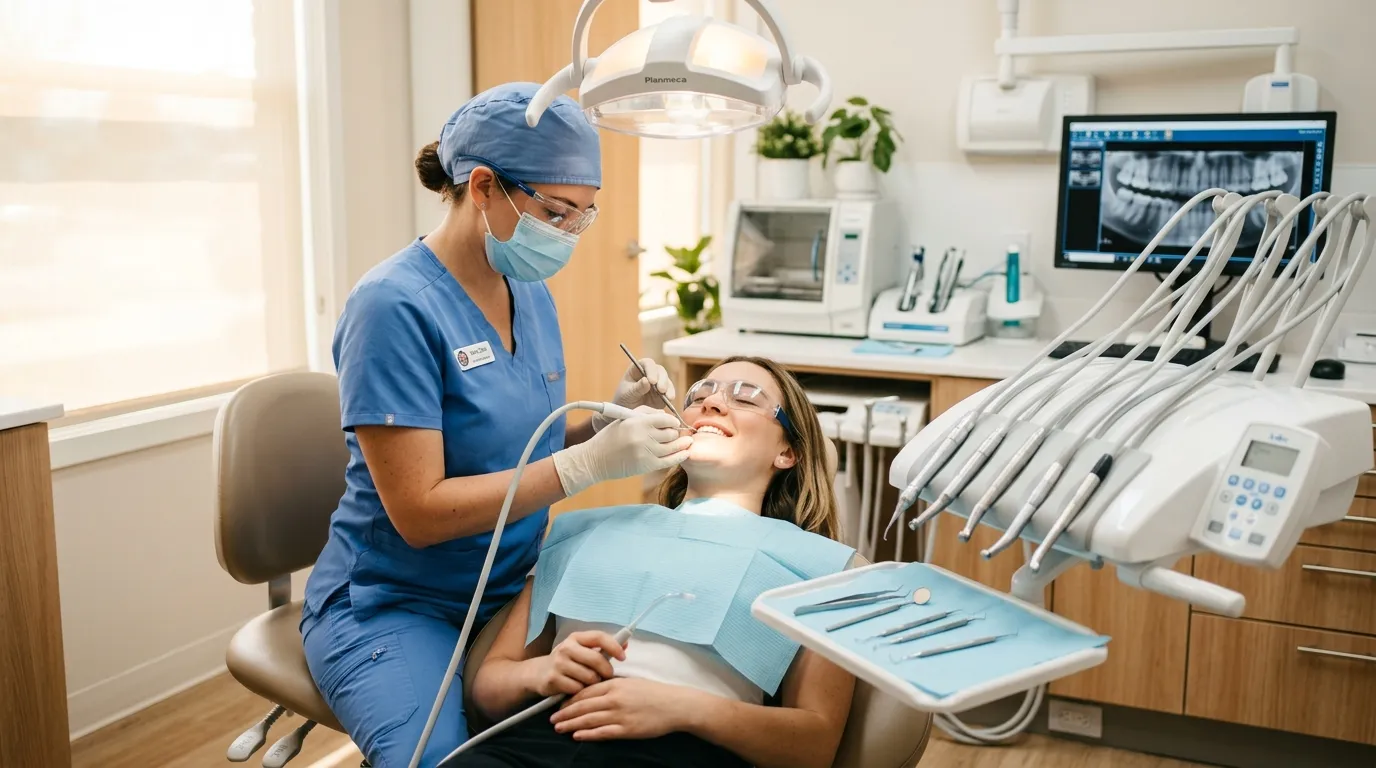
You just left the dental office with smooth, polished teeth—and now your mouth aches. Hot coffee sends a jolt through your front teeth, cold water makes you wince, and your gums feel tender. Sound familiar? Post-cleaning sensitivity is one of the most common complaints dental patients have, and it is almost always temporary and harmless.
Understanding why your teeth hurt after a cleaning—and knowing the difference between normal soreness and a sign that something needs attention—can save you a lot of unnecessary worry. This guide covers the science behind post-cleaning sensitivity, how long it lasts, what you can do at home to speed recovery, and when you should pick up the phone and call your dentist. If you are a patient in Nassau County or anywhere on Long Island, our team at Meadowbrook Dental Care is always happy to answer follow-up questions after your appointment.
Why Post-Cleaning Sensitivity Is Normal
Think of post-cleaning sensitivity the way you would think of muscle soreness after a workout. Your teeth and gums just went through a thorough cleaning process—scaling instruments removed hardened plaque (calculus) and tartar, polishing paste buffed away surface stains, and your gum tissue was manipulated more than it is during your daily brushing routine. A certain degree of tenderness is your body's natural, expected response to that stimulation.
The discomfort does not mean anything went wrong. In fact, if your teeth feel more sensitive than usual, it often indicates that the hygienist did a thorough job removing buildup that was hiding beneath the gum line or between teeth. The three most common causes of post-cleaning sensitivity are explored below.
Top 3 Reasons Your Teeth Hurt After a Cleaning
1. The "Tartar Blanket" Effect
When tartar (hardened plaque and mineral deposits) builds up along the gum line, it essentially forms an insulating blanket over the tooth surface. Beneath that blanket, the enamel may be thinner than normal or the cementum on the root surface may be partially exposed. While the tartar is in place, it acts as a crude shield—blocking hot, cold, and acidic stimuli from reaching the sensitive areas underneath.
When your hygienist removes that tartar, those previously protected areas are suddenly exposed to the full force of temperature changes and air flow. The result is a sharp but temporary increase in sensitivity. As your mouth adjusts—and as a thin layer of saliva proteins (the pellicle) re-forms over the cleaned surfaces—the sensitivity fades.
2. Gum Inflammation and Tender Tissue
If you have any degree of gingivitis—red, puffy, or bleeding gums— your gum tissue is already inflamed before the cleaning begins. The scaling process, while necessary to remove the bacterial deposits driving the inflammation, can temporarily aggravate tissue that is already irritated. You might notice soreness, a dull ache along the gum line, or minor bleeding when you brush that evening.
This is actually a sign that the cleaning is helping. By removing the tartar and bacteria that were fueling the inflammation, the hygienist has given your gums a chance to heal. Within a few days, the tenderness subsides and your gums begin to tighten and return to a healthier, pink state.
3. Root Surface Exposure
If your gums have receded—due to aggressive brushing, periodontal disease, or simply aging—the roots of your teeth may be partially exposed. Unlike the crown of the tooth, roots are not covered by enamel. Instead, they are covered by cementum, a much softer and thinner material. Beneath the cementum lies dentin, which is permeated by thousands of microscopic tubules that lead directly to the nerve.
Cleaning instruments and polishing paste on these exposed root surfaces can temporarily open or irritate the dentin tubules, creating heightened sensitivity to temperature, sweets, and even air. The sensitivity usually resolves within a few days as the tubules naturally occlude (close) again.

How Long Does Post-Cleaning Sensitivity Last?
The duration depends on the type of cleaning you received and your individual oral health. Here is a general guide:
- Routine prophylaxis (standard cleaning): Sensitivity typically peaks within the first few hours and resolves within 24–48 hours. Most patients feel completely normal by the next day.
- Deep cleaning / scaling and root planing: Because this procedure goes beneath the gum line to remove tartar from root surfaces, sensitivity and gum tenderness can last 3–7 days. Some patients experience mild sensitivity for up to two weeks, especially in areas with significant recession.
If your discomfort persists beyond these timeframes or worsens instead of gradually improving, contact your dentist. Prolonged sensitivity after a cleaning is uncommon but may indicate an underlying issue that needs attention.
Routine Cleaning vs. Deep Cleaning: What to Expect
Patients sometimes confuse a routine cleaning with a deep cleaning, but they are different procedures with different recovery profiles. The comparison below can help you set expectations.
| Feature | Routine Cleaning (Prophylaxis) | Deep Cleaning (Scaling & Root Planing) |
|---|---|---|
| What it treats | Surface plaque and tartar above the gum line | Tartar and bacteria below the gum line, on root surfaces |
| Who needs it | Patients with healthy gums or mild gingivitis | Patients with periodontal pockets ≥ 4 mm |
| Anesthesia | Usually none | Local anesthetic (numbing) is common |
| Typical sensitivity | Mild; cold drinks may zing briefly | Moderate; tenderness, sensitivity to temperature and touch |
| Recovery time | 24–48 hours | 3–7 days (up to 2 weeks in some cases) |
| Frequency | Every 6 months | As needed based on periodontal evaluation |
4 Home Remedies to Ease Post-Cleaning Sensitivity
You do not need to white-knuckle your way through post-cleaning discomfort. These evidence-based strategies can help you feel better faster.
1. Switch to a Desensitizing Toothpaste
Toothpastes containing potassium nitrate (such as Sensodyne or Colgate Sensitive) work by blocking the transmission of pain signals from the tooth surface to the nerve. For best results, start using a desensitizing toothpaste a week before your cleaning appointment and continue for at least two weeks after. You can also dab a small amount directly onto sensitive spots and leave it for a few minutes before rinsing.
2. Rinse with Warm Salt Water
Dissolve half a teaspoon of salt in eight ounces of warm water and gently swish for 30 seconds. Salt water reduces inflammation, soothes irritated gum tissue, and creates an environment that discourages bacterial growth. Repeat two to three times per day for the first 48 hours after your cleaning.
3. Take an Over-the-Counter Anti-Inflammatory
Ibuprofen (Advil, Motrin) at the standard dose can reduce both pain and inflammation. Taking it 30–60 minutes before your appointment can also help minimize discomfort during and after the cleaning. Always follow the dosing instructions on the label and consult your physician if you have contraindications such as kidney disease or stomach ulcers.
4. Avoid Temperature Extremes for 24 Hours
Your freshly cleaned teeth are at peak sensitivity immediately after the appointment. Skip the iced drinks and piping-hot soup for the rest of the day. Stick to lukewarm or room-temperature foods and beverages, and try to breathe through your nose in cold weather to avoid blasting air across sensitive surfaces.
When to Call Your Dentist
Mild sensitivity after a cleaning is expected and self-limiting. But certain symptoms go beyond "normal" and could indicate an underlying issue like an undetected cavity or nerve problem. Call your dental office if you notice:
- Throbbing pain that does not respond to over-the-counter pain medication or worsens over several days.
- Bleeding that will not stop—a small amount of bleeding when brushing the evening after a cleaning is normal, but persistent or heavy bleeding the next day is not.
- Visible swelling of the gums, cheek, or jaw that appears after the cleaning.
- Fever or a foul taste in your mouth, which could indicate infection.
- Sensitivity lasting more than two weeks after a routine cleaning or more than three weeks after a deep cleaning.
If you are unsure whether what you are experiencing is normal, it is always better to call and ask. Our team at Meadowbrook Dental Care is available to answer questions after every appointment. If the issue turns out to be something that needs in-person evaluation, we can usually see you quickly—learn more about our emergency dental guidelines.
How Meadowbrook Makes Cleanings More Comfortable
At Meadowbrook Dental Care, we use ultrasonic scaling technology rather than relying solely on manual hand instruments. Ultrasonic scalers use high-frequency vibrations and a stream of water to break apart tartar deposits, which is generally faster and gentler than traditional scraping. The result is less pressure on your teeth and gums and, for most patients, a noticeably more comfortable experience.
For patients with dental anxiety or heightened sensitivity, we also offer sedation options ranging from nitrous oxide (laughing gas) to oral sedation. If past cleanings have been stressful for you, let us know—we can tailor the appointment to your comfort level so that staying on track with your preventive care does not feel like an ordeal.
Frequently Asked Questions
Is it normal for teeth to hurt for a week after a cleaning?
After a routine cleaning, sensitivity that lasts more than two to three days is uncommon and worth mentioning to your dentist. After a deep cleaning (scaling and root planing), however, sensitivity for up to a week—and occasionally two weeks—is within the normal range, especially in areas with gum recession or deep periodontal pockets.
Should I still brush and floss if my gums are sore after a cleaning?
Yes. Skipping brushing and flossing allows plaque to re-accumulate and can slow the healing of inflamed gum tissue. Use a soft-bristled toothbrush, brush gently, and floss carefully. If your gums bleed lightly the first night, that is normal—it should improve over the next day or two.
Can I eat right after a dental cleaning?
In most cases, yes. After a standard cleaning with no fluoride treatment, you can eat whenever you like. If a fluoride varnish was applied, your hygienist may recommend waiting 30 minutes to allow the fluoride to absorb. Regardless, choose lukewarm, soft foods for the first few hours to avoid aggravating sensitive teeth.
Why are my teeth more sensitive to cold after a cleaning than before?
The tartar that was removed had been insulating your teeth from temperature changes. With that layer gone, the underlying tooth surface—especially if enamel is thin or roots are slightly exposed— reacts more intensely to cold. This is temporary and typically resolves within 24–72 hours as your mouth adjusts.
Does a deep cleaning damage your teeth?
No. Scaling and root planing removes disease-causing tartar and bacteria from below the gum line, which is essential for halting the progression of periodontal disease. While the procedure can cause temporary sensitivity and tenderness, it does not damage healthy tooth structure. In fact, avoiding a needed deep cleaning is far more harmful—untreated periodontal disease leads to bone loss and eventually tooth loss.
Ready to schedule a comfortable cleaning? Call (516) 284-1234 (Mineola) or (516) 346-5757 (Plainview), or book your appointment online.
Comfortable Cleanings You Won't Dread
Meadowbrook Dental Care uses ultrasonic technology and a gentle approach to make cleanings as comfortable as possible. Book your next visit at our Mineola or Plainview office.