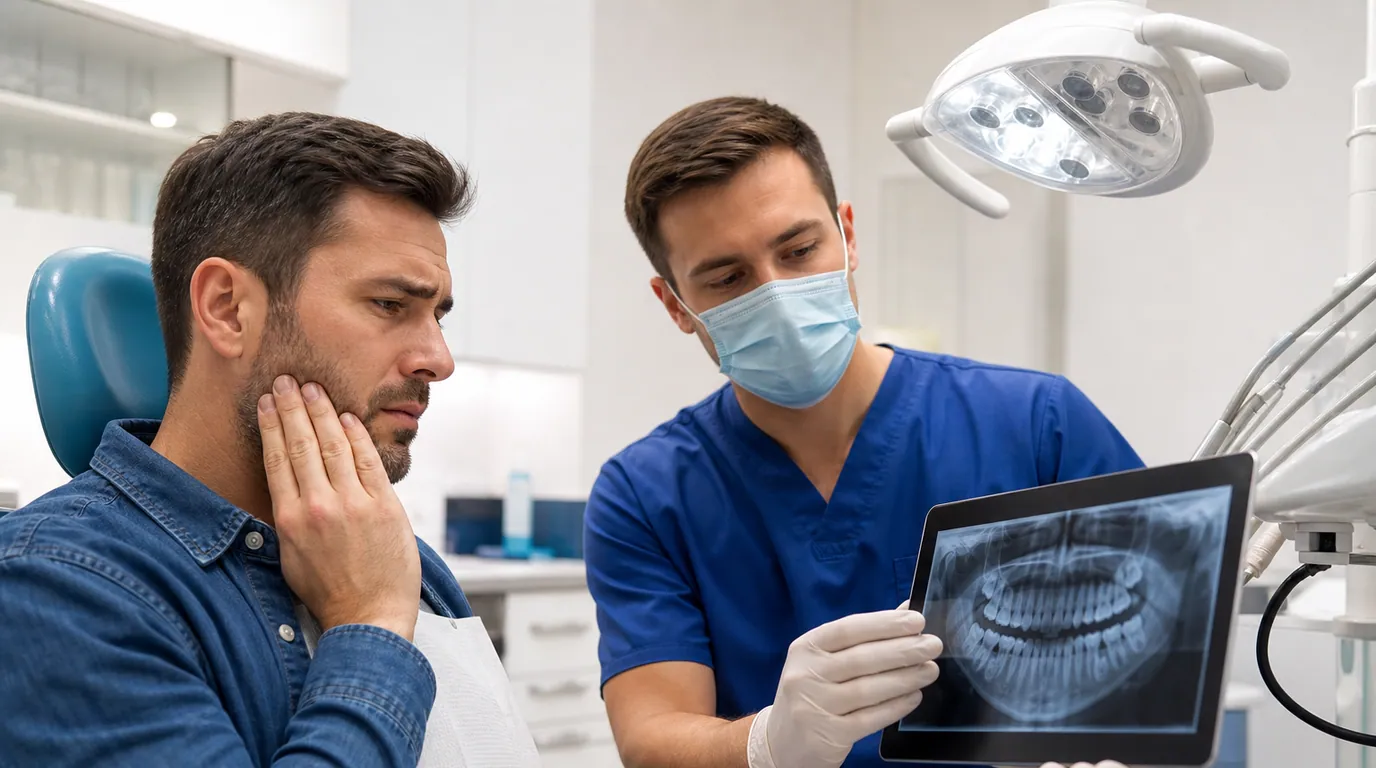
Quick Answer
It is easy to hope that a throbbing tooth, tender gum bump, or bad taste will settle down overnight. Symptoms sometimes do become quieter, but symptom relief is not proof that an infection has resolved. A dental abscess is a pocket of pus associated with a bacterial infection, often near a tooth root or in the gum. It needs an examination to identify the source and decide whether the tooth can be treated.
For patients across Long Island and Nassau County, the practical advice is simple: call for prompt dental triage rather than waiting for visible swelling or severe pain. This article is educational and cannot diagnose an abscess. Similar symptoms can have other causes, and only an in-person exam and appropriate imaging can guide treatment.
Why an Abscess Usually Does Not Resolve Without Treatment
Your immune system can limit an infection temporarily, and an abscess can find a path to drain through the gum. Neither event necessarily removes bacteria from an infected root canal system, deep periodontal pocket, crack, or area around a partially erupted tooth. Because those spaces are difficult for the body to reach, the source may persist after pressure and pain decrease.
A dentist may recommend drainage and treatment of the source. Depending on examination findings, that could include cleaning around the gums, root canal therapy, or removing a tooth that cannot be predictably restored. Antibiotics are not automatically required for every localized dental infection, and they are not a substitute for dental treatment. Their use depends on findings such as spreading infection, fever, or medical risk factors.
Signs That Need Dental Attention Today
Abscess symptoms vary, and some people have little pain. Contact an emergency dentist for same-day guidance if you notice one or more of the following:
- Persistent, throbbing, or worsening pain in a tooth or jaw
- A pimple-like bump on the gum, pus, or a recurring foul taste
- Swelling of the gum, cheek, jaw, or area under the chin
- Pain when biting or a tooth that feels raised or loose
- Fever, chills, swollen lymph nodes, or feeling generally unwell
- New symptoms after a tooth recently became less painful
Pain alone cannot show how far an infection has progressed. In particular, a tooth may stop hurting when its nerve tissue loses vitality. Our guide to warning signs that may require root canal evaluation explains why examination matters even when discomfort changes.
Dental Office, Hospital ER, or 911? A Red-Flag Guide
Most localized tooth infections belong in a dental office, where the source can be examined and treated. A hospital is appropriate when the infection may threaten the airway or general health. Use this table as general triage guidance, not a diagnosis.
| What you notice | Where to seek help | Why |
|---|---|---|
| Tooth pain, localized gum bump, or mild localized swelling | Call an emergency dentist today | Dental treatment can address the source |
| Facial swelling that is increasing but breathing is normal | Urgent same-day dental assessment; follow triage instructions | Spreading infection needs prompt evaluation |
| Fever with facial swelling or marked weakness | Urgent medical or dental assessment the same day | Systemic involvement may require medical support |
| Trouble breathing or swallowing, drooling, or voice change | Call 911 or go to the nearest ER now | The airway may be at risk |
| Rapid swelling toward the eye or neck, confusion, or faintness | Call 911 or go to the nearest ER now | These can signal a serious spreading infection |
If you are uncertain and symptoms are changing quickly, choose the safer level of care. Do not drive yourself if you feel faint, confused, or unable to see normally. After hospital stabilization, dental follow-up is still usually needed because an ER may manage the medical emergency without completing definitive treatment inside the tooth.
What You Can Safely Do While Arranging Care
Call first and describe where the swelling is, when it began, whether it is growing, and whether you have fever or difficulty swallowing. While waiting for professional advice, gently rinse with warm salt water and spit it out. Apply a cold pack outside the cheek for short intervals if that feels comfortable. Choose soft foods, stay hydrated, and avoid chewing on the affected side.
Over-the-counter pain medicine may help temporarily when taken exactly as labeled and when it is safe with your health conditions, allergies, pregnancy status, and other medicines. A pharmacist or clinician can help if you are unsure. Do not place aspirin, alcohol, peroxide, or essential oils directly on the gum; these can burn tissue. Do not use leftover antibiotics or someone else’s prescription, and never try to puncture the swelling.
How a Dentist Finds and Treats the Source
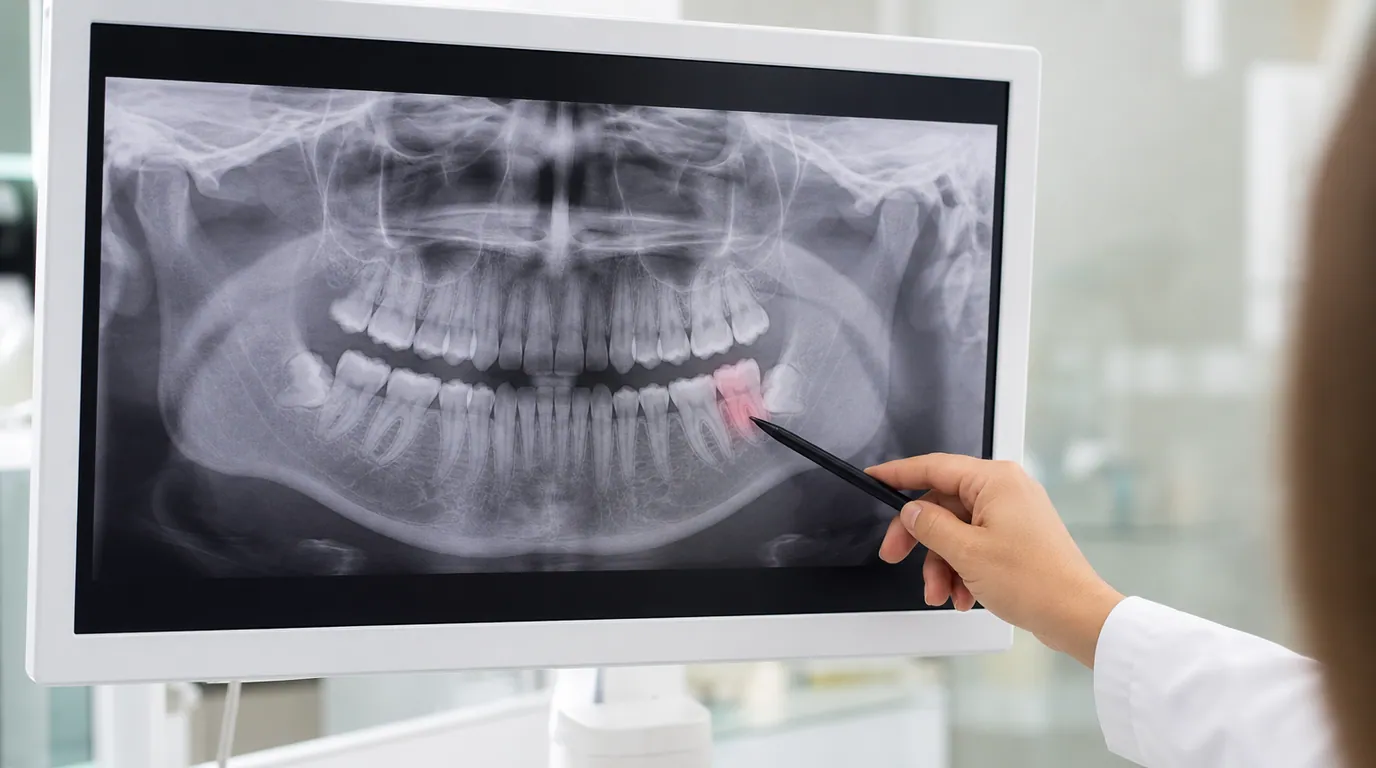
An urgent visit typically begins with questions about symptoms and medical history, followed by an examination. The dentist may check the tooth’s response to temperature or pressure, evaluate the gums, and take dental X-rays. Those findings help distinguish infection inside a tooth from gum-related infection, a cracked tooth, sinus-related pain, or another condition.
Treatment is individualized. If the tooth is restorable and infection comes from inside it, root canal treatment may remove infected tissue and preserve the tooth. If it cannot be restored, extraction may be discussed; this overview of tooth extraction care and Long Island costs can help you prepare questions. Gum-related abscesses may need drainage and periodontal cleaning. Your dentist should explain options, risks, expected follow-up, and fees after evaluating you; no specific outcome can be promised before that exam.
Why Feeling Better Is Not a Reason to Cancel
A sudden release of salty or foul-tasting fluid can mean the abscess has drained. Pressure may fall dramatically. Rinse gently, do not squeeze the area, and keep the appointment. An opening can close while the original source remains, allowing pressure to build again.
Likewise, pain that stops without treatment can reflect a change in the tooth’s nerve rather than healing. Timely dental examination and diagnostic imaging offer the best way to learn what is happening. Waiting for another flare can make care more urgent and may reduce available treatment choices, although the course differs for every patient.
Frequently Asked Questions
Can a tooth abscess drain and heal by itself?
An abscess may rupture and drain, which can reduce pressure and pain, but that does not mean the infection is gone. Bacteria can remain inside the tooth or surrounding tissues and the infection can return or spread. Arrange an urgent dental examination even if symptoms suddenly improve.
Will antibiotics cure a tooth abscess?
Antibiotics may be appropriate when infection is spreading or there are systemic symptoms, but they usually do not remove the source inside a damaged tooth. Definitive dental treatment may involve drainage, root canal therapy, or extraction. A dentist must examine you to determine the appropriate combination of care.
How quickly should I see a dentist for a suspected abscess?
Call a dentist the same day if you have a painful gum bump, swelling, pus, a foul taste, fever, or worsening tooth pain. Call 911 or go to a hospital emergency room immediately if swelling affects breathing or swallowing, is rapidly spreading toward the eye or neck, or is accompanied by confusion, faintness, or severe illness.
Can I pop an abscess on my gum?
No. Squeezing, piercing, or popping a swollen area can injure tissue and may push bacteria deeper. Use a gentle warm salt-water rinse, avoid pressing the area, and seek professional care. A dentist can drain an infection safely when drainage is clinically indicated.
If you suspect a tooth abscess, call Meadowbrook Dental Care in Mineola at (516) 284-1234 or Meadowbrook Dentistry in Plainview at (516) 346-5757 for urgent triage, or review our emergency dental care. If breathing or swallowing is affected or you feel severely ill, call 911 or go to the nearest hospital ER instead.
Concerned About a Tooth Abscess?
Pain, a gum bump, drainage, or facial swelling deserves prompt evaluation. Our Mineola and Plainview teams can examine the source and explain the safest next step.