
Quick Answer
A toothache can make it difficult to sleep, work, or eat, especially when an appointment is still hours away. People across Long Island often search for something safe they can do immediately. The key is to treat home remedies as short-term comfort measures, not a cure. Tooth pain is a symptom, and only an examination can identify whether it comes from decay, a crack, inflamed gums, grinding, or an infection inside the tooth.
This guide focuses narrowly on responsible relief while you arrange care. It does not attempt to classify every dental emergency; our broader guide explains what qualifies as emergency dental treatment. Educational information cannot replace a diagnosis, and personal factors such as allergies, pregnancy, ulcers, kidney disease, blood thinners, and other medicines affect what is safe for you.
Why Toothaches Need a Dental Diagnosis
Pain can start in the hard outer tooth, the living pulp at its center, the ligament around the root, or nearby gum tissue. A cavity may cause brief sensitivity before bacteria reach deeper layers. A crack may hurt mainly when you release your bite. Inflamed or infected pulp can create lingering heat sensitivity or spontaneous throbbing, while food lodged beneath the gum can produce localized soreness.
Symptoms can overlap, so intensity alone does not reveal the cause. Pain may even seem to come from the wrong tooth or be referred from the sinuses or jaw muscles. Dental examination, temperature and bite tests, and sometimes X-rays are used to distinguish these problems. Depending on the finding, definitive care could be a filling, gum treatment, crown, root canal therapy, extraction, or treatment for clenching. Meadowbrook Dental's general dentistry team can explain which option is appropriate after evaluating the tooth.
Safe Steps for Temporary Toothache Relief
Start with simple measures that do not injure tissue or conceal a worsening problem. Use this checklist until you can speak with a dental professional:
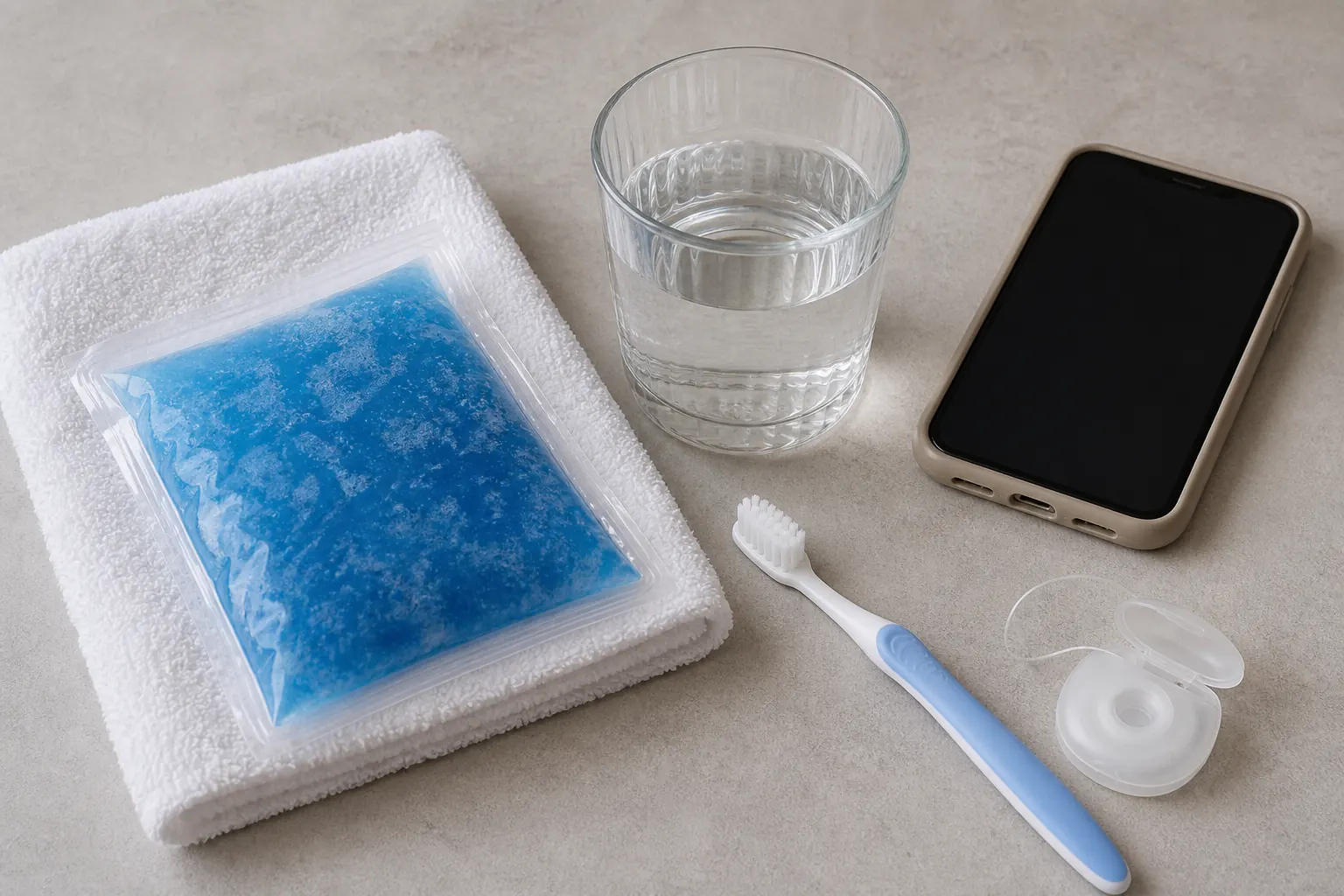
- Clean gently. Brush with a soft-bristled toothbrush and floss around the sore tooth to remove trapped food. Do not snap floss into tender gums or probe the area with a sharp object.
- Rinse with salt water. Dissolve about one-half teaspoon of salt in eight ounces of warm, not hot, water. Swish gently and spit. Do not swallow the rinse, and supervise children.
- Use a cold compress. Wrap a cold pack in a thin towel and hold it outside the cheek for 15 minutes, then remove it for at least 15 minutes. This may ease soreness and swelling.
- Reduce pressure and irritation. Chew on the opposite side, choose lukewarm soft foods, avoid tobacco and alcohol, and keep your head slightly elevated when resting.
- Use medication cautiously. If you can normally take an over-the-counter pain reliever, follow the package directions and maximum dose. Do not combine products containing the same ingredient. A pharmacist can check interactions and age-specific dosing.
Write down when the pain began, what triggers it, whether it lingers after cold or heat, and any swelling or fever. That information can make phone triage and the clinical exam more efficient.
What Not to Put on an Aching Tooth
Some popular internet remedies can burn gums, delay care, or interact with medicines. Do not place aspirin, crushed tablets, alcohol, bleach, hydrogen peroxide, essential oils, garlic, or undiluted clove oil directly on a tooth or gum. Do not use leftover antibiotics. Antibiotics are not painkillers, do not repair a damaged tooth, and should be prescribed only when a clinician determines they are indicated.
Avoid draining a bump, cutting swollen tissue, or trying to pull a tooth yourself. Numbing gels also require caution: follow the label, avoid repeated application, and do not use adult products for young children unless their pediatric clinician says to. If a filling or crown has come out, never reattach it with household glue. Keeping the area clean and calling a dentist is safer than experimenting with a caustic or unapproved substance.
Urgent Red Flags: Call Now or Seek Emergency Help
Contact a dentist the same day for severe or escalating pain, facial or gum swelling, fever, pus or a foul taste, pain with biting, a broken tooth, or symptoms after an injury. Pain that repeatedly wakes you, continues beyond 24 to 48 hours, or disappears and then returns also deserves prompt evaluation. A quiet period can occur when nerve tissue deteriorates; it does not necessarily mean the infection is gone. If infection is a concern, read why a tooth abscess does not resolve on its own.
Go to an emergency department or call 911 for difficulty breathing or swallowing, swelling spreading toward the eye or neck, confusion, fainting, uncontrolled bleeding, or significant facial or head trauma. Those signs can involve the airway or structures beyond what a dental office can safely manage. Our guide to choosing an emergency dentist or hospital for facial swelling explains that distinction. Otherwise, a dentist is generally best equipped to diagnose and definitively treat the tooth itself through urgent dental care.
What Treatment May Be Needed
Treatment is based on the source and restorability of the tooth. Early decay may need a filling. A fractured cusp or weakened tooth may need a crown. If inflammation or infection has reached the pulp but the tooth can be saved, root canal treatment removes diseased tissue and seals the inner space. A tooth that cannot be predictably restored may need extraction, followed by a discussion of replacement choices.
An exam does not obligate you to a procedure. It creates a diagnosis, identifies alternatives, and clarifies the risks of waiting. At our Mineola and Plainview offices, recommendations are individualized after clinical findings and imaging; no home symptom pattern can guarantee a particular treatment. Until then, continue gentle hygiene and avoid chewing on the painful side rather than relying on repeated numbing.
Frequently Asked Questions
Can a toothache go away without dental treatment?
Pain may fade temporarily, but that does not prove the underlying problem has healed. A small piece of trapped food may resolve after cleaning, while decay, a crack, or an infected tooth usually requires professional care. Even if the ache stops, arrange an exam when pain has lasted more than a day or keeps returning.
Is it safe to put aspirin on an aching tooth?
No. Aspirin and other pain tablets should never be placed directly on a tooth or gum because they can chemically burn the tissue. If an over-the-counter pain reliever is safe for you, swallow it exactly as its label directs. Ask a pharmacist or clinician if you have medical conditions, take other medicines, or are pregnant.
Should I use heat or ice for tooth pain?
A cold pack wrapped in cloth is generally the safer choice for pain or facial swelling; use it outside the cheek for about 15 minutes at a time. Avoid applying heat to visible swelling because warmth may worsen discomfort from an infection. Never place ice directly against skin or the tooth.
How quickly should a dentist see a toothache?
Call promptly for pain that is severe, worsening, disrupting sleep, triggered by biting, or lasting longer than 24 to 48 hours. Fever, facial swelling, pus, a bad taste, or trouble opening the mouth warrants same-day dental guidance. Trouble breathing or swallowing, rapidly spreading swelling, or serious facial trauma requires emergency medical care.
If temporary measures are not enough—or you simply want to stop guessing—call Meadowbrook Dental Care at (516) 284-1234 (Mineola) or (516) 346-5757 (Plainview). You can also request a toothache evaluation online.
Get the Cause of Your Toothache Treated
Temporary relief should not become a substitute for a diagnosis. Our Mineola and Plainview teams can evaluate the source of your pain and explain the appropriate next step.