Quick Answer
A dental crown is meant to protect a weakened tooth, so having one chip, crack, or come loose repeatedly is frustrating. It can also feel confusing when the crown looked fine at first. Although no restoration is indestructible, repeat failure deserves a broader look at the conditions around that tooth.
The bite is often part of the story, but it is not the only possible explanation. Dentists must consider the crown's material and shape, the amount of clearance between the teeth, the health of the supporting tooth, and habits such as ice chewing. At Meadowbrook Dental, patients from Mineola, Plainview, and nearby Long Island communities can have those factors assessed together. This article offers general education; only a clinical exam can identify the cause in your case.
Why Bite Force Matters to a Crown
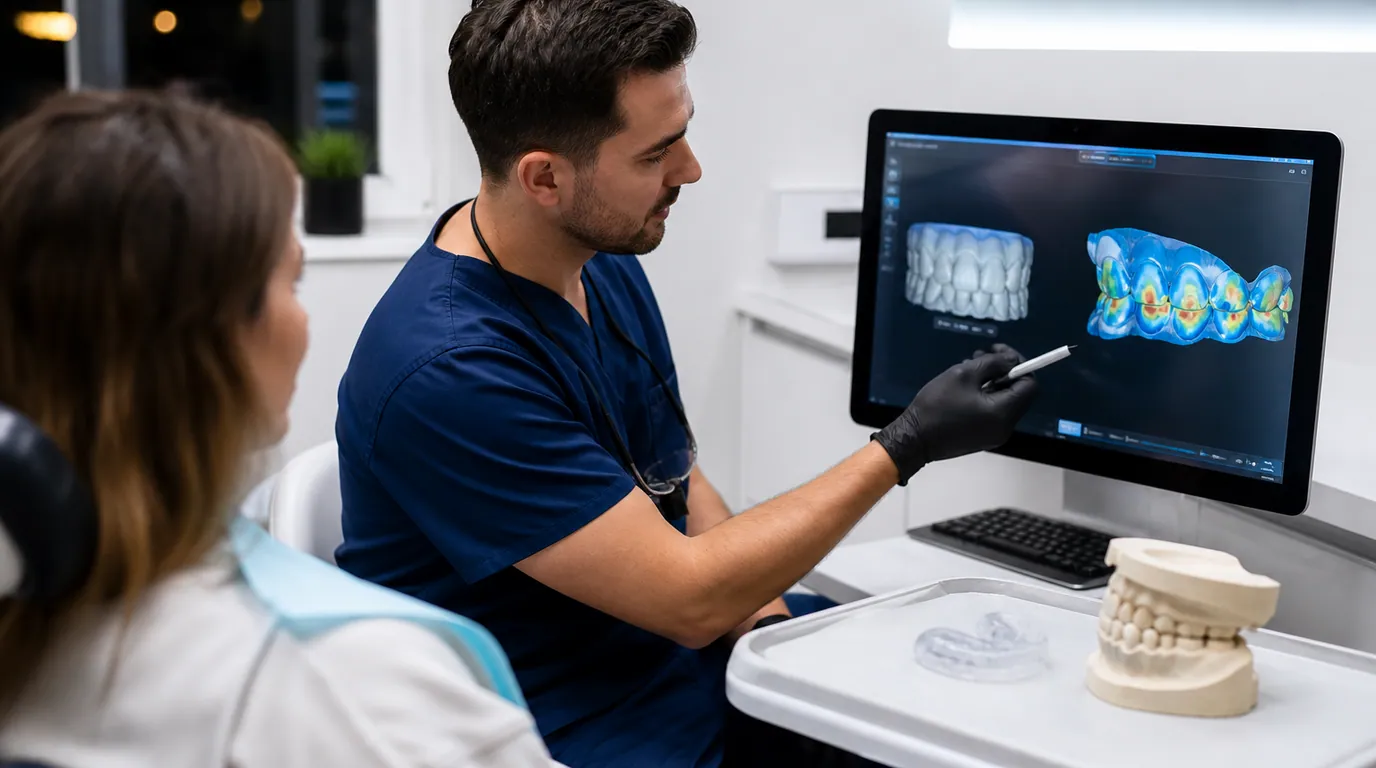
Teeth do not simply move straight up and down. They contact during chewing, swallowing, and side-to-side jaw movement. Ideally, those forces are shared in a way that keeps one restoration from taking a repeated overload. If a crown is the first point to touch when you close, or it catches heavily during a jaw movement, stress can concentrate in a small area.
This does not mean every high spot causes a fracture, or that every broken crown proves the bite was wrong. A single failure can result from biting an unexpectedly hard object, long-term wear, or an isolated material flaw. Repeated damage at the same tooth, however, makes force analysis especially relevant. A thoughtful dental crown evaluation checks function as well as appearance.
Common Failure Patterns and What They May Suggest
| What You Notice | Possible Contributors | What the Dentist May Check |
|---|---|---|
| Small porcelain chips | Heavy contact, grinding, thin porcelain, hard foods | Bite movements, material thickness, opposing tooth |
| Crown splits or fractures | High force, inadequate space, material selection | Clearance, crown design, clenching history |
| Crown repeatedly comes off | Short tooth preparation, decay, overload, cement failure | Retention, fit, tooth condition, bite direction |
| Underlying tooth breaks | Crack, decay, limited remaining structure, post stress | Restorability, X-rays, fracture depth, gumline |
| Pain when biting | High contact, crack, pulp or root inflammation | Bite test, nerve tests, imaging, periodontal probing |
Grinding and Clenching Can Overload Dental Work
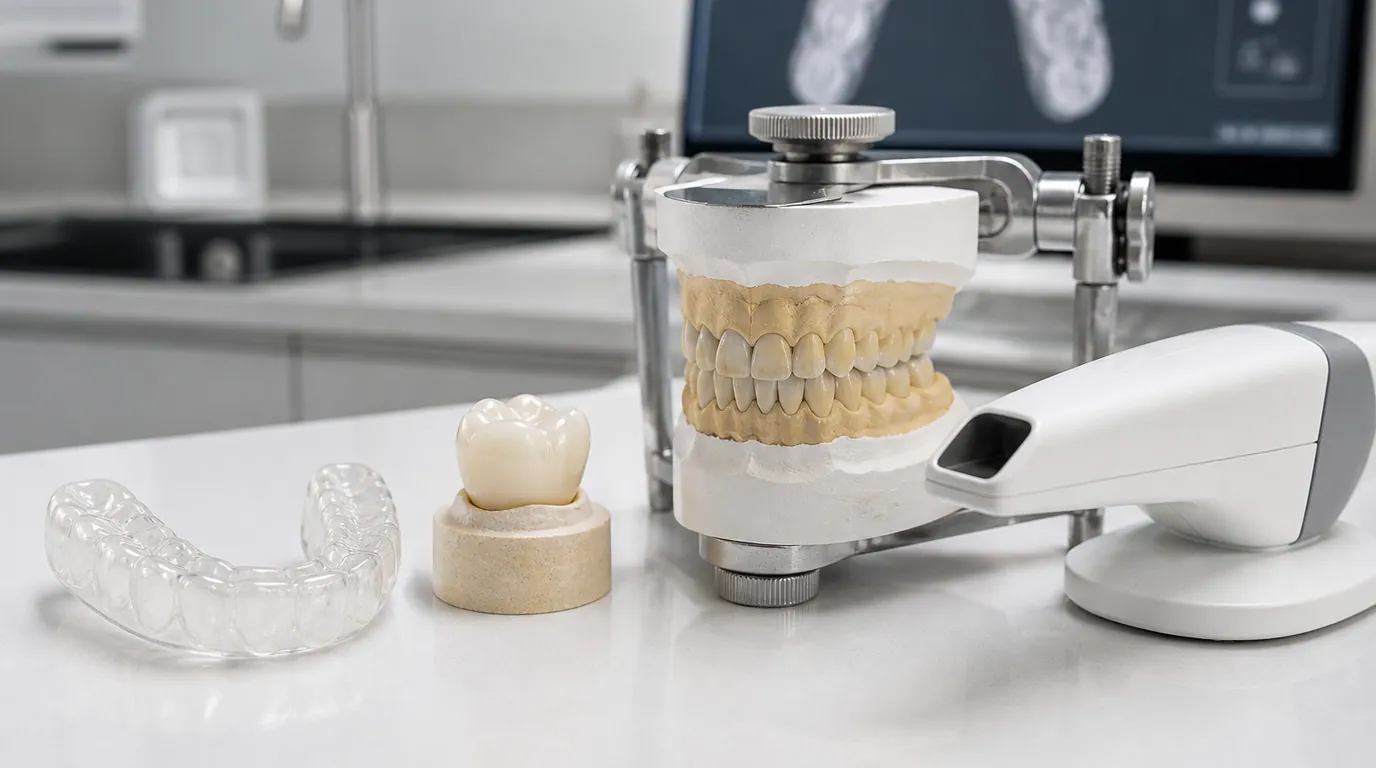
Sleep bruxism can expose teeth to repeated clenching and sliding forces outside normal chewing. Because it happens during sleep, many patients do not know they do it. Flattened teeth, jaw fatigue, morning headaches, scalloped tongue edges, and repeated restoration damage may raise suspicion, but none proves bruxism by itself.
A custom guard may help protect a new crown by separating the teeth and distributing force. It must fit correctly and be monitored, because wear marks can provide useful information and the bite can change over time. Our guide to night guards for teeth grinding explains the differences between dentist-made and store-bought options. Stress management or sleep evaluation may also be relevant for some people, but a guard is not a treatment for every sleep or jaw condition.
The Crown Material Is Only One Piece of the Decision
Different materials respond differently to pressure. Zirconia is strong and commonly considered for high-load areas, while layered ceramics may provide nuanced appearance but can be vulnerable to surface chipping. There is no single best material for every tooth.
Strength also depends on thickness and support. Even a durable ceramic may be compromised if there is too little vertical space to create the recommended thickness. Removing more tooth to gain room is not automatically appropriate, especially when the remaining tooth is already limited. The dentist and laboratory must balance preservation, design, appearance, and function. Read more about crown materials and longevity for context on how these choices perform over time.
The Tooth Underneath May Be the Real Problem
A crown relies on the prepared tooth for support and retention. New decay at the margin can soften that foundation. A short or heavily damaged tooth may offer limited surface area for retention, and a crack extending beneath the gum can make the outlook uncertain. Teeth treated with root canals may also have substantial prior structural loss, though root canal treatment itself does not guarantee that a crown will fail.
Evaluation may include X-rays, inspection under magnification, gum probing, mobility checks, and removal of a loose crown when needed. Sometimes the tooth can be rebuilt and recrowned. Other situations may call for gum or orthodontic procedures to expose sound tooth structure. A deeply split or nonrestorable tooth may need extraction. Those choices require discussion of benefits, limitations, and alternatives rather than assumptions based on the broken crown alone.
How a Dentist Investigates Repeat Breakage
The most useful appointment starts with a timeline: how old each crown was, where it fractured, what you were doing, and whether it ever felt high or sensitive. Bring the broken piece if you have it. The dentist may mark contacts while you bite and move your jaw, inspect wear elsewhere in the mouth, and compare the space available for restorative material.
A complete dental examination also checks for decay, gum inflammation, cracks, nerve health, and changes on X-rays. If the crown has come off intact, its inner surface and the remaining tooth can provide clues about whether the issue involved cement, fit, retention, or tooth fracture. Digital scans or impressions may also help assess shape.
Treatment might include a minor bite adjustment, repair of a small chip, a replacement crown with a revised design or material, a core buildup, or a custom night guard. More complex structural problems may need another approach. No adjustment or material can promise that a restoration will never break, but addressing identified risks is more rational than repeating the same plan without investigation.
What to Do When a Crown Breaks
Stop chewing on that side and contact a dentist promptly. Rinse gently, keep the area clean, and save the fragment or crown in a container. If an edge is sharp, dental wax can provide temporary protection. Do not use superglue or another household adhesive; these products can irritate tissues and interfere with proper treatment.
Pain, swelling, fever, drainage, facial trauma, or difficulty swallowing increases the urgency. A break with no pain still matters because the exposed tooth may shift, decay, or fracture further. If the damage happened suddenly, the steps in our guide to a chipped or broken tooth can help you protect the area until you are seen.
Questions to Ask Before the Next Crown
Ask what appears to have failed: the ceramic, cement bond, supporting tooth, or another component. Find out whether the bite shows a heavy contact, whether there is evidence of grinding, and whether enough space exists for the proposed material. You can also ask how the replacement design differs from the previous one and whether a guard or follow-up adjustment is advisable.
Good clinical planning acknowledges uncertainty. Sometimes a single exact cause cannot be proven after the fact. Your dentist should still be able to describe the evidence, reasonable alternatives, and warning signs to monitor. For Long Island patients who have already replaced the same crown, that explanation is an important part of informed care.
Frequently Asked Questions
Why would the same dental crown break more than once?
Repeated breakage can point to an unresolved source of stress, such as a heavy bite contact, nighttime grinding, limited space for restorative material, or a damaged tooth underneath. Material choice, bonding, and crown design also matter. A dentist should evaluate the whole bite rather than simply replacing the crown again.
Can a crown be repaired instead of replaced?
A very small porcelain chip may sometimes be smoothed or repaired with bonded material, especially if appearance is the main concern. Larger fractures, an open edge, recurrent decay, looseness, or a structural problem usually make replacement more appropriate. An exam determines whether a repair would be dependable.
Will a night guard stop my crown from breaking?
A properly designed custom night guard can reduce destructive forces from sleep grinding and protect crowns, but it cannot correct every cause. The crown still needs sound support, suitable material thickness, and balanced contacts. A guard should be recommended and adjusted based on your bite, not treated as a universal fix.
Is a broken crown a dental emergency?
It deserves prompt attention, particularly if the tooth is painful, sharp, loose, or exposed. Severe pain, swelling, fever, trauma, or difficulty swallowing requires urgent care. If you can do so safely, save any broken piece, avoid chewing on that side, and do not use household glue to reattach it.
If the same crown has chipped, cracked, or loosened more than once, call Meadowbrook Dental Care in Mineola at (516) 284-1234 or Meadowbrook Dentistry in Plainview at (516) 346-5757. We can assess the restoration, supporting tooth, and bite before discussing your next step. You can also review Meadowbrook's dental crown services.
Stop the Cycle of Broken Crowns
Our Mineola and Plainview teams can evaluate the crown, supporting tooth, and bite forces before recommending a durable, personalized solution.