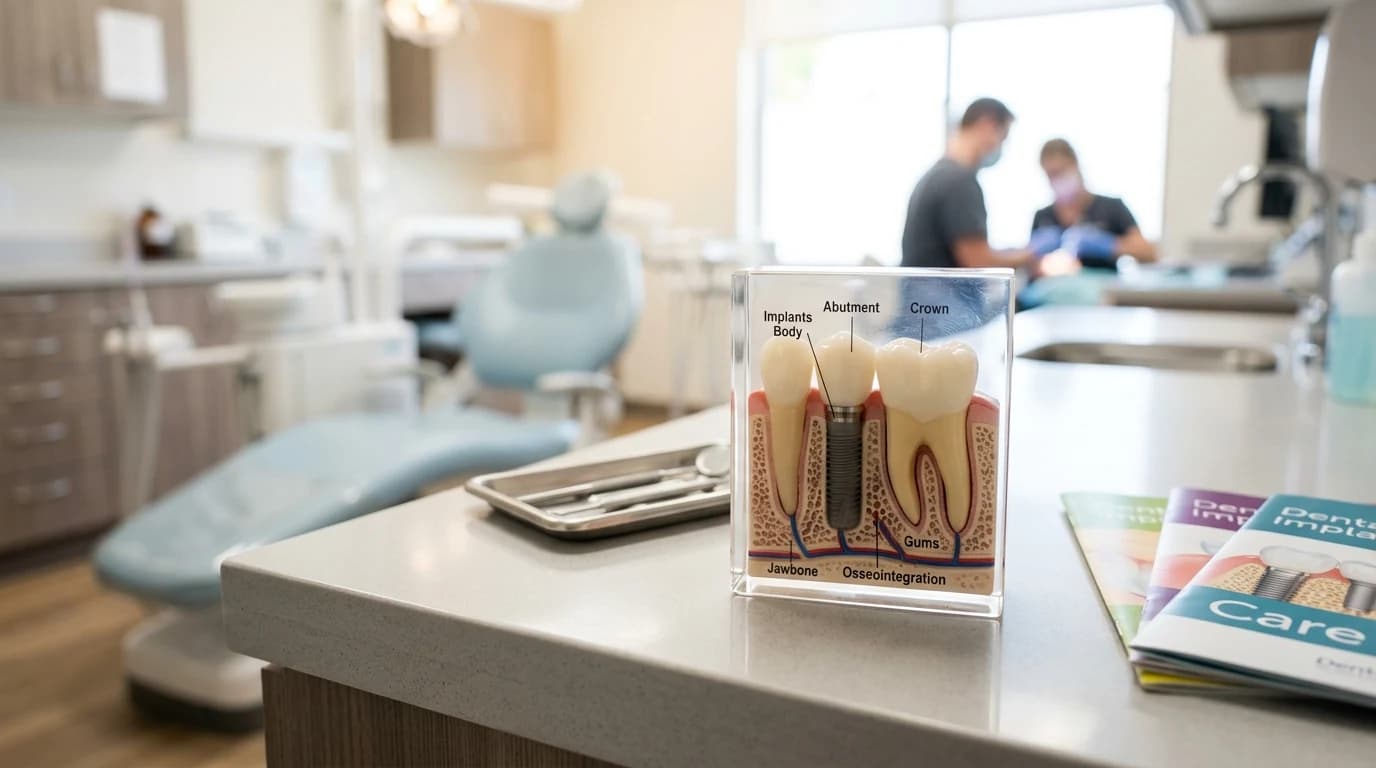
If you are missing one or more teeth, you have likely heard that dental implants are the gold standard for tooth replacement. But what does that actually mean for your daily life? Unlike bridges that rely on neighboring teeth or dentures that sit on top of your gums, implants replace the entire tooth structure—root and all—creating a foundation that looks, feels, and functions like the real thing.
At Meadowbrook Dental Care in Mineola and Plainview, we have placed thousands of implants for patients across Long Island and Nassau County. Here are ten evidence-based benefits that make implants the preferred choice for most candidates—along with honest context about who benefits most.
1. Bone Preservation and Jawbone Health
When a tooth is lost, the jawbone in that area begins to resorb because it no longer receives stimulation from the tooth root. This process starts within the first year and can result in 25% or more bone volume loss in the first 12 months alone. Over time, significant bone loss changes your facial profile, causing a sunken or aged appearance.
Dental implants are the only tooth replacement option that integrates directly into the jawbone through a process called osseointegration. The titanium or zirconia post mimics the function of a natural root, transmitting chewing forces into the bone and signaling the body to maintain bone density. Studies show implant patients retain significantly more bone volume compared to bridge or denture patients over five- and ten-year periods.
2. Natural Look and Feel
Modern implant crowns are custom-fabricated from materials like layered zirconia or lithium disilicate that replicate the translucency, color gradient, and surface texture of natural enamel. Because the crown emerges through the gum tissue on a precisely angled abutment, it looks and feels like a tooth that grew there. Most patients forget which tooth is the implant within a few weeks of final restoration.
Compared to removable dentures—which can look artificial and shift during conversation—or bridges that require bulky connectors, implant-supported restorations offer the most lifelike result available in modern dentistry.
3. A Proven Track Record: 95%+ Success Rate
Dental implants have been studied extensively for over 40 years. Large-scale clinical reviews consistently report 10-year survival rates between 95% and 98% for implants placed in healthy patients with adequate bone. That makes implants one of the most predictable procedures in all of dentistry—more predictable, in fact, than root canal therapy or certain bridge designs.
Success depends on factors like patient health, smoking status, bone quality, and adherence to maintenance. At Meadowbrook Dental Care, we use 3D cone-beam imaging and digitally guided surgery to optimize implant position, which contributes to long-term stability and high first-time success rates.
4. Eat Anything with Confidence
One of the most immediate quality-of-life improvements patients report after implant treatment is the ability to eat without restriction. Denture wearers often avoid hard, crunchy, or sticky foods because their prosthetics shift, pop out, or cause sore spots. Implant-supported teeth restore roughly 90–95% of natural bite force, allowing you to enjoy steak, apples, corn on the cob, and other foods you may have been avoiding.
For patients considering All-on-4 full-arch treatment, this benefit is transformative—patients go from struggling with loose dentures to eating a normal diet, often within the same day they receive their temporary teeth.
5. No Adhesives, No Slipping
Denture adhesives are messy, taste unpleasant, and need to be reapplied throughout the day. Even with adhesive, conventional dentures can shift during eating or speaking, creating embarrassing moments. Dental implants eliminate these problems entirely because the restoration is fixed directly to the implant post—there is nothing to slip, rock, or come loose.
6. Protect Your Remaining Natural Teeth
A traditional fixed bridge requires grinding down the two teeth adjacent to the gap to serve as anchors. This permanently removes healthy enamel and increases the long-term risk of decay or fracture on those anchor teeth. If either supporting tooth fails later, the entire bridge fails with it.
A single-tooth implant stands independently in the bone without touching or altering neighboring teeth. This keeps healthy tooth structure intact and reduces the risk of cascading dental problems down the line.
7. Improved Speech Clarity
Missing front teeth and ill-fitting dentures can cause lisping, whistling, or mumbling—particularly with sounds like “s,” “f,” and “th.” Because implant restorations are fixed in place and positioned precisely where natural teeth once sat, they restore the tongue-to-tooth contact patterns necessary for clear speech. Most patients notice improvement within days of receiving their final restoration.
8. Exceptional Durability: 25+ Years and Counting
The implant post itself is designed to last a lifetime with proper care. Titanium is biocompatible and does not corrode in the oral environment. The crown on top typically lasts 10–15 years before showing enough wear to justify replacement—roughly twice the average lifespan of a conventional bridge. Learn more about what determines implant longevity in our implant lifespan guide.
When you calculate the total cost of ownership over 25–30 years, implants frequently cost less than bridges or dentures that need repeated replacement. For a detailed cost comparison, see our cost of dental implants guide.
9. Simple Daily Maintenance
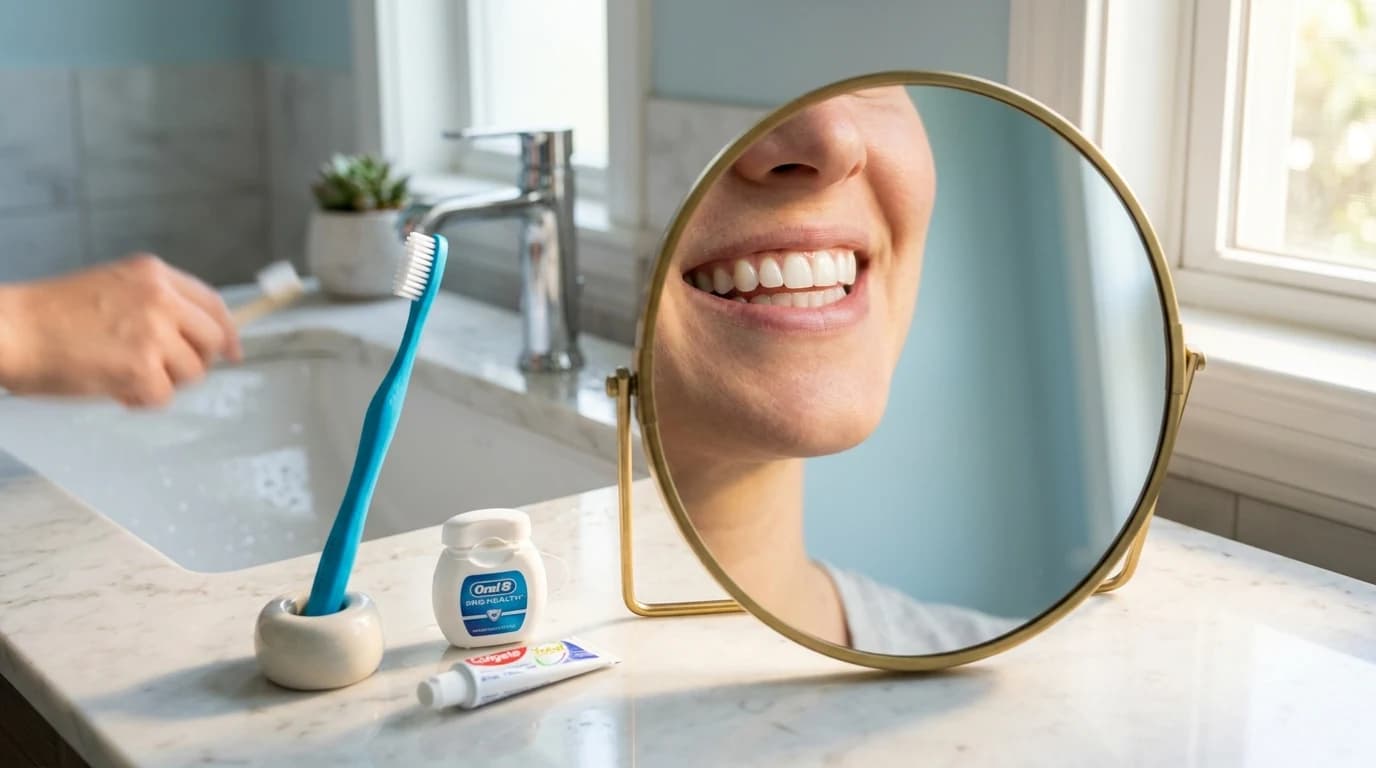
Caring for dental implants is nearly identical to caring for natural teeth. You brush twice daily, floss once daily (a floss threader or water flosser can help around implant bridges), and visit your dentist for regular cleanings and exams. There are no special soaking solutions, no adhesive cleanup, and no need to remove anything at night.
Your hygienist may use specialized instruments designed for implant surfaces during cleanings, but from your perspective the routine feels exactly like a normal dental visit.
10. Restored Confidence and Quality of Life
The psychological impact of missing teeth is well documented. Research shows that people with visible tooth loss smile less, avoid social situations, and report lower self-esteem. Dental implants restore not just function but confidence—patients consistently rank implant treatment as one of the most life-changing dental procedures they have experienced.
At our Nassau County offices, we see this transformation regularly. Patients who once covered their mouths when laughing leave our practice smiling freely. That shift in confidence often ripples into professional and personal life in ways that are hard to put a dollar value on.
How Do Implants Compare to Bridges and Dentures?
The table below summarizes key differences across the three most common tooth replacement options. Every case is different, so use this as a starting point for your consultation conversation.
| Criteria | Dental Implant | Fixed Bridge | Removable Denture |
|---|---|---|---|
| Bone preservation | Yes—stimulates jawbone | No | No—accelerates bone loss |
| Lifespan | 25+ years (post); 10–15 years (crown) | 7–15 years | 5–8 years |
| Bite force restored | 90–95% of natural | ~70% of natural | ~25–40% of natural |
| Adjacent teeth altered | No | Yes—two teeth ground down | Clasps may stress neighbors |
| Removable | No (fixed) | No (fixed) | Yes |
| Daily care | Brush and floss normally | Floss threader under bridge | Remove, soak, and clean nightly |
| Success rate (10-year) | 95–98% | 85–90% | N/A (reline/remake cycle) |
Disclaimer: Not everyone is a candidate for dental implants. Factors like bone density, overall health, and smoking status affect eligibility. A comprehensive exam and imaging are required to determine suitability.
Frequently Asked Questions
Are dental implants worth the higher upfront cost?
For most candidates, yes. When you factor in the 25+ year lifespan of the implant post, the preservation of adjacent teeth and jawbone, and the elimination of repeated bridge or denture replacements, implants typically offer the best long-term value. Many patients also report that the quality-of-life improvement alone justifies the investment.
How painful is dental implant surgery?
Most patients describe implant placement as less uncomfortable than they expected—often comparing it to a routine extraction. The procedure is performed under local anesthesia, and sedation options are available for patients who feel anxious. Post-operative discomfort is typically managed with over-the-counter pain relievers for 3–5 days.
Can I get implants if I have bone loss?
In many cases, yes. Bone grafting procedures can rebuild the jaw to support implant placement. For patients with significant bone loss, All-on-4 treatment uses angled implants to maximize contact with available bone, often eliminating the need for grafting entirely. Your dentist will determine the best approach based on 3D imaging.
How long does the implant process take from start to finish?
A straightforward single-tooth implant typically takes 3–6 months from placement to final crown, with most of that time devoted to healing (osseointegration). Cases requiring bone grafting may add 3–4 months. All-on-4 patients often receive temporary teeth the same day as surgery, with a final prosthesis delivered 4–6 months later.
Ready to find out if dental implants are right for you? Call Meadowbrook Dental Care at (516) 284-1234 (Mineola) or (516) 346-5757 (Plainview), or schedule online to book your consultation.
Discover What Implants Can Do for You
From a single missing tooth to full-arch restoration, Meadowbrook Dental Care designs treatment around your health, lifestyle, and budget—at our Mineola or Plainview office.