Quick Answer
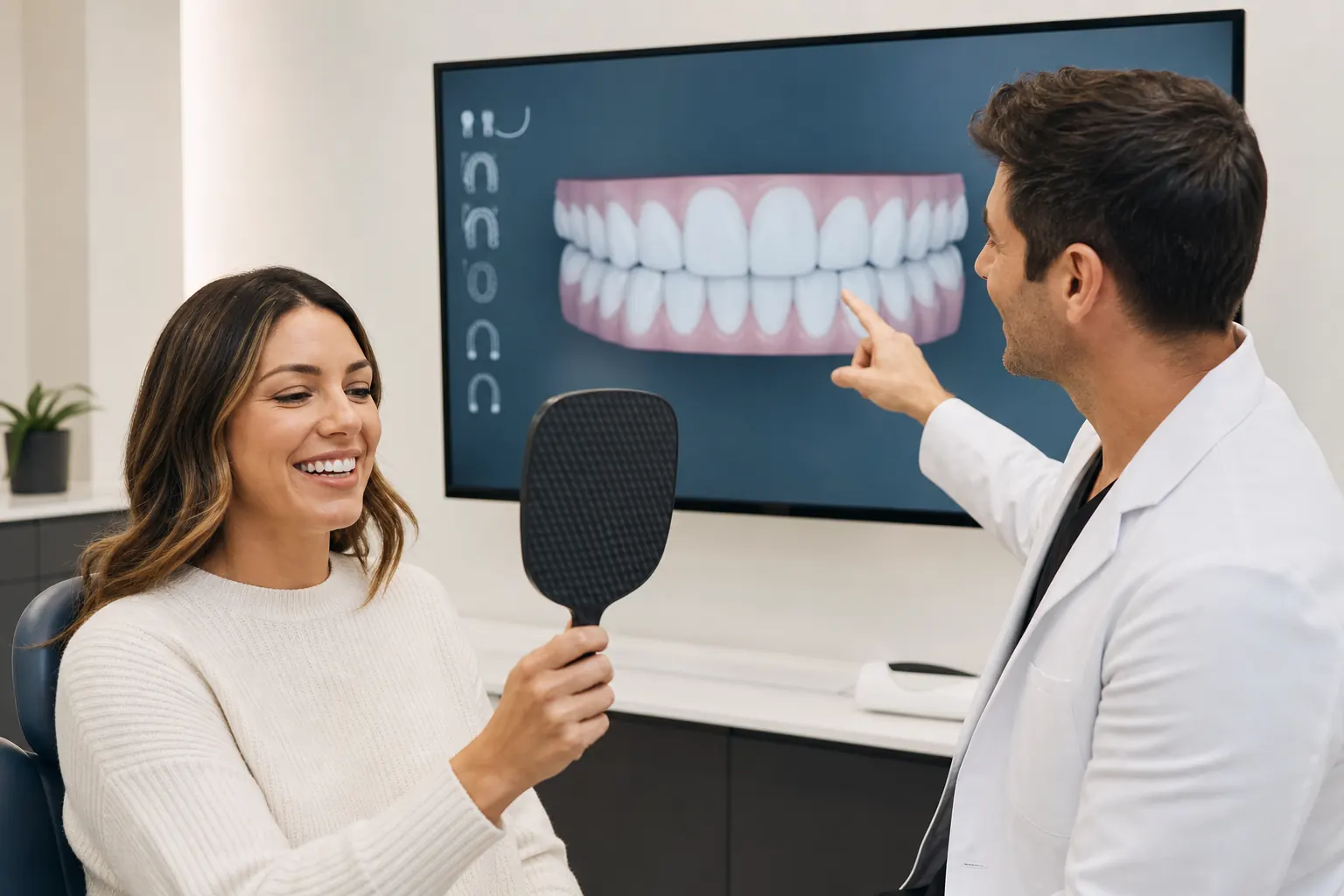
Cosmetic dentistry can feel abstract when decisions are described only with dental terms. “Longer central incisors” or “more balanced gingival contours” may be technically accurate, yet hard to imagine on your own face. Digital Smile Design gives those conversations a visual framework. Instead of selecting a procedure first, the patient and dentist can begin with goals, evaluate a proposed endpoint, and work backward to the most conservative practical sequence.
At Meadowbrook Dental, patients from across Nassau County may encounter digital planning in both cosmetic and restorative cases. This guide explains what information goes into a design, how it informs treatment, where its limits are, and what questions to ask before approving a plan. It is educational guidance rather than a substitute for an examination.
What Digital Smile Design Is—and Is Not
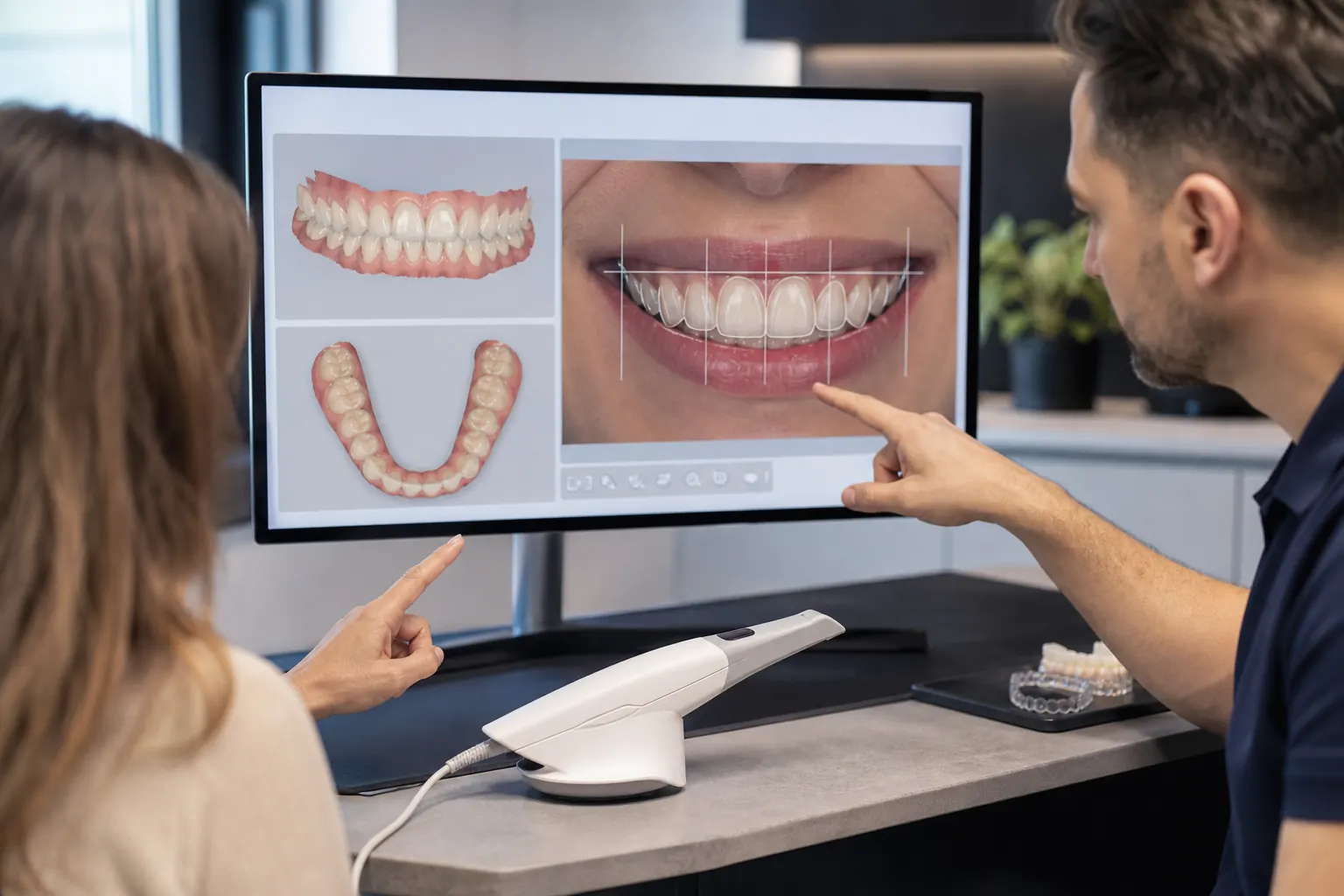
Digital Smile Design is a structured method for analyzing how teeth, gums, lips, and facial features relate. The team gathers calibrated photographs, video when useful, and a digital scan or impression of the teeth. Reference lines help evaluate the smile against the facial midline, lip movement, visible tooth display, gum levels, and tooth proportions. Software then supports a proposed arrangement that can be reviewed on screen.
The value lies in communication. Patients can point to a contour that feels too square, too uniform, or too prominent. Dentists and laboratory technicians can use the approved concept to coordinate records and fabrication. The design may also reveal that a desired appearance would require moving teeth, treating gums, or restoring damaged structure before cosmetic finishing.
It is not a filter, an automatic treatment recommendation, or evidence that every simulated change is safe. Software cannot replace X-rays, periodontal measurements, decay detection, palpation, or a functional bite evaluation. A responsible design follows biology; it does not ask healthy teeth and gums to conform to an image at any cost. Our Digital Smile Design resource explains how this visual collaboration fits into an in-office visit.
From Records to a Shared Treatment Blueprint
The process begins with a conversation about what the patient notices and what they would prefer to preserve. The team documents the face at rest and in a natural smile, close views of the teeth, and the bite. Digital scans capture tooth surfaces and spacing without relying only on two-dimensional photographs. Health findings remain the first filter: active decay, gum inflammation, infection, and unstable bite conditions need to be addressed in the plan.
Next, the dentist develops a proposal guided by facial and dental reference points. A patient may review more than one direction, such as a subtle edge refinement compared with a broader change in tooth proportions. The discussion should cover which features are digital approximations and which can be transferred to a physical mock-up.
For selected cases, the design can inform a wax-up or printed model. A temporary mock-up placed over the teeth may let the patient see and feel approximate contours in the mouth before final treatment. It can reveal speech, lip-support, and length concerns that a flat screen cannot. After feedback, the approved blueprint helps coordinate preparation, provisionals, laboratory communication, and final review.
Where Digital Planning Adds the Most Value
Not every case needs the same depth of simulation. Repairing a tiny chip may require only direct shade and shape planning. Digital design becomes more useful when changes involve several visible teeth, multiple specialties, or a sequence in which early decisions affect the final smile.
| Clinical Goal | How the Design Helps | Important Limitation |
|---|---|---|
| Bonding or veneers | Coordinates length, width, edge form, and symmetry | Enamel, bite, and material thickness set boundaries |
| Orthodontics before cosmetic care | Shows why tooth movement may reduce restorative preparation | Simulation does not predict exact movement or timing |
| Implant or missing-tooth restoration | Starts from the desired tooth position to guide planning | Bone, gum, and surgical anatomy must be verified separately |
| Gum and tooth proportion changes | Evaluates visible gum levels with the full smile | Biologic width and tissue response limit reshaping |
| Multi-step rehabilitation | Keeps clinicians and laboratory aligned on one endpoint | Health and function may require changes during treatment |
For a coordinated aesthetic plan, review the broader role of cosmetic dentistry. The design should help decide whether a less invasive route—such as whitening, alignment, or selective bonding—can meet the goal before irreversible treatment is considered.
How to Read a Preview Realistically
A preview is strongest as a decision aid. Compare overall harmony rather than focusing on a perfectly mirrored image. Natural teeth and faces have asymmetries, and eliminating all of them can create an artificial result. Ask how the proposal behaves during speech and a full smile, not just in one still photograph. Also ask which parts require tooth preparation and which could be achieved additively.
Color on a monitor is especially approximate. Screen calibration, lighting, camera settings, enamel translucency, and surrounding skin tone affect perception. Final shade selection uses clinical information and material samples, not the digital image alone. Similarly, a digital outline cannot show exactly how gums will heal or how ceramic will reflect light under every condition.
If porcelain veneers are being considered, confirm whether the preview has been checked against available enamel, current tooth position, and bite clearance. Ask what happens if a proposed contour requires more reduction than expected. Good planning includes an alternative, not just an idealized endpoint.
Preparing for a Productive Design Consultation
Bring examples of what you like, but describe the qualities rather than asking to copy another person's teeth. Words such as “subtle,” “natural texture,” “softer corners,” or “keep my character” are useful. Mention time constraints, prior dental work, sensitivity, grinding, dental anxiety, and any history of difficult healing. These details can change the safest sequence.
During the visit, ask what records are being used, whether health or bite treatment comes first, and whether a mock-up is appropriate. Request a clear explanation of reversible versus irreversible steps. You should understand which parts of the plan are essential for health or function and which are elective aesthetic choices. Taking time to review the design is reasonable; visual technology should reduce pressure, not create it.
At the Mineola and Plainview offices, the most useful endpoint is a plan that looks appropriate for the individual and can be maintained. No design system can promise a particular emotional response or exact appearance. It can, however, make assumptions visible early enough for thoughtful discussion and revision.
Frequently Asked Questions
Is Digital Smile Design the same as treatment?
No. Digital Smile Design is a planning and communication process, not a dental procedure by itself. It helps the patient and dentist evaluate potential tooth shapes, proportions, and treatment sequences. The actual care may involve whitening, bonding, veneers, orthodontics, crowns, implants, gum treatment, or no treatment at all after the options are reviewed.
Will the final smile look exactly like the digital preview?
The preview is a useful visual target, but it is not a guarantee or a literal photograph of the final result. Gum response, tooth structure, material behavior, facial movement, healing, and clinical limitations can affect the outcome. A careful team explains which parts of a simulation are readily achievable and which require compromise or further evaluation.
Can I request changes to the proposed design?
Yes. Collaboration is one of the main purposes of the process. You can discuss tooth length, edge shape, symmetry, shade direction, and how prominent or subtle you want the change to feel. The dentist must still protect function, tooth health, and material strength, so not every visual preference is clinically advisable.
Is Digital Smile Design only for porcelain veneers?
No. It can support planning for bonding, whitening, orthodontics, crowns, implants, gum contouring, and complex combinations. It is particularly useful when several procedures must be sequenced toward one shared endpoint. For a very small repair, simpler photographs and direct planning may provide all the information needed.
To discuss a digitally planned smile approach, call Meadowbrook Dental Care in Mineola at (516) 284-1234 or Meadowbrook Dentistry in Plainview at (516) 346-5757, or request a smile design consultation. Bring your questions and preferences so the team can explain what is clinically realistic before any treatment decision.
See and Discuss Your Smile Plan Before Treatment
Use a collaborative digital design process to explore realistic cosmetic and restorative options with our Meadowbrook Dental teams in Mineola and Plainview.