Quick Answer
“I hate my teeth” can carry years of frustration, embarrassment, pain, or avoidance in four words. You may hide your smile in photographs, chew only on one side, or feel overwhelmed by the number of things you think are wrong. You might also worry that a dentist will criticize you for waiting. Those feelings are common reasons people postpone care, and they deserve to be met with practical help rather than judgment.
You do not need to diagnose yourself or arrive knowing the right procedure. A productive first visit turns a broad feeling into a prioritized list. This guide explains how patients on Long Island can move from “everything feels wrong” to a realistic sequence of choices. It is educational and cannot replace an individual examination.
Step 1: Describe the Problems in Your Own Words
Begin with experiences, not dental vocabulary. Write down what you notice in three categories: health, function, and appearance. Health concerns include pain, swelling, bleeding gums, bad taste, sensitivity, or a tooth that feels loose. Functional concerns include trouble chewing, jaw fatigue, a bite that feels uneven, or speech changes. Appearance concerns might involve color, spacing, crowding, worn edges, missing teeth, old dental work, or how much gum shows.
Then identify your top one or two priorities. “I want to eat comfortably on both sides” gives the dentist a clearer starting point than trying to solve every visible issue at once. Bring notes and photographs if they help, and mention dental anxiety, a strong gag reflex, time limits, past difficult visits, medical conditions, and budget concerns. These facts shape a usable plan.
Step 2: Build a Complete Clinical Picture
A comprehensive assessment commonly includes a review of your medical and dental history, examination of each tooth and existing restoration, gum measurements, bite and jaw evaluation, oral cancer screening, and appropriate X-rays. Photographs or digital scans may document starting conditions and help explain findings. The exact records depend on your needs.
This stage prevents a common mistake: treating what is visible while missing what supports it. Whitening cannot resolve decay. Veneers are not a substitute for controlling gum inflammation. A new crown may not last predictably if grinding or an unstable bite goes unaddressed. Likewise, a tooth that looks unattractive may be healthy and need a far more conservative option than expected.
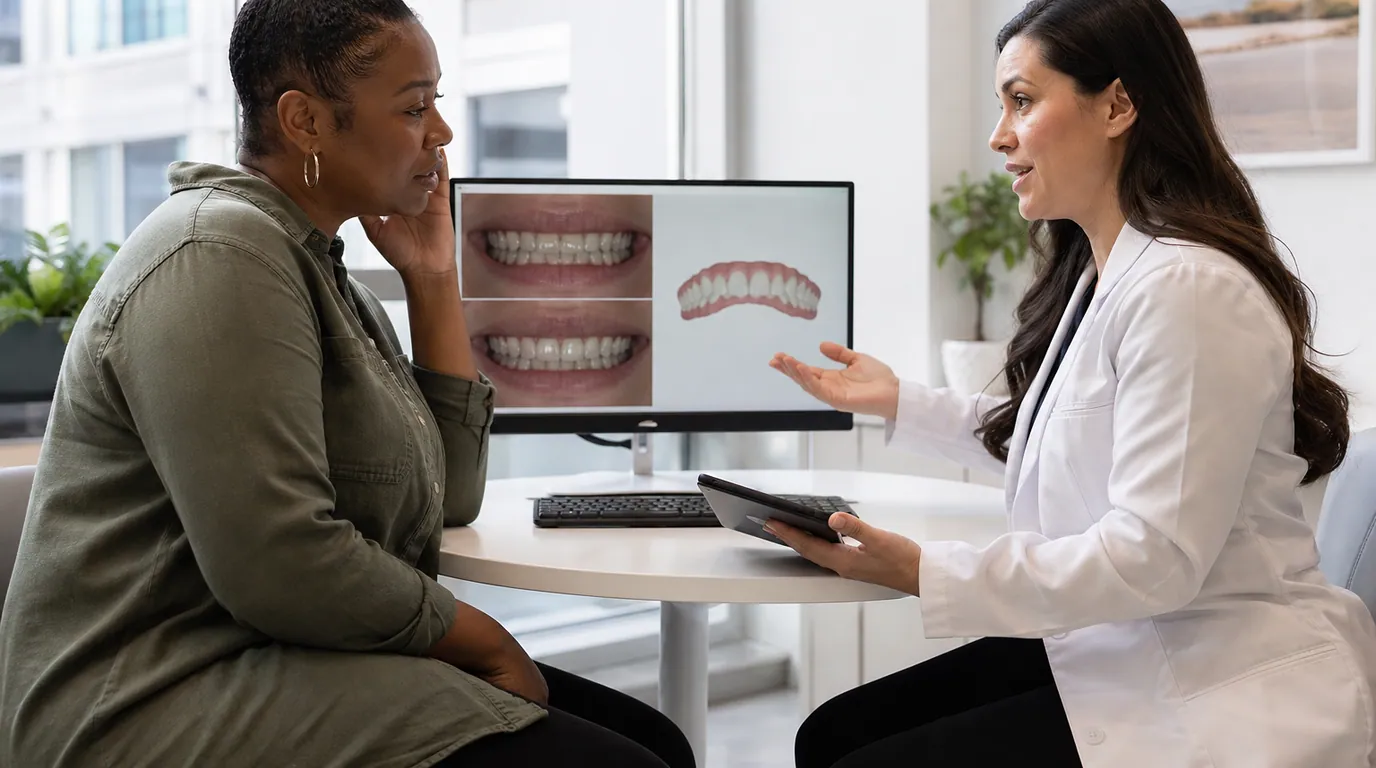
Ask the dentist to show you the evidence behind each finding. You should be able to understand which areas are urgent, which are being watched, and which changes are elective. If many teeth are damaged or missing, the overview of full-mouth reconstruction can help explain why coordinated planning may matter.
Step 3: Put the Plan in the Right Order
Comprehensive care becomes less intimidating when divided into phases. Not everyone needs every phase, and the treatments within each phase depend on examination findings.
| Phase | Main Goal | Possible Examples |
|---|---|---|
| 1. Urgent stabilization | Address pain, infection, trauma, or teeth at immediate risk | Temporary protection, infection care, or necessary extraction |
| 2. Disease control | Create a healthier foundation | Gum therapy, decay treatment, home-care support |
| 3. Function and structure | Restore chewing, replace teeth, and manage the bite | Fillings, crowns, orthodontics, bridges, implants, or dentures |
| 4. Appearance refinement | Address color, shape, proportion, and smile harmony | Whitening, bonding, veneers, or gum contouring |
| 5. Maintenance | Protect the result and monitor risks | Cleanings, exams, home care, or a night guard |
Ordering care this way does not mean appearance is unimportant. It means the cosmetic endpoint is designed on a stable foundation. In some cases, phases overlap: orthodontic movement may improve both bite and appearance, while replacing a missing front tooth may restore both speech and confidence.
Step 4: Compare Paths, Not Just Procedures
There may be more than one clinically reasonable route. A worn or uneven smile, for example, might be approached with selective bonding, orthodontics followed by bonding, veneers on appropriate teeth, or broader restorative care if structure and bite are compromised. The best conversation compares what each path changes, preserves, costs in time and tooth structure, and requires for maintenance.
Ask these questions for each option:
- Which problem does this treatment solve, and which does it not?
- Is it reversible, additive, or does it require removing tooth structure?
- What maintenance or future replacement should I expect?
- What happens if I postpone this phase or choose the simpler option?
- How will the bite, gums, and neighboring teeth be protected?
For appearance-led concerns on otherwise healthy teeth, a cosmetic dentistry consultation can compare conservative and more comprehensive approaches. If the issues involve widespread breakdown, missing teeth, or loss of bite support, restorative planning should lead the discussion.
Step 5: Use Visual Planning Without Treating It as a Promise
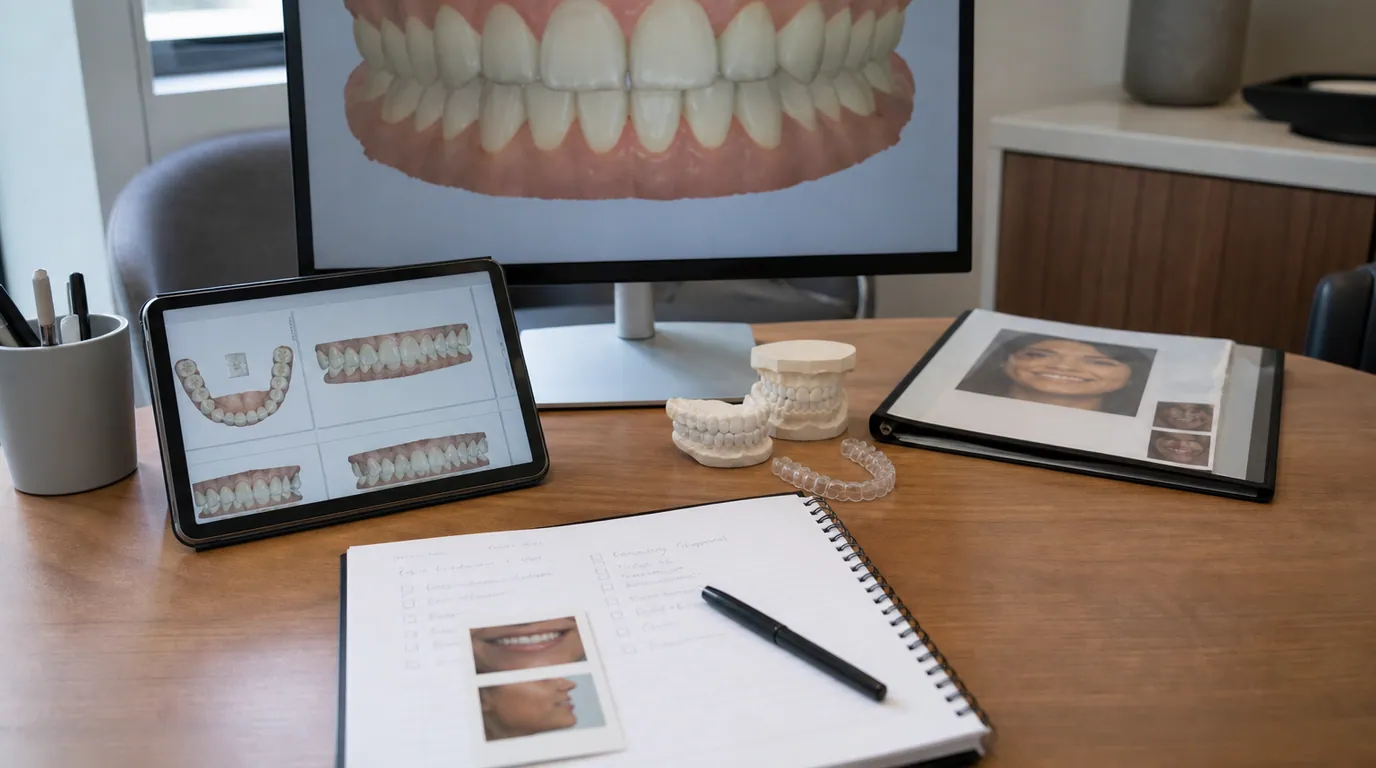
It can be hard to approve a plan you cannot picture. Photographs, digital scans, smile simulations, diagnostic wax-ups, and temporary mock-ups can help you discuss tooth length, proportions, alignment, and the overall character you prefer. You can ask for a natural, age-appropriate, subtle, or brighter direction without copying someone else's smile.
Meadowbrook Dental's Digital Smile Design resource explains how visual tools can support that conversation. A preview is a planning aid, not a guarantee. Gum response, available enamel, bite forces, healing, material properties, and facial movement create real clinical limits. A responsible plan explains those limits before irreversible care begins.
Step 6: Make the Plan Work in Real Life
Request a written plan organized by priority, including alternatives and the reason for the proposed sequence. Ask which phase is needed to stop active disease, which restores function, and which is optional. You can also ask whether treatment can be divided around work, caregiving, healing, or financial needs without creating additional risk.
If cost feels impossible, do not assume the only choices are doing everything immediately or doing nothing. A phased plan may begin with relief and prevention, followed by rebuilding over time. Insurance benefits, annual limits, and exclusions vary, while financing creates a separate payment obligation; review the terms carefully. The practice's financing information is a starting point for questions, not a substitute for a personalized treatment estimate.
Your First Goal Is Clarity, Not Perfection
A first consultation does not commit you to a complete smile overhaul. Its most useful result may be a diagnosis, immediate priorities, and a map for the future. Some patients discover that a few focused treatments address what bothered them most. Others benefit from a coordinated reconstruction. Neither path reflects personal worth, and no ethical plan should promise perfection or a particular emotional outcome.
For patients in Nassau County, choosing the Mineola or Plainview office that is easier to revisit can support continuity through a phased plan. Consistent follow-up and maintenance matter as much as the starting design. The right place to begin is the next manageable step.
Frequently Asked Questions
What if I am embarrassed to show a dentist my teeth?
You can say that at the start of the visit and ask the team to explain each step before proceeding. A dental examination is meant to gather information, not judge how a problem developed. Many people delay care because of fear, finances, caregiving, health issues, or past experiences. The useful question is what can be done from today forward.
Do I need to fix every tooth at once?
Usually not. A treatment plan can be divided into urgent care, disease control, functional rebuilding, and optional cosmetic refinement. Phasing may make time and cost easier to manage. The sequence matters, however, because infection, gum disease, and bite instability generally need attention before elective appearance changes.
Should I ask for veneers or a full-mouth reconstruction?
Start by describing what bothers you rather than choosing a procedure. Veneers address selected cosmetic concerns on suitable teeth, while full-mouth reconstruction coordinates restorative care for widespread damage, missing teeth, or bite problems. An examination, X-rays, and discussion of your priorities are needed before either path can be recommended.
Can a dentist show me what my smile might look like first?
In some cases, photographs, digital scans, simulations, wax-ups, or trial mock-ups can make options easier to understand. These tools support planning and communication, but they are not guarantees of an identical result. Tooth structure, gums, bite, materials, healing, and the selected treatment all influence what is clinically achievable.
To begin with a conversation rather than a predetermined procedure, call Meadowbrook Dental Care in Mineola at (516) 284-1234 or Meadowbrook Dentistry in Plainview at (516) 346-5757. Tell the team what concerns you most and ask for an examination and a phased explanation of your options, or request a consultation online.
Start With a Clear, Judgment-Free Plan
Bring your concerns to our Mineola or Plainview team and explore a phased plan built around health, function, appearance, and your priorities.