Quick Answer
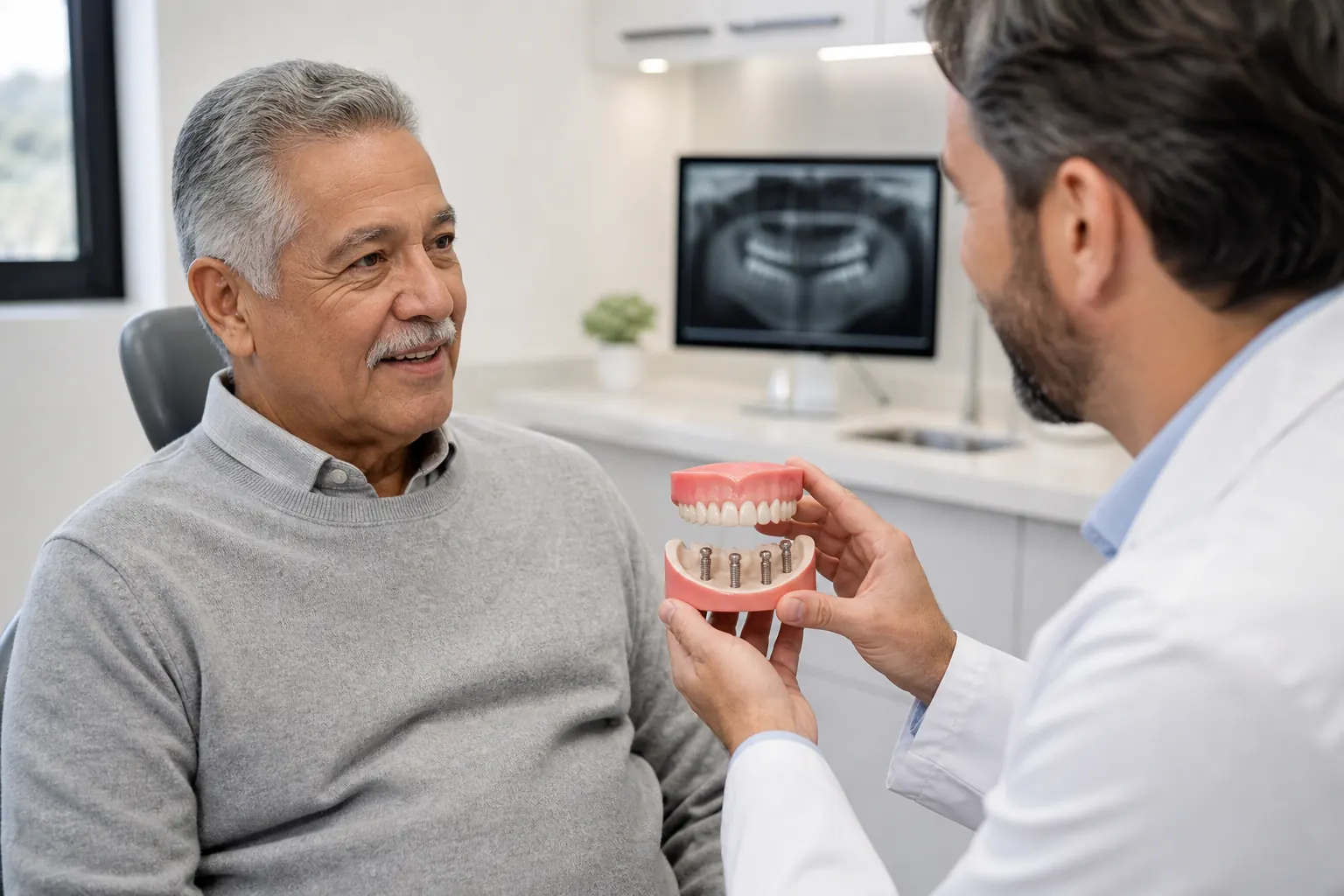
A loose lower denture can make eating and conversation frustrating, even when it was carefully made. Implant-supported dentures address that specific problem by connecting a prosthesis to implants in the jaw. They occupy the middle ground between a conventional denture that rests only on the gums and a fixed full-arch bridge that the patient cannot remove.
This guide focuses on the cost, components, and ownership responsibilities of implant-supported dentures—not the broader question of implants versus dentures in general. For patients in Nassau County, understanding whether a quote describes a two-implant overdenture, a four-implant bar design, or fixed teeth is essential because those treatments have different procedures and price ranges.
What “Implant-Supported Denture” Can Mean
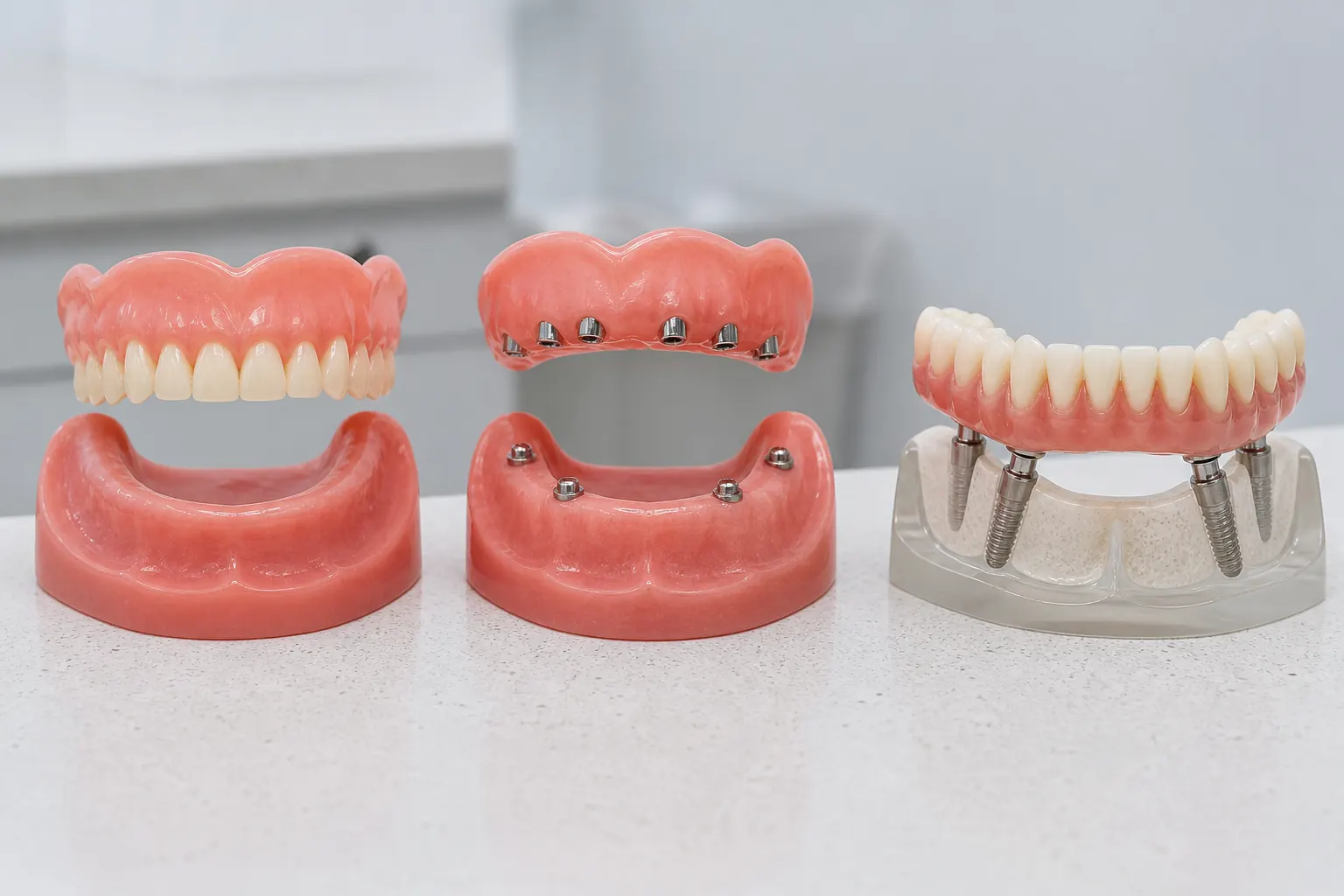
The term most often describes a removable overdenture that snaps onto attachments connected to dental implants. The patient removes it for cleaning, but the attachments resist lifting and side-to-side movement during use. Two implants may stabilize a lower denture. Additional implants or a connecting bar can distribute support differently, especially in the upper jaw where bone and anatomy present distinct planning considerations.
“Implant-supported” is also sometimes used casually for fixed full-arch bridges. Those restorations are secured to four or more implants and are removed only by a dental professional. They generally feel different, require a different hygiene technique, and cost more. Ask whether the proposed teeth are patient-removable, what attachment system is included, and whether the fee includes both a temporary and final prosthesis.
Implants improve retention and transmit some chewing force into bone, but they do not make a prosthesis maintenance-free. The acrylic teeth and denture base still wear, attachments lose retention, and gum and bone contours can change. The goal is a more stable, serviceable system—not an indestructible replacement for natural teeth.
How the Main Designs Compare
The best design depends on anatomy as much as preference. A lower two-implant overdenture may deliver a meaningful stability improvement with less surgery. Four implants may support a bar or provide retention at more points. Fixed full-arch treatment offers a non-removable design but requires sufficient support and a commitment to cleaning underneath the bridge.
| Option | How It Is Retained | Daily Cleaning | Typical Use Case |
|---|---|---|---|
| Two-implant overdenture | Individual snap attachments | Remove and clean denture and implants | Added lower-denture retention with limited surgery |
| Four-implant overdenture | Individual attachments or a bar | Remove; clean denture, bar, and tissues | Broader retention or upper-arch planning |
| Fixed full-arch bridge | Screwed to four or more implants | Brush and clean beneath with special aids | Patient prefers non-removable full-arch teeth |
| Conventional denture | Suction, anatomy, and sometimes adhesive | Remove and clean daily | No implant surgery or lowest initial cost |
Long Island Cost Ranges and Quote Details
A removable implant-supported denture on Long Island commonly ranges from about $7,000 to $18,000 per arch. A simpler lower design using two implants may fall around $7,000 to $12,000, while a four-implant or bar overdenture may range from roughly $12,000 to $18,000 or more. Fixed full-arch treatment generally starts around $20,000 per arch and can increase with implant number, restorative material, or added surgery.
A useful written estimate identifies what is included: diagnostic scans, extractions, implant placement, grafting if needed, temporary teeth, the final denture, abutments or bar, sedation, and follow-up adjustments. Existing dentures can sometimes be converted, but a new prosthesis adds cost. Maintenance expenses also matter; attachment inserts may need periodic replacement, and the denture may eventually need a reline, repair, or remake.
Disclaimer: These figures are educational estimates for the Long Island market and are not a quote. Your actual cost depends on implant number, jaw anatomy, prosthesis design, materials, and any extractions or grafting required. A formal treatment plan requires an examination and diagnostic imaging.
Dental benefits may offset selected components but often have annual limits. For remaining costs, review verified dental financing information and compare payment terms, total interest, and eligibility rather than focusing only on a monthly figure.
Candidacy, Imaging, and the Treatment Sequence
Planning starts with a health history, oral examination, and 3D imaging. The dentist evaluates available bone, nerve and sinus locations, gum condition, smile and lip support, jaw relationship, hand dexterity, and the teeth in the opposing arch. Uncontrolled gum disease, smoking, poorly controlled diabetes, or certain medications can affect healing and should be discussed honestly; none can be assessed from an online checklist alone.
If teeth need removal, the team decides whether implants can be placed at the same appointment or after healing. Some patients need bone grafting before dental implants. After implant placement, the bone generally needs a healing period before the attachments carry full functional load. A temporary or adjusted conventional denture may be worn during this stage, subject to clinical instructions.
Once integration is confirmed, the restorative phase records the implant positions, bite, tooth display, and tissue support. The laboratory makes the denture and incorporates its attachments. Delivery includes fit and bite checks plus instruction on inserting, removing, and cleaning it. Multiple adjustments are normal as the tissues adapt; they do not necessarily indicate a failed design.
Maintenance, Tradeoffs, and Long-Term Value
Snap-in dentures are easier for many patients to clean because they come out, but the implants beneath still need meticulous plaque removal. Brush the prosthesis with products recommended for denture materials, clean around each implant and attachment, and attend maintenance visits. Abrasive toothpaste or very hot water can damage a denture. Worn nylon inserts can make the prosthesis feel loose and are usually replaced as a routine service item.
The tradeoff is that removable teeth still feel like a denture and may move slightly as tissues change. Fixed teeth avoid daily removal but can be harder to clean beneath and are typically a larger investment. Neither approach guarantees that every food will feel the same as it did with healthy natural teeth. Realistic expectations should include possible repairs to acrylic teeth, periodic professional removal for fixed designs, and continued monitoring of bone and gum health.
The broader dental implant service includes both individual and full-arch options. At Meadowbrook Dental in Mineola and Plainview, treatment selection should follow the diagnostic plan—not a predetermined implant count or an advertised package.
Frequently Asked Questions
How many implants are needed for an implant-supported denture?
A removable lower overdenture may use two implants, while four can provide broader support and are commonly considered for an upper denture. The appropriate number depends on bone volume, implant positions, bite forces, the opposing teeth, and whether the prosthesis will be removable or fixed. A 3D scan and restorative plan are needed before selecting a number.
Can my current denture be converted to snap onto implants?
Sometimes. An existing denture may be retrofitted if it fits well, has enough strength and space for attachments, and aligns with safe implant positions. Many older dentures are too worn, thin, or poorly fitting to convert predictably, in which case a new prosthesis is planned around the implants. The dentist and laboratory must evaluate it directly.
Do implant-supported dentures come out at night?
Most snap-in overdentures are patient-removable and should be removed for daily cleaning and usually overnight, following the dentist's instructions. A fixed full-arch bridge is different: only a dental professional removes it. Patients should clarify which design is being proposed because cleaning routines, cost, feel, and repair needs differ substantially.
Will insurance cover implant-supported dentures?
Coverage varies. Some plans contribute to the denture, extractions, or a portion of implant treatment, while others exclude implants or limit benefits to a conventional denture allowance. Annual maximums and waiting periods may also apply. A written predetermination can clarify estimated benefits, but it is not a guarantee of payment.
For an itemized implant-supported denture evaluation, call Meadowbrook Dental Care in Mineola at (516) 284-1234 or Meadowbrook Dentistry in Plainview at (516) 346-5757, or request a consultation online. The team can compare removable and fixed designs after reviewing your 3D images, health, cleaning needs, and priorities.
Plan a More Stable Denture Solution
Explore removable and fixed implant-supported options with a personalized 3D evaluation and itemized treatment plan at Meadowbrook Dental in Mineola or Plainview.