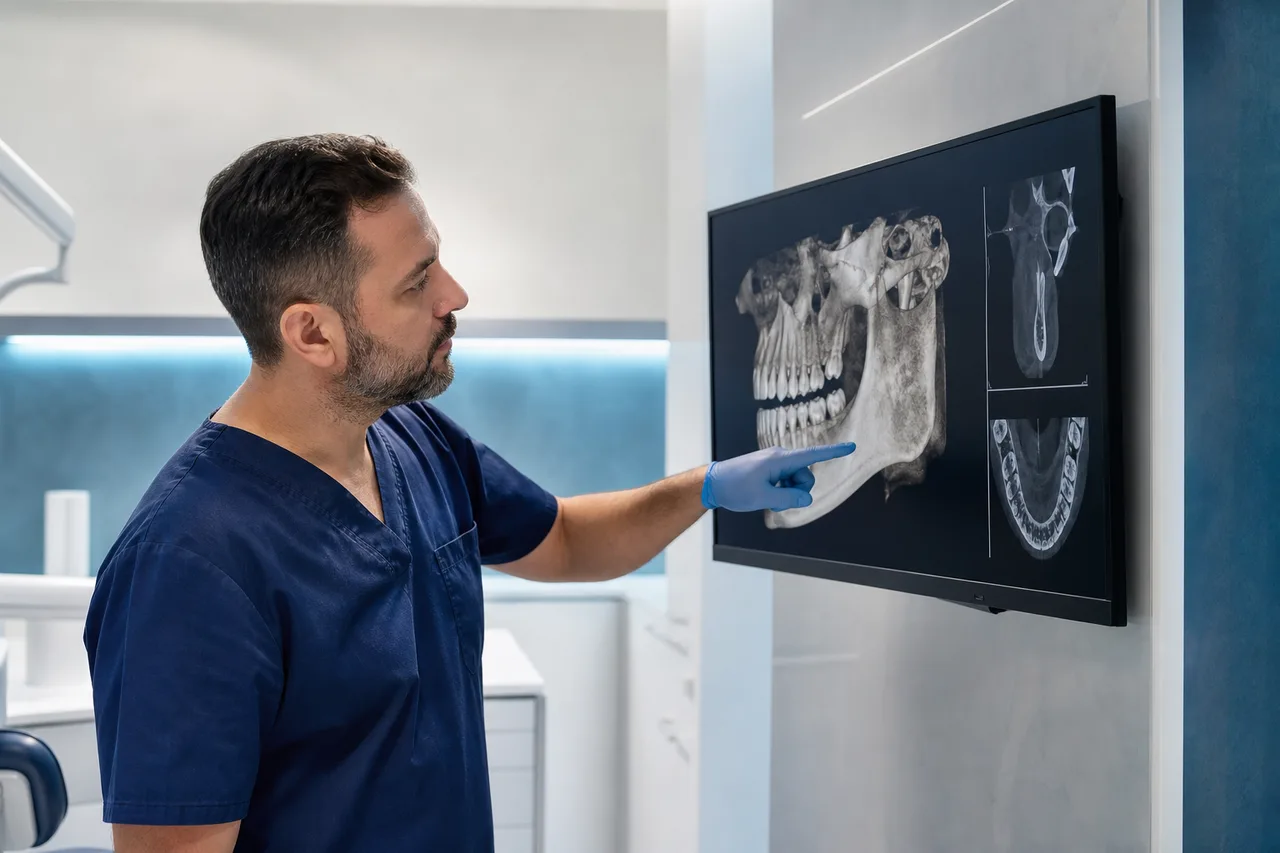
If you have been told you need a bone graft before getting a dental implant, it is easy to feel discouraged, as though the finish line just moved further away. In reality, bone grafting is one of the most common and predictable steps in modern implant dentistry, and it is often the very thing that makes a strong, lasting implant possible.
This guide explains what a bone graft actually is, why so many patients on Long Island need one, the different types available, and what recovery is really like. We will also cover typical costs in the Nassau County area so you can plan with confidence. As always, only a clinical exam and 3D imaging can tell you exactly what your jaw needs, but understanding the basics first makes that conversation far easier.
What Is a Dental Bone Graft?
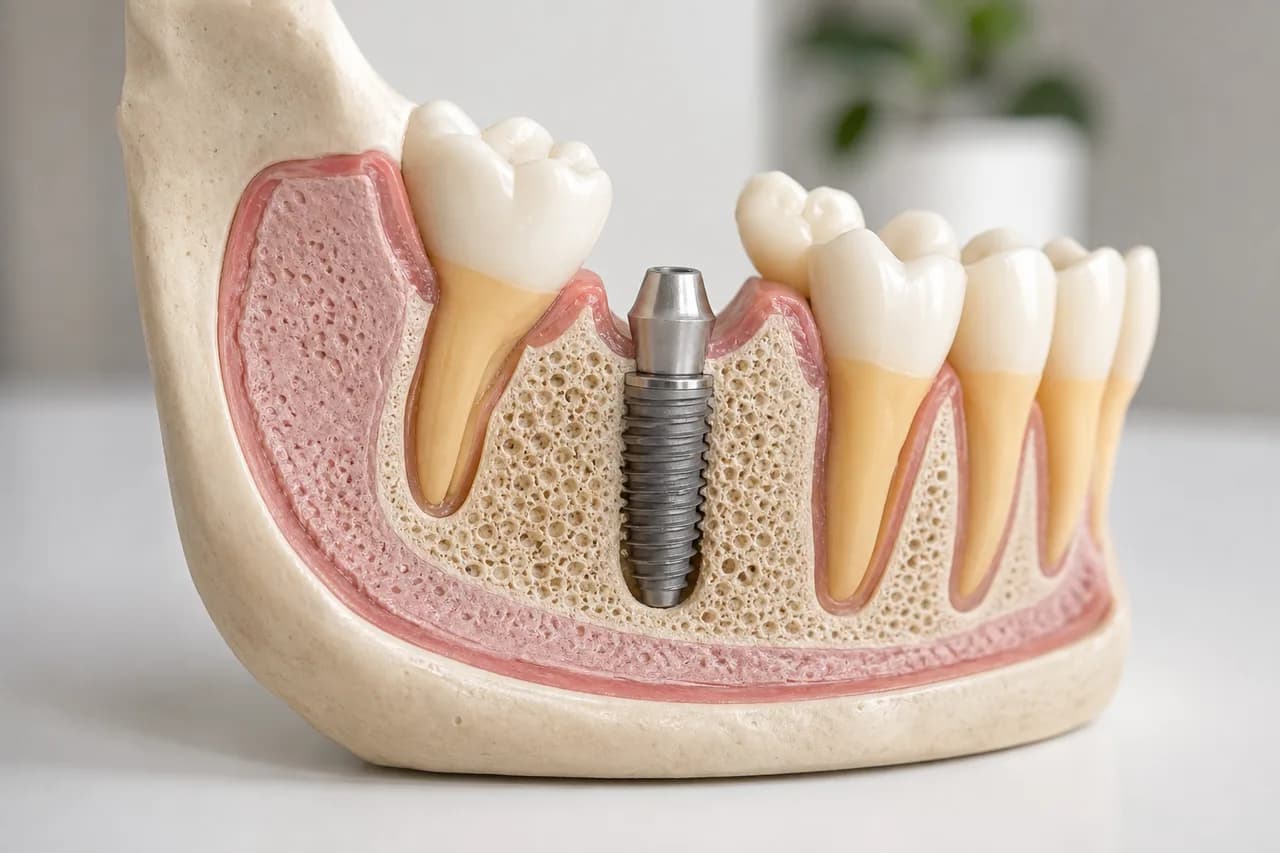
A dental bone graft is a procedure that rebuilds or reinforces bone in the jaw where it has thinned or been lost. The dentist places grafting material into the area that needs support, and over the following months your body uses that material as a scaffold to grow new, healthy bone of its own. The end result is a ridge with enough volume and density to securely hold an implant.
Think of it as preparing a foundation before building a house. An implant needs solid bone around it to fuse properly and bear the forces of chewing for years to come. When the existing bone is too thin or too soft, a graft creates the stable base the implant depends on.
Why You Might Need a Bone Graft
Bone loss in the jaw happens for several reasons, and many patients are surprised to learn how quickly it can begin. The most common causes we see at Meadowbrook Dental Care include the following.
- Missing teeth over time: When a tooth has been gone for months or years, the bone that supported its root gradually shrinks because it no longer receives chewing pressure.
- Gum disease: Advanced periodontal disease destroys the bone that anchors teeth, often well before the teeth themselves are lost.
- Tooth extraction: The socket left behind after an extraction can collapse and lose width if nothing is done to preserve it.
- Sinus position: In the upper back jaw, the sinus cavity can sit low, leaving too little height for an implant without a procedure called a sinus lift.
The good news is that grafting addresses all of these situations. In many cases, placing a small graft right after an extraction, known as socket preservation, prevents the problem before it ever starts.
Types of Bone Grafts
Not all grafts are the same, and your dentist selects the material based on how much bone is needed and where. The main categories are below.
- Autograft: Bone taken from your own body, often from another site in the mouth. It integrates extremely well because it is your own tissue.
- Allograft: Processed and sterilized human donor bone from a certified tissue bank. This is one of the most common choices because it avoids a second surgical site.
- Xenograft: Bone derived from an animal source, usually bovine, that provides a durable scaffold for new bone to grow into.
- Synthetic graft: Lab-made biocompatible materials that safely stimulate your body to form new bone without any donor tissue.
What to Expect During the Procedure
For most patients, a routine bone graft is a straightforward, in-office procedure performed with local anesthesia, with sedation available for anyone who prefers it. The general sequence looks like this.
- Step 1: The area is numbed and gently opened to expose the bone that needs reinforcement.
- Step 2: Grafting material is placed and shaped to rebuild the missing volume.
- Step 3: A protective membrane is often placed over the graft to guide healing, and the site is closed with sutures.
- Step 4: The graft is left to integrate while new bone forms, typically over several months, before the implant is placed.
Healing and Recovery Timeline
The immediate recovery from a bone graft is usually milder than patients expect. The real waiting period is the months of quiet healing beneath the gum while new bone matures. Here is a general timeline, keeping in mind that every case differs.
| Phase | Typical Timeframe | What Happens |
|---|---|---|
| Initial recovery | 3 to 7 days | Mild swelling and soreness, managed with basic pain relief |
| Soft tissue healing | 2 to 3 weeks | Gums close over the site and sutures dissolve or are removed |
| Bone integration | 3 to 6 months | New bone forms and matures around the graft material |
| Implant placement | After integration | The implant is placed once the bone is strong enough |
During the first week, sticking to soft foods, avoiding the surgical site when brushing, and following your aftercare instructions closely will keep healing on track. Smoking significantly slows graft healing, so this is an ideal time to cut back or quit.
Bone Grafting Costs on Long Island
Bone graft pricing depends on the size of the graft, the material used, and whether a more involved procedure such as a sinus lift is required. The ranges below reflect what patients in the Long Island area can generally expect.
| Procedure | Typical Cost Range |
|---|---|
| Socket preservation (after extraction) | $300 to $900 |
| Standard ridge graft | $500 to $3,000 |
| Sinus lift | $1,500 to $5,000 |
Disclaimer: These figures are educational estimates for the Long Island area and are not a quote. Your actual cost depends on the type and extent of grafting needed, which can only be determined with a clinical exam and 3D imaging.
Many patients fold grafting into the overall cost of treatment, and our complete guide to dental implant costs explains how the pieces fit together. We also offer flexible financing so the investment can be spread over time. If you are still deciding between tooth replacement options, our comparison of a dental bridge versus an implant is worth a look.
Frequently Asked Questions
Does a bone graft hurt?
The procedure itself is painless because the area is fully numbed, and sedation is available if you feel anxious. Afterward, most patients report mild soreness and some swelling for a few days, similar to a routine extraction, which is easily managed with over the counter pain relievers.
How long after a bone graft can I get an implant?
In most cases the graft needs 3 to 6 months to integrate before the implant is placed, though smaller grafts may heal faster. Your dentist confirms readiness with a follow up scan to make sure the new bone is strong enough to support the implant securely.
Can my body reject a bone graft?
True rejection is very rare because graft materials are processed to be biocompatible and act mainly as a scaffold for your own bone to grow into. The most common complication is graft failure from infection or smoking, which is why aftercare and avoiding tobacco are so important.
Is bone grafting always necessary for an implant?
No. Many patients have plenty of healthy bone and can proceed straight to implant placement. Grafting is only recommended when imaging shows the bone is too thin, too short, or too soft to support an implant on its own. A 3D scan during your evaluation gives a definitive answer.
Curious whether grafting is part of your path to a new smile? Call Meadowbrook Dental Care at (516) 284-1234 (Mineola) or (516) 346-5757 (Plainview), or schedule online to book your implant evaluation and 3D scan.
Find Out If You Need a Bone Graft
A quick 3D scan at our Mineola or Plainview office tells us exactly how much bone you have and whether grafting is part of your implant plan. No guessing, just a clear path forward.