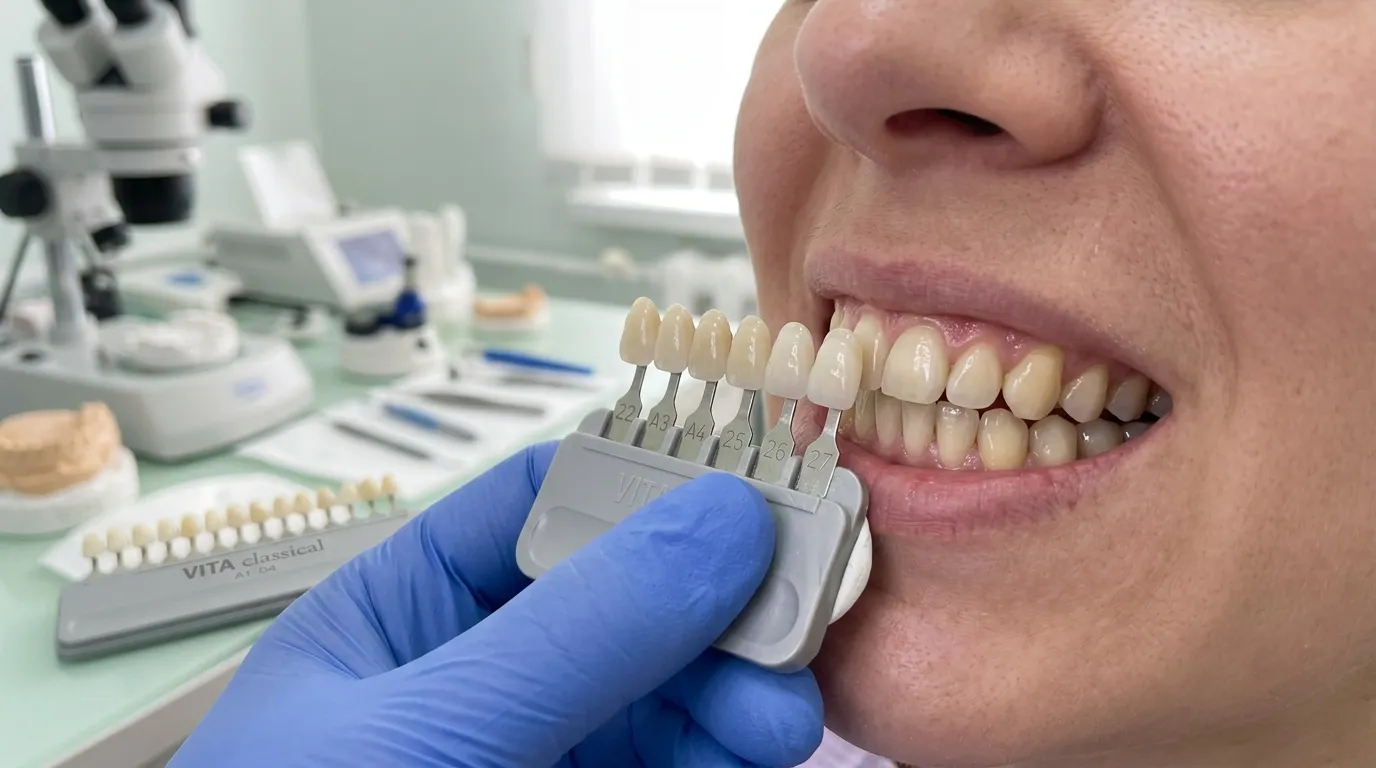
Porcelain veneers are one of the most popular cosmetic dental treatments for a reason — they can transform the color, shape, size, and alignment of your teeth in just two to three visits. But the investment is not trivial, and understanding what drives veneer pricing helps you budget realistically and avoid surprises. If you are considering veneers on Long Island, this guide covers everything you need to know about cost, material options, the treatment process, longevity, candidacy, and how veneers compare to alternatives.
At Meadowbrook Dental Care, Dr. Miguel Casañas and our cosmetic team have placed thousands of porcelain veneers for patients across Nassau County. We believe informed patients make better decisions, so we lay out the numbers and trade-offs with full transparency.
What Are Porcelain Veneers?
Porcelain veneers are thin, custom-fabricated shells of dental ceramic bonded to the front surface of your teeth. Each veneer is typically 0.3–0.5 mm thick — about the width of a contact lens — and is shaped, shaded, and contoured to create a natural, harmonious smile. Once bonded, veneers become a permanent part of your tooth structure and function just like natural enamel.
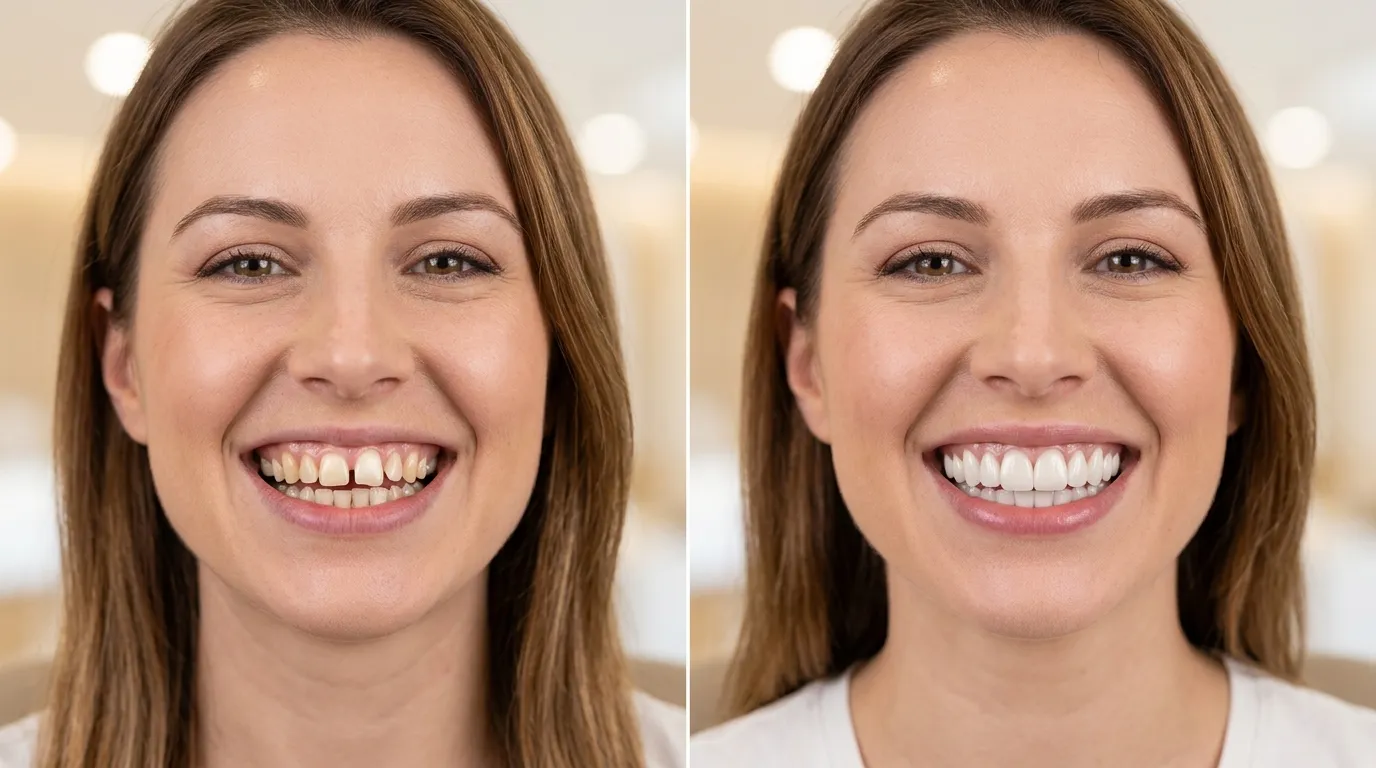
Veneers address a wide range of cosmetic concerns in a single treatment: stubborn discoloration that does not respond to whitening, chips and cracks, minor gaps between teeth, uneven or worn edges, and teeth that appear too small or irregularly shaped. Because each veneer is individually crafted, your dentist can fine-tune every detail — from translucency and surface texture to the precise shade of white.
Porcelain vs. Composite Veneers
Not all veneers are created equal. The two main categories — porcelain and composite resin — differ significantly in durability, aesthetics, and price.
Porcelain veneers are fabricated in a dental laboratory from high-strength ceramic. They resist staining far better than composite, replicate the light-reflecting properties of natural enamel, and last 15–20 years with proper care. The trade-off is higher cost and the need for a small amount of enamel removal (0.3–0.7 mm) during preparation.
Composite veneers are sculpted directly onto the teeth in a single appointment using tooth-colored resin material. They are significantly less expensive and require little to no enamel removal, making them reversible in some cases. However, composite is more prone to staining, chipping, and wear, and typically lasts only 5–7 years before needing replacement or repair. For patients wanting a long-term solution with the best aesthetics, porcelain is the superior choice.
Veneer Cost on Long Island (2026)
Veneer pricing in Nassau County and the broader Long Island market generally falls within these ranges:
- Porcelain veneers: $1,000–$2,500 per tooth. The variation depends on the lab used, material grade (feldspathic vs. pressed ceramic vs. layered zirconia), and the complexity of the case.
- Composite veneers: $300–$800 per tooth. Lower cost reflects the simpler fabrication process and shorter lifespan.
- Full smile makeover (6–10 porcelain veneers): $6,000–$25,000 total. Most patients choose 6–8 veneers for the upper front teeth, which is the "smile zone" visible when you smile and speak.
At Meadowbrook Dental Care, we provide an itemized quote during your cosmetic consultation so you know the per-tooth and total investment before any work begins.
Disclaimer: These cost ranges are educational estimates for the Long Island area and are not a quote. Your actual price depends on the number of teeth treated, material selection, and any preparatory work required. A formal quote requires an in-person cosmetic evaluation.
What Affects the Price of Veneers?
Several factors determine where your case falls within the cost range:
- Number of teeth: More veneers mean a higher total, though some practices offer per-tooth pricing that decreases slightly with larger cases.
- Material and lab quality: Premium ceramics from master-level dental labs produce the most lifelike results but cost more than standard fabrication. The difference is visible in translucency, surface detail, and color matching.
- Prep required: Minimal-prep or no-prep veneers (sometimes marketed as Lumineers) skip significant enamel removal but are not suitable for every case. Traditional-prep veneers require more chairside time and lab work.
- Preparatory treatments: Some patients need teeth whitening, gum contouring, or minor orthodontic work before veneers can be placed for optimal results.
- Geographic market: Costs in the New York metro area and Long Island tend to be higher than the national average due to overhead and lab proximity, but you also gain access to some of the best cosmetic labs in the country.
The Veneer Process: What to Expect
The journey from consultation to final bonding typically spans two to three appointments over two to four weeks:
- Consultation and Digital Smile Design: Your dentist evaluates your teeth, discusses your goals, and uses Digital Smile Design technology to create a projected preview of your new smile. You will see a simulation on screen before committing to treatment.
- Tooth preparation: A thin layer of enamel (0.3–0.7 mm) is removed from the front of each tooth receiving a veneer. Digital impressions are taken and sent to the lab. Temporary veneers are placed to protect your teeth and give you a preview of the final shape.
- Lab fabrication: The dental lab crafts each veneer to the exact specifications — shade, shape, translucency, and fit. This typically takes 10–14 days.
- Final bonding: The temporary veneers are removed, each porcelain veneer is tried in to verify fit and aesthetics, and then permanently bonded using a specialized dental adhesive and curing light. Minor adjustments to bite and contour are made on the spot.
Longevity: How Long Do Veneers Last?
Porcelain veneers are one of the longest-lasting cosmetic dental treatments available. With good oral hygiene, regular dental visits, and reasonable care (no ice-chewing or bottle-opening), porcelain veneers typically last 15–20 years. Some patients get 25+ years from a well-maintained set before replacement is needed.
Composite veneers, by comparison, generally last 5–7 years before staining, chipping, or wear requires replacement. When you calculate the cost per year of service, porcelain often proves more economical despite the higher upfront price: a $1,500 porcelain veneer lasting 18 years costs roughly $83 per year, while a $500 composite veneer lasting 6 years costs about $83 per year — with the porcelain delivering superior aesthetics and fewer replacement appointments throughout.
Who Is a Good Candidate for Veneers?
Porcelain veneers work best for patients with cosmetic concerns that are primarily surface-level:
- Chips, cracks, or worn edges on front teeth
- Stubborn discoloration or intrinsic staining that does not respond to professional whitening
- Small gaps (diastemas) between teeth
- Minor misalignment — teeth that are slightly crooked or uneven but do not require full orthodontic treatment
- Teeth that appear too small, too short, or irregularly shaped
Veneers may not be the right choice for everyone. Patients with severe crowding or bite issues may benefit more from Invisalign first to align teeth before veneers — or instead of veneers entirely. Heavy grinders or clenchers (bruxism) may be better candidates for full-coverage dental crowns, which protect all surfaces of the tooth. And patients with significant decay or structural damage may need restorative work before cosmetic enhancement is appropriate. Your consultation will clarify which approach gives you the best result. For broader cosmetic options, explore our guide to cosmetic smile makeovers.
Comparison Table: Porcelain Veneers vs. Composite Veneers vs. Bonding vs. Crowns
| Criteria | Porcelain Veneers | Composite Veneers | Dental Bonding | Dental Crowns |
|---|---|---|---|---|
| Cost per tooth (Long Island) | $1,000–$2,500 | $300–$800 | $200–$600 | $1,000–$3,000 |
| Longevity | 15–20 years | 5–7 years | 3–7 years | 10–15 years |
| Enamel removal | 0.3–0.7 mm | Minimal to none | Minimal to none | 1.5–2.0 mm (all surfaces) |
| Stain resistance | Excellent | Moderate | Low to moderate | Excellent |
| Appointments needed | 2–3 | 1 | 1 | 2 (or 1 with CEREC) |
| Best for | Comprehensive smile makeover | Budget-friendly cosmetic fix | Small chips, minor gaps | Damaged or weakened teeth |
| Reversible | No (enamel removed) | Sometimes (minimal prep) | Yes | No (significant prep) |
| Natural appearance | Excellent — mimics enamel | Good | Good for small areas | Excellent |
Financing Your Veneers
Porcelain veneers are considered a cosmetic procedure and are rarely covered by dental insurance. However, that does not mean you have to pay the full amount upfront. Meadowbrook Dental Care offers flexible financing options including 0% interest plans for 12–24 months and extended payment terms for larger cases. HSA and FSA funds can also be applied since veneers restore tooth structure as well as aesthetics.
For patients considering a full smile makeover in the $10,000–$25,000 range, financing transforms a lump-sum investment into manageable monthly payments — often $250–$600 per month depending on the term. Our Mineola and Plainview teams walk you through every option during your consultation.
Frequently Asked Questions
Are porcelain veneers worth the cost?
For patients with the right candidacy, porcelain veneers deliver one of the highest satisfaction rates in cosmetic dentistry. The combination of lifelike aesthetics, 15–20 year longevity, and stain resistance makes them a strong long-term value compared to alternatives that require more frequent replacement. The key is choosing an experienced cosmetic dentist and a reputable dental lab.
Does insurance cover porcelain veneers?
Dental insurance rarely covers veneers because they are classified as a cosmetic procedure. In some cases, if a veneer replaces a damaged or decayed tooth surface, a portion may be covered under restorative benefits. Our team will check your specific plan and identify any applicable coverage.
How many veneers do I need for a full smile?
Most smile makeovers involve 6–10 veneers on the upper front teeth — the teeth visible when you smile. Some patients add 2–4 lower veneers for symmetry. During your consultation, your dentist will recommend the ideal number based on your smile line, tooth proportions, and cosmetic goals.
Do veneers damage your natural teeth?
Porcelain veneer preparation removes a thin layer of enamel (0.3–0.7 mm), which is an irreversible step. However, the bonded veneer actually strengthens the tooth surface and protects it from further wear. With proper care, veneered teeth remain healthy and functional for decades. Composite veneers and dental bonding require little to no enamel removal if you prefer a reversible option.
Can I get veneers if my teeth are crooked?
Veneers can mask mild misalignment effectively — slightly rotated or uneven teeth are routinely corrected with veneers alone. For moderate to severe crowding, your dentist may recommend Invisalign first to align teeth into their ideal positions, followed by veneers for the final cosmetic refinement. This "ortho-then-veneers" approach delivers the best functional and aesthetic outcome.
Ready to explore what veneers can do for your smile? Call Meadowbrook Dental Care at (516) 284-1234 (Mineola) or (516) 346-5757 (Plainview), or schedule online to book your cosmetic consultation.
See What Veneers Can Do for Your Smile
Schedule a veneer consultation at our Mineola or Plainview office. We'll use Digital Smile Design to preview your results before any prep work begins.